FMCG Packaging Market Set for Strong Growth as Sustainable and Smart Packaging Redefine Consumer Goods Industry
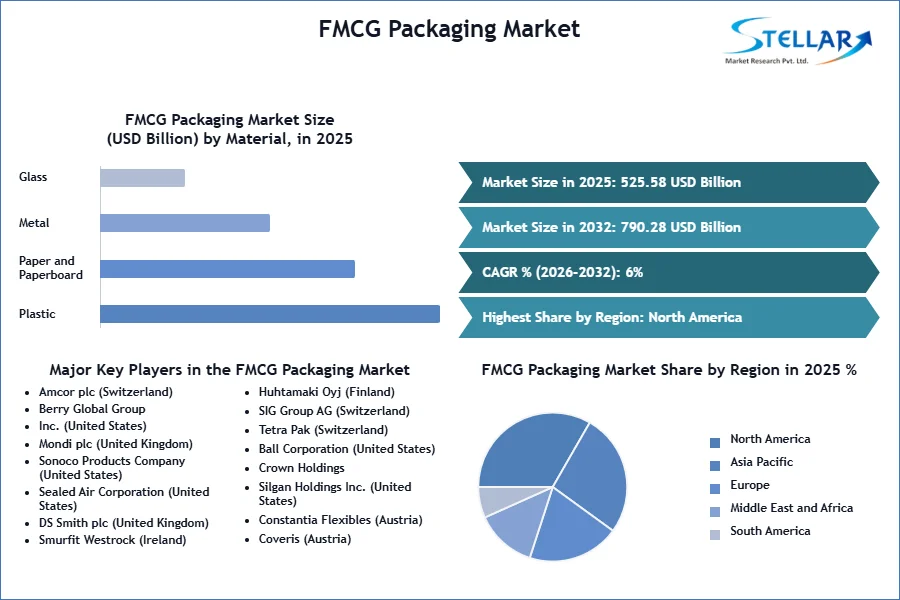
The global FMCG Packaging Market is entering a transformative phase, fueled by the rapid expansion of e-commerce, increasing demand for convenience foods, and growing consumer preference for sustainable packaging solutions. According to Stellar Market Research, the market is projected to grow from USD 525.58 billion in 2024 to USD 790.28 billion by 2032, registering a CAGR of 6% during the forecast period.
The Growing Importance of FMCG Packaging
Packaging has evolved from being a protective layer to becoming a strategic branding and sustainability tool. Modern consumers expect packaging that is durable, visually appealing, environmentally responsible, and capable of preserving product quality throughout transportation and storage.
The increasing popularity of online grocery shopping, food delivery platforms, and dire ct-to-consumer brands has significantly increased the need for innovative packaging solutions that minimize damage while enhancing the customer experience.
𝐃𝐨𝐰𝐧𝐥𝐨𝐚𝐝 𝐅𝐫𝐞𝐞 𝐏𝐃𝐅 𝐁𝐫𝐨𝐜𝐡𝐮𝐫𝐞: https://www.stellarmr.com/report/req_sample/FMCG-Packaging-Market/1154
E-Commerce Continues to Drive Market Expansion
The continued rise of digital commerce remains one of the strongest growth drivers for the FMCG packaging industry. Products sold through online channels require packaging capable of withstanding longer transportation routes while maintaining product integrity.
Manufacturers are responding by developing:
- Lightweight packaging materials
- High-strength corrugated packaging
- Tamper-evident packaging
- Smart labeling and tracking solutions
- Recyclable protective packaging
These innovations help companies reduce logistics costs while improving customer satisfaction.
Sustainability Is Reshaping Packaging Innovation
Environmental concerns are transforming packaging strategies worldwide. Governments, consumers, and retailers are placing greater emphasis on reducing plastic waste and improving recyclability.
Leading packaging manufacturers are increasingly investing in:
- Biodegradable packaging materials
- Paper-based alternatives
- Recyclable plastic packaging
- Mono-material flexible packaging
- Circular economy initiatives
Companies are also redesigning packaging to reduce raw material usage without compromising durability or product protection.
Food & Beverage Segment Leads Market Demand
Among all end-use industries, the Food & Beverage segment remains the largest contributor to FMCG packaging demand. Rising consumption of ready-to-eat meals, dairy products, beverages, frozen foods, and packaged snacks continues to create significant opportunities for packaging manufacturers.
Packaging innovations in this sector focus on:
- Extended shelf life
- Leak-proof designs
- Attractive shelf presentation
- Convenient portability
- Improved food safety
Pharmaceuticals and personal care products also represent fast-growing end-use segments requiring specialized packaging solutions.
Plastic Continues to Dominate Material Usage
Plastic remains the dominant packaging material because of its versatility, lightweight properties, and cost-effectiveness. Materials such as PET and HDPE continue to be widely used across bottles, containers, and jars.
However, growing environmental regulations are encouraging manufacturers to gradually transition toward recyclable plastics and paper-based alternatives that reduce environmental impact while maintaining performance standards.
Regional Outlook
North America currently leads the global FMCG packaging market, supported by strong demand from the beverage industry, advanced packaging technologies, and increasing adoption of recyclable materials.
Meanwhile, the Asia-Pacific region is emerging as one of the fastest-growing markets due to:
- Expanding middle-class population
- Rapid urbanization
- Rising disposable incomes
- Growth of organized retail
- Increasing food processing investments
- Strong pharmaceutical manufacturing sector
Countries such as India, China, and Japan continue to play an increasingly important role in global packaging demand.
Technology Is Creating Smarter Packaging Solutions
Packaging companies are integrating advanced technologies to improve supply chain efficiency and consumer engagement. Emerging trends include:
- QR code-enabled packaging
- RFID tracking
- Digital printing
- Anti-counterfeit technologies
- Intelligent inventory management
- Smart labels with product information
These innovations provide brands with better product traceability while enhancing consumer trust.
Competitive Landscape
The FMCG packaging market remains highly competitive, with major companies focusing on sustainability, acquisitions, product innovation, and manufacturing expansion.
Key industry players include:
- Berry Global Inc.
- Crown Holdings
- WestRock Company
- Sealed Air Corporation
- Sonoco Products Company
- Ball Corporation
- Kimberly-Clark Corporation
- Mondi Plc
- Huhtamaki Oyj
- Ardagh Group S.A.
𝐃𝐨𝐰𝐧𝐥𝐨𝐚𝐝 𝐅𝐫𝐞𝐞 𝐏𝐃𝐅 𝐁𝐫𝐨𝐜𝐡𝐮𝐫𝐞: https://www.stellarmr.com/report/req_sample/FMCG-Packaging-Market/1154
Future Outlook
As sustainability regulations become stricter and consumer expectations continue to evolve, packaging manufacturers will increasingly prioritize recyclable materials, lightweight designs, and smart packaging technologies. The integration of digital solutions with environmentally responsible materials is expected to redefine the future of FMCG packaging.
With expanding global retail networks, rising demand for packaged food, and continued growth in e-commerce, the FMCG packaging industry is well-positioned for long-term expansion through 2032
