Key Highlights
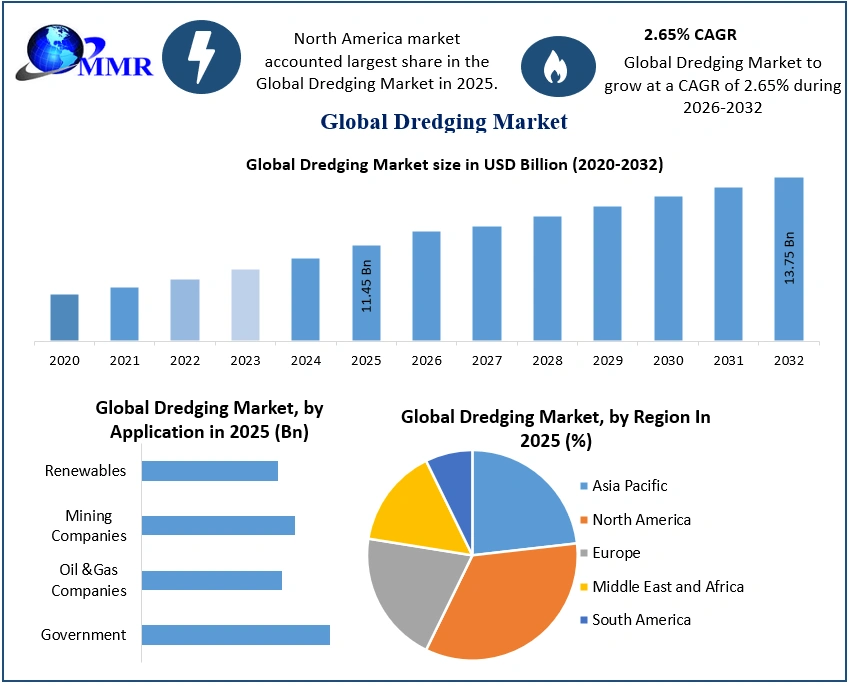
Market Scale: The global revenue reached USD 11.45 Billion in 2025 and is projected to expand to USD 13.75 Billion by 2032, advancing at a steady 2.65% CAGR.
Dominant Mechanism: The pneumatic segment dictates the processing type division, leveraging precise hydrostatic penetration pressures to optimize sand and water slurry separation.
Regional Concentration: The South Asia & Oceania zone represents a core development center, generating over 17.2% of total industry revenue, while China maintains an independent domestic volume epicenter.
Infrastructure Targets: Severe urbanization across Asia-Pacific (46%), North America (3.4%), and the European Union drives contaminated sediment remediation and coastal resilience programs.
Restraining Factors: Stringent ecological compliance mandates and environmental activist pressure regarding natural marine ecosystem disruption restrict rapid project approvals.
Why This Matters Now
Accelerating sea-level rise and aggressive urbanization have transformed underwater sediment management from a periodic municipal maintenance task into a critical asset protection priority. Industrial trade corridors, chemical manufacturing terminals, and deepwater marine ports are facing severe siltation threats that reduce navigate drafts and disrupt global supply chains. Simultaneously, severe demographic migration to vulnerable coastlines requires intense land reclamation and structural erosion defense. For infrastructure investors, procurement executives, and energy project developers, securing long-term dredging contracts is no longer a matter of basic harbor upkeep—it is a mandatory requirement to insulate coastal physical assets from escalating climate disruptions.
Market Overview
The global Dredging Market recorded a commercial size of USD 11.45 Billion in 2025. Driven by escalating investments in port expansions, deepwater energy infrastructure, and disaster mitigation frameworks, the total sector revenue is projected to hit USD 13.75 Billion by 2032, expanding at a compound annual growth rate (CAGR) of 2.65%.
The primary function of dredging revolves around the specialized excavation of sub-surface sediments, utilizing heavy vessels to displace natural resources from riverbeds and coastal shelves to new disposal zones. This industrial process preserves crucial navigational depth, enables coastal flood defense, and provides aggregate raw materials like sand and gravel to downstream construction markets. However, the market faces near-term headwind friction from environmental organizations. Activists frequently raise concerns over the destruction of marine ecosystems and benthic disruption, forcing operators to adapt to strict regulatory compliance frameworks that prolong project permitting and escalate baseline execution costs.
Key Trends Driving Growth
Accelerating coastal urbanization is reshaping regional market demand. As populations concentrate in high-density maritime hubs, governments must invest heavily to mitigate severe soil erosion and prevent frequent tidal inundation. This demographic shift has fundamentally altered public infrastructure spending, moving funds toward long-term land reclamation and coastal defense projects.
Concurrently, a massive global push for fossil fuel security and offshore renewable integration is driving deepwater excavation demand. Expanding exploration in remote marine areas requires specialized dredging vessels to clear shipping channels and prepare stable underwater foundations for heavy energy platforms. These massive energy infrastructure programs provide long-term revenue visibility for vessel operators, prompting heavy machinery manufacturers to deploy advanced, high-efficiency equipment capable of operating in highly challenging marine environments.
Segment Insights
Dominant Process — Pneumatic Mechanism: This segment commands the premier share of the operational equipment sector. These units are deployed from land-based cranes or compact floating platforms, using internal suction cycles to draw in materials and adjusting penetration pressure to separate water from dense sand aggregates.
Core Upstream Application — Energy and Resources: Private-sector energy corporations, deepwater mining organizations, and offshore renewable developers represent highly lucrative, long-term consumers. Their specialized demand focuses on clearing sub-sea corridors for pipeline installation and drilling platform foundations.
Primary Downstream Sector — Government and Port Authorities: Public infrastructure bodies remain the largest overall buyers of dredging services. State agencies utilize long-term leasing models to maintain deepwater channels, protect coastal assets, and execute flood mitigation programs.
Regional Growth Story
The South Asia & Oceania zone represents an increasingly lucrative hub for sub-aquatic engineering, currently generating more than 17.2% of global industry revenue. Severe monsoonal flooding and accelerating siltation across India, Bangladesh, and Sri Lanka have forced regional governments to allocate massive public funds toward river channel management. For example, the state government of Assam in northeastern India committed USD 5.3 billion to execute massive sediment removal programs along the Brahmaputra River to prevent catastrophic seasonal flooding.
China functions as a massive independent market, commanding an overwhelming market share of more than 80% within its designated theater. This dominance is sustained by extensive domestic trade maintenance, massive port expansion infrastructure, and state-backed tariff reductions on high-demand technical machinery.
In North America, the market is on track to reach USD 1.5 billion, supported by deepwater navigation upgrades across major United States coastal cities.
In Europe, the United Kingdom leads regional activity, with energy sector operations contributing 2.5% of national Gross Value Added (GVA). Meanwhile, Germany’s aggressive push to expand renewable wind energy generation to 50% of its power mix requires extensive seabed preparation for offshore wind arrays. Similarly, Japan is recording continuous trade growth, utilizing deepwater maintenance to protect its import-dependent maritime supply chains.
Competitive Landscape
The competitive environment is consolidated around a core tier of international marine engineering specialists, including Royal Boskalis Westminster, China Harbour Engineering, Van Oord, DEME Group, Jan De Nul, Great Lakes Dredge & Dock Corp, and Weeks Marine. These market leaders control significant market share by operating highly diversified, technologically advanced vessel fleets that include high-capacity trailer suction hopper dredgers and cutter suction dredgers.
To lock in steady utilization rates and counter regional economic volatility, leading operators are shifting toward long-term asset deployment strategies. A prime example is the Dredging Corporation of India (DCI), which actively leases out its high-capacity hopper and cutter suctions to established private operators under extended multi-year agreements. This consolidation trend limits pricing power for smaller, single-port operators that lack the capital required to maintain compliance with evolving global maritime emission standards.
Recent Developments
Assam Flood Mitigation Allocation: The regional government of Assam, India, finalized a USD 5.3 billion infrastructure fund focused entirely on large-scale mud and silt extraction along the Brahmaputra River corridor to control regional flooding.
DCI Fleet Leasing Initiative: The Dredging Corporation of India launched a strategic long-term leasing framework, offering its primary trailer suction hopper fleets to certified international engineering corporations to optimize vessel utilization.
German Wind Seabed Capitalization: German marine contractors expanded heavy offshore operations following new federal energy mandates aimed at boosting renewable wind output to 50% of the national energy mix.
Strategic Implications
For procurement officers and industrial logistics directors, the evolution of the global dredging sector requires a proactive approach to harbor and channel capacity management. Because high-capacity dredging vessels are specialized assets with fixed global availability, sudden climate events or major state-backed port expansions can quickly pull equipment away from commercial routes, leaving private industrial terminals vulnerable to draft-reducing siltation.
To secure long-term logistics resilience, private port operators and industrial developers must move away from spot-market service procurement. Organizations should establish multi-year, proactive maintenance agreements with major fleet operators. Furthermore, by utilizing pneumatic dredgers that feature high-precision hydrostatic control, industrial operators can minimize local turbidity and sediment disruption, ensuring smoother environmental permitting processes with regional regulatory bodies.
Future Outlook
Long-term market consolidation will favor major marine engineering firms that operate modern fleets certified under updated international maritime codes. Foundries and legacy operators relying on aging, unmonitored mechanical dredgers will face increasing regulatory barriers and higher insurance premiums, shifting high-margin public contracts exclusively to automated, low-impact operators.
Analyst Perspective
“The dredging sector has shifted from a basic maritime maintenance service into a critical component of global climate adaptation strategy. As major industrial hubs face the dual pressures of coastal migration and severe silting, the ability to rapidly and precisely displace sub-surface sediment dictates the economic survival of trade corridors. Foundries and engineering firms that secure long-term vessel availability while meeting strict environmental standards will capture the highest-value contracts.” Ankita Kagawade, Materials & Chemicals Research Analyst, Maximize Market Research
About Maximize Market Research
Maximize Market Research Pvt. Ltd. (MMR) is a global market research and consulting company that provides reliable, data-focused, and practical business insights. The firm serves a wide range of industries, including healthcare, pharmaceuticals, technology, automotive, electronics, chemicals, personal care, and consumer goods. Through market forecasts, competitive analysis, strategic consulting, and industry impact assessments, MMR helps organizations understand changing market conditions, identify growth opportunities, and make informed business decisions for long-term success.
2nd Floor, Navale IT Park Phase 3
Pune Banglore Highway, Narhe
Pune, Maharashtra 411041, India
+91 9607365656
sales@maximizemarketresearch.com
