Key Highlights
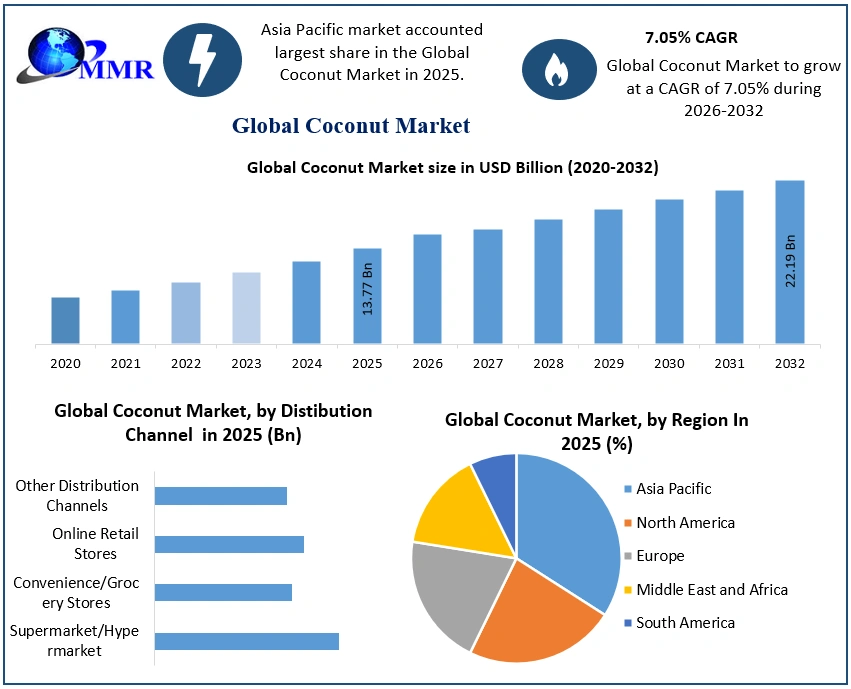
Coconut Market size was valued at USD 13.77 Billion in 2025 and is expected to reach USD 22.19 Billion by 2032 at a 7.05% CAGR, indicating sustained demand for coconut-based foods, beverages and ingredients across global FMCG.
Growth is driven by rising demand for clean-label nutrition, plant-based dairy alternatives, functional beverages, premium snacking, natural personal care ingredients, and healthier food formulations.
Coconut water holds the largest share within coconut types in broader market analyses, highlighting beverage-led growth dynamics and signalling opportunity for hydration and functional drink brands.
Food & beverage applications account for roughly half of global coconut demand in comparable datasets, confirming coconut’s central role in consumer product innovation.
Asia-Pacific leads coconut production and value, while North America and Europe drive downstream brand portfolios through plant-based, premium and wellness-focused coconut products.
Why This Matters Now
Food and beverage executives are under pressure to deliver healthier, plant-based products without losing taste or brand equity; coconut sits at the intersection of these demands. With the Coconut Market projected to rise from USD 13.77 Billion in 2025 to USD 22.19 Billion by 2032 at 7.05% CAGR, coconut ingredients are moving from niche “natural” claims to central pillars of mainstream product architectures.
Coconut water, milk, oil, snacks and derivatives support clean-label, lactose-free, and functional positioning, giving FMCG brands tools to respond to lifestyle disease concerns and evolving dietary preferences. The growth trajectory signals that companies which secure coconut sourcing, processing capabilities and brand stories will gain strategic advantage in wellness and plant-based categories.
Market Overview
The Coconut Market size is entering a high-growth phase, with size valued at USD 13.77 Billion in 2025 and projected to reach USD 22.19 Billion by 2032 at a CAGR of 7.05%. This expansion is being driven by rising demand for clean-label nutrition, plant-based dairy alternatives, functional beverages and premium snacking options.
Coconut water, milk, oil and value-added snacks now feature prominently across grocery aisles and online platforms, supported by consumer perceptions of coconut as “natural”, hydrating and nutritionally beneficial. At the same time, coconut-derived ingredients such as oil and butter power growth in natural personal care and cosmetics, expanding coconut’s footprint beyond traditional foods.
Key Trends Driving Growth
A primary trend is the surge in clean-label demand: consumers seek shorter ingredient lists and recognizable plant sources, driving interest in coconut-based drinks, dairy alternatives and snacks. Coconut water, often sold as “pure” or minimally processed, fits this narrative and has become a staple in functional hydration segments.
Plant-based dietary shifts also accelerate coconut adoption. Coconut milk and cream are central ingredients in non-dairy yogurts, ice creams, sauces and ready meals, giving brands a way to serve lactose-intolerant and flexitarian consumers while maintaining indulgence cues.
Functional beverages are another growth vector. Coconut water and coconut-blended drinks are positioned around electrolytes, hydration and light calories, integrating easily into fitness, wellness and everyday refreshment routines. Premium snacking, including coconut chips, bars and trail mixes, reinforces coconut’s role as a healthier alternative in on-the-go segments.
Request a Free Sample Copy or View Report Summary: https://www.maximizemarketresearch.com/request-sample/29399/
Segment Insights
Dominant Segment – Food & Beverage Applications
In broader coconut market data, food & beverage applications account for approximately half of total demand, signalling that coconut’s core value remains in edible products. Coconut water, milk, oil and snacks anchor this segment, supplying hydration, flavour, texture and functional benefits to mainstream and premium FMCG lines.Fastest-Growing Segment – Functional Beverages and Plant-Based Dairy Alternatives
Press-release insights highlight functional beverages and plant-based dairy alternatives as key growth drivers, with coconut water and milk used to design next-generation drinks and non-dairy products. Brands targeting performance, hydration and lactose-free nutrition rely on coconut ingredients to differentiate in crowded shelves.Product Mix – Water, Milk, Oil, Snacks and Desiccated Coconut
Detailed type shares from similar coverage show coconut water, milk, oil, snacks, desiccated and fiber as major categories, with water leading value and oil and snacks adding premium potential. This mix indicates that coconut is both a raw commodity and a high-margin processed ingredient, depending on product positioning and channel.Consumer Behaviour – Health, Indulgence and Convenience
Consumers adopt coconut products for perceived health benefits, flavor and convenience, creating space for hybrid propositions—healthy yet indulgent, functional yet easy to consume. As premium snacks and ready-to-drink beverages grow, coconut becomes a familiar vehicle for better-for-you claims without sacrificing sensory appeal.
Regional Growth Story
Asia-Pacific commands a significant share of global coconut value, supported by production strength in India, the Philippines and Indonesia and rising regional consumption of coconut-based foods and beverages. These countries not only supply raw coconuts but also build domestic processing industries, enhancing value capture from water, milk, oil and snacks.
North America and Europe drive downstream brand portfolios in plant-based, functional and premium categories. In North America, the United States leads coconut demand for beverages and oils, while Canada and Mexico contribute to regional growth through diversified FMCG adoption. In Europe, Germany, France and the United Kingdom anchor coconut consumption, particularly in health-oriented retail and specialty channels.
The Middle East & Africa region shows rising interest in coconut-based products, particularly in markets like the UAE and Saudi Arabia where modern retail and premium health trends are expanding. These regional dynamics indicate that origin countries and consumption hubs are increasingly interconnected through global supply chains and brand strategies.
Competitive Landscape
The Coconut Market includes ingredient suppliers, beverage companies, snack brands and personal care manufacturers competing to secure coconut supply and convert it into differentiated consumer products. Leading beverage brands in coconut water and plant-based drinks set taste and quality benchmarks, while private label and emerging players fill value and niche segments.
Competition focuses on sourcing reliability, quality certifications, and innovation in flavours, blends and formats—such as flavoured coconut waters, fortified milks, and premium snack combinations. Over the next 12–24 months, players that combine supply chain resilience with rapid product development in plant-based and functional categories will likely capture disproportionate share of the 7.05% CAGR.
Recent Developments
Rising launch activity in coconut water-based functional drinks, incorporating flavours, vitamins and botanicals to expand beyond basic hydration.
Increased use of coconut milk in plant-based dairy alternatives, including yogurts, ice creams and ready meals, driven by lactose intolerance and vegan-friendly demand.
Growth in coconut-based premium snacking, including chips, bars and trail mixes positioned as healthier indulgence options.
Expansion of coconut oil and derivatives in natural personal care and cosmetics, supporting claims around purity, moisturization and sustainability.
Strategic Implications
For FMCG and food & beverage boardrooms, coconut is now a strategic ingredient across hydration, dairy alternatives, snacks and personal care. Investing in coconut-centric product lines allows brands to play simultaneously in health, indulgence and sustainability narratives.
Sourcing strategies become critical. Companies must manage climate and supply risks in key producing countries while securing long-term contracts and collaboration with processors to ensure quality and traceability. Brands that treat coconut as a portfolio-wide platform—rather than a single SKU trend—can build resilient growth across categories and regions.
E-commerce and modern retail accelerate discovery and trial of coconut products, especially premium and functional ranges. Digital channels allow targeted storytelling around origin, nutrition and sustainability, helping coconut brands command higher margins and loyalty compared with generic offerings.
Future Outlook
With market size moving from USD 13.77 Billion in 2025 to USD 22.19 Billion by 2032 at a 7.05% CAGR, coconut will remain central to plant-based, clean-label and functional product innovation. Continued growth in coconut water, milk, oil and snacks will depend on how effectively brands link coconut to tangible health benefits, clear sourcing stories and everyday convenience.
As climate, supply volatility and competitive crowding intensify, the critical divide will be between companies that build integrated coconut strategies—covering sourcing, processing, innovation and multi-channel branding—and those that treat coconut as a short-term trend. The winners will turn coconut into a long-cycle growth platform; the losers will watch their limited coconut SKUs get eclipsed by more committed rivals.
Related Reports
Global Hermetic Laser Packaging Market https://www.maximizemarketresearch.com/market-report/global-hermetic-laser-packaging-market/102413/
Global Waterproof Headphones Market https://www.maximizemarketresearch.com/market-report/global-waterproof-headphones-market/53538/
global tissue vending machine market https://www.maximizemarketresearch.com/market-report/global-tissue-vending-machine-market/68363/
Analyst Perspective
“As clean-label nutrition and plant-based lifestyles scale, brands that lock coconut into their beverage, dairy alternative, snacking and personal care roadmaps will build durable advantage in health, taste and sustainability,” Siddhi Dole
About Maximize Market Research
Maximize Market Research Pvt. Ltd. (MMR) is a global market research and consulting company that provides reliable, data-focused, and practical business insights. The firm serves a wide range of industries, including healthcare, pharmaceuticals, technology, automotive, electronics, chemicals, personal care, and consumer goods. Through market forecasts, competitive analysis, strategic consulting, and industry impact assessments, MMR helps organizations understand changing market conditions, identify growth opportunities, and make informed business decisions for long-term success.
2nd Floor, Navale IT Park Phase 3
Pune Banglore Highway, Narhe
Pune, Maharashtra 411041, India
+91 9607365656
sales@maximizemarketresearch.com
