Key Highlights
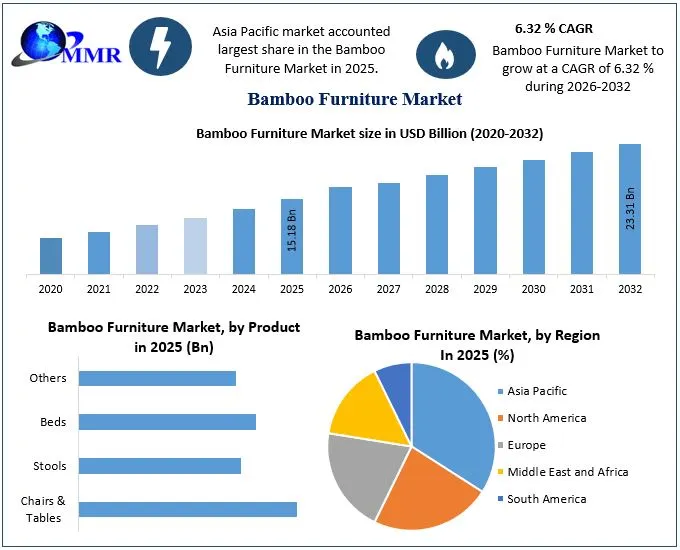
Market Capitalization: The global bamboo furniture market achieved a valuation of USD 15.18 billion in 2025 and is projected to reach USD 23.31 billion by 2032.
Expansion Velocity: The category is growing at a compound annual growth rate (CAGR) of 6.32% across the 2026 to 2032 industrial planning timeline.
Resource Centralization: Asia dominates the supply pipeline, controlling approximately 65% of total global raw bamboo resources.
Manufacturing Footprint: Setting up a small-scale specialized bamboo furniture factory requires a direct physical asset footprint of 1,200 to 1,600 square feet.
Core Consumption Focus: The residential sector holds the largest operational market share, anchored by high demand for architectural fencing, paneling, and interior woven fixtures.
Why This Matters Now
Corporate purchasing directors and consumer goods executives face immediate supply shocks as carbon taxation penalties on slow-growing hardwood timber lines begin squeezing corporate retail margins. Brands that continue to rely on traditional oak, teak, or synthetic plastic composites will lose premium shelf placements to fast-scaling, carbon-negative raw materials that fulfill strict global corporate compliance mandates.
What changed? The residential furniture purchase pathway has evolved from a basic fashion transaction into a critical carbon-accounting choice driven by strict corporate environmental goals and consumer demand for green products. Why now? A global surge in commercial and residential construction has driven raw material costs to record highs, making bamboo a highly competitive option due to its rapid growth cycles and structural durability. Who benefits? Original equipment manufacturers (OEMs), international home decor distributors, and lifestyle retail networks that secure stable, high-volume bamboo supply agreements will capture premium margins and long-term space from eco-conscious consumers.
What happens next? Leading furniture fabricators will modify their manufacturing setups to handle advanced woven and engineered bamboo composites. This operational shift allows brands to protect their supply chains from traditional lumber shortages while capturing high-value sales from the growing minimalist interior design segment.
Market Overview
The global Bamboo furniture market size operates as a fast-growing, high-margin anchor within the broader premium lifestyle retail, sustainable construction, and consumer goods sectors. Valued at USD 15.18 billion in 2025, the market is on a direct track to reach USD 23.31 billion by 2032, advancing at a compound annual growth rate (CAGR) of 6.32%. This structural expansion is backed by growing global building activity, a rise in digital direct-to-consumer lifestyle channels, and specialized manufacturing plants globally.
This commercial trajectory is highly resilient against shifting timber import restrictions. Because bamboo functions as a fast-growing grass that can be harvested repeatedly without damaging local forest floors, it avoids the strict regulatory scrutiny applied to old-growth hardwoods. Driven by this structural supply advantage, the manufacturing sector is moving quickly toward high-tensile engineered bamboo boards, panels, and furniture collections that compete directly with premium traditional furniture lines.
Key Trends Driving Growth
The most critical catalyst transforming the lifestyle manufacturing sector is the rapid consumer adoption of minimalist and Zen-inspired interior design styles. Modern buyers are systematically choosing clean lines, simple layouts, and natural textures to create calm, wellness-focused environments inside their homes. This aesthetic trend drives direct demand for high-end woven bamboo furniture, which premium brands use to command higher prices while keeping material costs low.
Simultaneously, the high mechanical durability and physical flexibility of raw bamboo grass are opening new design opportunities for global product engineers. Bamboo possesses tensile strength metrics that match or exceed several standard hardwoods, allowing factories to build lighter, high-durability items such as beds, tables, and outdoor stools. This strength-to-weight advantage lowers international shipping costs, allowing e-commerce retailers to improve their logistics margins across high-volume distribution setups.
Furthermore, small-scale entrepreneurs and local manufacturing groups are expanding the global market by utilizing highly efficient factory floor layouts. Establishing a specialized bamboo processing line requires a relatively low capital commitment, with basic operations utilizing small facility footprints of just 1,200 to 1,600 square feet. This low financial barrier to entry allows regional suppliers to scale up production quickly, providing major retail brands with agile, localized supply partners that can adjust output rapidly to match changing seasonal retail demands.
Segment Insights
Product Line Distribution: Comprises specialized categories including chairs and tables, structural stools, premium beds, and auxiliary interior accessories like rugs and slats.
End-Use Classifications: Divided between residential spaces, commercial properties including corporate offices and hotels, and high-durability outdoor landscaping setups.
Raw Material Applications: Segmented across traditional round-pole bamboo builds, woven crochet-style paneling, and advanced high-density laminated bamboo blocks.
Dominant Segment: The residential sector represents the dominant end-user segment, commanding the largest portion of global market revenue due to a surge in sustainable home renovations, interior fencing, and decorative paneling upgrades.
Fastest-Growing Segment: High-end woven crochet furniture lines and laminated outdoor chairs and tables represent the fastest-growing product tracks, expanding rapidly as commercial hospitality buyers upgrade outdoor seating spaces worldwide.
Regional Growth Story
The global distribution of bamboo furniture revenue highlights a deep concentration of raw material control and manufacturing power within the Asia Pacific region. This geographic territory controls the global supply chain, supported by the fact that Asia holds approximately 65% of total global raw bamboo resources. China and India act as the primary resource hubs, leveraging massive tropical and subtropical forest networks to supply domestic and international furniture manufacturers with low-cost, high-grade raw grass stocks. This deep concentration of natural assets allows local factories to run automated processing lines, making the region the primary exporter of finished bamboo goods to Western retail markets.
At the same time, North America and Europe are experiencing rapid sales growth driven by strict corporate environmental standards and eco-conscious consumer behavior. The United States and major European economies like the United Kingdom and the Netherlands operate with strict carbon-accounting frameworks, forcing corporate procurement managers to select rapidly renewable materials for office and commercial designs. This regulatory environment ensures steady import volumes for premium bamboo brands, requiring logistics managers to establish stable shipping lanes to prevent seasonal inventory shortages across major retail channels.
Competitive Landscape
The global bamboo furniture market features intense competition between established regional manufacturers and agile, design-focused Western brands. Elite industry participants include Shenzhen Vincent Handicraft Co., Limited (China), July Bambu Co., Greenington LLC (USA), Reforest Design (USA), Moso International B.V. (Netherlands), EcoPlanet Bamboo (United Kingdom), Bamboo Company (Brazil), and Bamboo Revolution (South Africa). The competitive dynamic between these global operators centers on manufacturing technology and design innovation rather than basic wholesale price cutting.
To secure premium retail placement, leading brands are shifting away from basic rustic furniture styles toward high-density engineered composites. Top operators like Greenington and Moso International invest heavily in proprietary lamination techniques that turn raw grass fibers into ultra-hard, heavy-duty building materials that can replace traditional oak and maple planks. This focus on premium material quality allows major brands to win high-volume commercial contracts for hotel chains and corporate offices, blocking lower-tier regional suppliers from entering lucrative B2B distribution networks.
Recent Developments
Lamination Line Expansions: Leading global brands updated their factory layouts, installing high-pressure compression machinery to produce architectural-grade bamboo sheets for commercial interior design.
DTC Retail Channel Upgrades: Premium design firms launched specialized e-commerce platforms to offer direct-to-consumer customization options for minimalist bamboo bedroom furniture.
Supply Chain Diversification: International manufacturing groups expanded their raw material sourcing agreements across South American and African bamboo reserves, lowering their reliance on single-country export pipelines.
Outdoor Product Re-engineering: Research teams launched advanced weather-resistant coatings for outdoor bamboo seating lines, preventing splitting and color loss in high-moisture commercial resort settings.
Strategic Implications
For lifestyle brand executives, inventory managers, and procurement directors, the continuous growth of the bamboo furniture market requires an immediate focus on raw material security and advanced processing technologies. Relying entirely on unmanaged, single-source raw grass suppliers exposes brands to sudden price shocks if localized weather events disrupt regional harvesting seasons. Operations managers must partner with certified bamboo forestry networks to guarantee a steady flow of raw materials for factory production lines throughout the year.
Furthermore, moving past low-cost, unbranded product lines is essential for maintaining space on premium retail shelves. Product design teams must combine advanced engineering methods with modern, minimalist styles to protect their profit margins from lower-cost alternatives. Manufacturers that pair sustainable, verified sourcing practices with high-performance product designs will protect their wholesale margins, while slower-moving competitors face decreasing retail shelf space and heavy price competition.
Future Outlook
The global bamboo furniture market will maintain its upward growth path as expanding commercial real estate markets and a strong global focus on sustainable materials drive steady baseline demand. As high-density laminates, minimalist styles, and certified carbon-negative production processes transform from niche preferences into standard consumer requirements, the market’s premium tiers will continue to scale. Furniture manufacturing networks that systematically secure high-yield material supplies and optimize their digital omnichannel distribution channels will capture dominant retail positions and high customer lifetime value, whereas legacy brands tied to slow-growing hardwoods and non-recyclable synthetics will face intense margin compression, lost commercial tenders, and rapid brand obsolescence.
Analyst Perspective
“The global bamboo furniture market has moved past its historical association with simple rustic decor to become a key material in modern, sustainable architecture and high-end minimalist design,” states Siddhi Dole, Lead Analyst at Maximize Market Research.
About Maximize Market Research
Maximize Market Research Pvt. Ltd. (MMR) is a global market research and consulting firm known for delivering accurate, actionable, and data-driven insights. Our expertise spans diverse industries — including medical devices, pharmaceuticals, technology, automotive, electronics, chemicals, personal care, and consumer goods. We provide services such as market-validated forecasts, competitive intelligence, strategic consulting, and industry impact analysis, helping businesses navigate market complexities and achieve sustainable growth.
2nd Floor, Navale IT Park Phase 3
Pune Banglore Highway, Narhe
Pune, Maharashtra 411041, India
+91 9607365656
sales@maximizemarketresearch.com
