Key Highlights
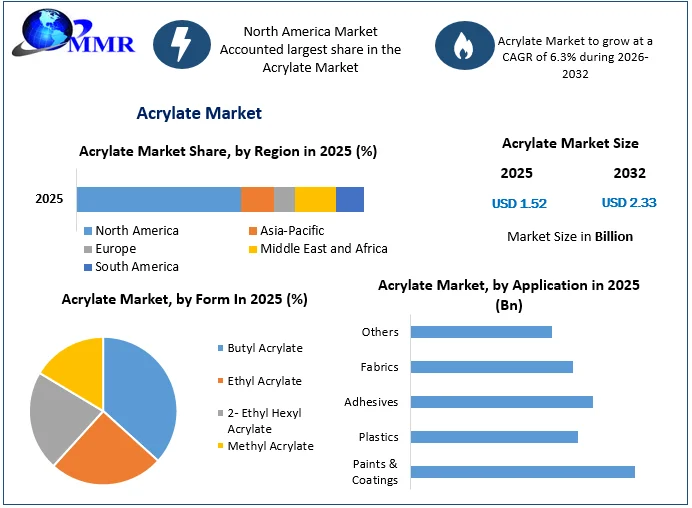
Acrylate Market size was valued at USD 1.52 Billion in 2025 and is expected to reach nearly USD 2.33 Billion by 2032 at a CAGR of 6.3%, signalling steady, volume-backed growth rather than a short-term spike.
Growth is driven by downstream demand in coatings, adhesives, sealants, plastics and specialty materials where acrylates deliver durability, flexibility and performance.
Capacity additions and debottlenecking projects aim to keep pace with demand while managing feedstock and energy volatility.
Sustainability, VOC rules and circular-economy agendas are reshaping product portfolios and investment priorities across key regions.
Competitive moves by producers focus on securing raw materials, upgrading technology, and targeting higher-margin specialty acrylate segments.
Why This Matters Now
Chemical producers, investors and procurement leaders face a tightening landscape in acrylates. A market moving from USD 1.52 Billion in 2025 to nearly USD 2.33 Billion by 2032 at 6.3% CAGR means acrylates will remain central to coatings, adhesives and polymer chains, and cannot be treated as a secondary product line.
For industrial buyers, this growth rate translates into persistent competition for high-quality supply, more complex contract negotiations and closer attention to specification, sustainability profiles and long-term price exposure. For producers, it means allocating capital between commodity volumes and higher-value specialty derivatives under rising regulatory pressure.
Market Overview
Acrylates size are key building-block monomers used to make polymers and copolymers for paints, varnishes, pressure-sensitive adhesives, construction sealants, textiles and plastics. Their chemistry supports gloss, flexibility, adhesion and weather resistance, making them indispensable in downstream applications.
The forecast to nearly USD 2.33 Billion by 2032 at 6.3% CAGR points to a well-established, industrially embedded market. Acrylate consumption tracks construction, automotive, packaging and industrial output cycles, but the breadth of applications gives the market resilience across demand swings in any single sector.
What changed over the last few years is the shift from pure volume play to performance and compliance. Customers increasingly ask for low-VOC, waterborne and higher-functionality acrylate formulations that meet stricter environmental rules and deliver better lifecycle performance.
Key Trends Driving Growth
The primary growth driver is downstream coatings and adhesives demand. Infrastructure expansion, renovation cycles, automotive refinishing and industrial maintenance all require acrylic-based systems, keeping acrylates near the core of procurement budgets in paints and adhesives.
At the same time, regulatory tightening around emissions and worker exposure accelerates the transition to waterborne and low-VOC solutions. Acrylate-based polymers often form the backbone of these systems, pushing formulators to invest in better grades and tailored monomer blends.
Sustainability agendas are another major trend. Customers in construction, packaging and consumer goods industries are pushing for materials that support recyclability, lower carbon footprints and longer service life. Acrylate chemistry offers flexibility to design more durable, lower-emission coatings and sealants, creating opportunities for specialty grades.
Request a Free Sample Copy or View Report Summary: https://www.maximizemarketresearch.com/request-sample/3468/
Segment Insights
Dominant Segment – Coatings & Paints
Coatings and paints are the dominant segment for acrylates, absorbing large volumes in architectural, industrial and automotive applications. This dominance means that construction cycles, housing renovation and industrial investments directly influence acrylate demand and pricing power.Fastest-Growing Segment – Specialty Acrylates for High-Performance Applications
Specialty acrylates used in high-performance coatings, advanced adhesives, electronics, automotive and specialty plastics represent the fastest-growing segment. Buyers in these areas demand tighter specifications, better UV and chemical resistance, and more precise property control, supporting premium pricing and margin expansion.Feedstock & Base Chemicals
Acrylate production relies on key feedstocks and base petrochemicals. Volatility in crude and derivatives affects costs, while producers look for efficiency gains, alternative routes and integration with upstream assets to stabilize margins and secure supply.Downstream & End-Use Diversity
Beyond coatings and adhesives, acrylates support textiles, paper, leather, construction chemicals and certain personal care formulations. This end-use diversity helps smooth cyclical fluctuations, but also forces producers to manage complex specification sets and technical service demands.
Regional Growth Story
In the United States, acrylate production benefits from established petrochemical infrastructure and robust demand from construction, automotive and industrial coatings. Regulatory pressure around VOCs and environmental impact drives innovation in waterborne and specialty acrylate formulations, reshaping portfolios and capital plans.
Germany and the wider European market emphasize sustainability and regulatory compliance. Producers and buyers must align with stringent EU chemical regulations and carbon reduction goals, pushing adoption of more advanced acrylate systems and encouraging capacity optimization rather than unchecked volume expansion.
China and India represent major growth zones, driven by rapid urbanization, infrastructure projects and expanding manufacturing bases. Their demand for architectural and industrial coatings, packaging and consumer goods increases acrylate consumption, while local producers and multinationals invest in new capacity and technology upgrades.
Japan and South Korea focus more on high-performance applications, including automotive, electronics and specialty materials. Acrylate suppliers in these markets compete aggressively on innovation and quality, strengthening the role of specialty grades and advanced production technologies.
Competitive Landscape
The competitive landscape includes global chemical majors, regional producers and specialized acrylate manufacturers. Larger players often enjoy integrated feedstock positions and broad downstream relationships, giving them leverage in pricing discussions and long-term contracts.
Partnerships and capacity expansions signal strategic bets on where demand will grow fastest. When a producer invests in a new acrylate reactor or debottlenecking project in a particular region, it signals confidence in local downstream industries and an intent to capture share, potentially tightening supply for rivals.
Moves into specialty acrylates reflect a push away from commodity competition. Producers that divert capital toward differentiated grades, technical service capabilities and application development aim to improve margins and lock in key customers whose specifications and performance needs are complex.
Recent Developments
Capacity expansions and optimization projects in key chemical hubs, aimed at meeting rising coatings and adhesives demand while managing feedstock volatility.
Portfolio shifts toward low-VOC, waterborne and specialty acrylate products aligned with regulatory and sustainability requirements.
Increased collaboration between acrylate producers and downstream formulators to co-develop high-performance systems for construction, automotive and industrial uses.
Trade and logistics adjustments as producers re-evaluate regional supply strategies in light of energy price swings and geopolitical disruptions.
Strategic Implications
For chemical producers, acrylates remain a strategic building block in the coatings and adhesives value chain. Decisions about feedstock integration, plant location and product mix will determine future pricing power and resilience against demand and cost shocks.
Procurement leaders in coatings and adhesives must manage exposure to acrylate price cycles and specification changes. Long-term agreements, diversified supplier bases and closer technical collaboration help secure supply and support innovation in finished formulations.
Investors should view acrylates as a steady-growth segment with meaningful upside in specialty grades and sustainability-driven product redesign. However, they must weigh regulatory risk, energy and feedstock volatility, and the need for ongoing capital expenditure to maintain competitive technology and capacity.
Future Outlook
With the Acrylate Market set to grow from USD 1.52 Billion in 2025 to nearly USD 2.33 Billion by 2032 at a 6.3% CAGR, the next decade will be shaped less by sheer volume and more by quality, compliance and value-added applications. Producers that commit to feedstock resilience, specialty product development and sustainability-driven innovation will secure stronger positions in key downstream chains.
The decisive advantage will go to companies and buyers that treat acrylates as a strategic lever in high-performance, low-emission materials strategies—while those that view them as interchangeable commodities will face margin pressure, supply risk and shrinking relevance in the next wave of coatings and materials innovation.
Related Reports
Commercial Single-ply Membrane Market https://www.maximizemarketresearch.com/market-report/commercial-single-ply-membrane-market/256671/
Global Smart Coatings Market https://www.maximizemarketresearch.com/market-report/global-smart-coatings-market/6341/
Global Photosensitive Materials Market https://www.maximizemarketresearch.com/market-report/global-photosensitive-materials-market/82483/
Analyst Perspective
Ankita Kagawade, Analyst at Maximize Market Research, sees acrylates at a critical inflection in the chemicals landscape. “As coatings, adhesives and specialty materials pivot toward higher performance and lower emissions, acrylate producers that align capacity, technology and sustainability with these downstream priorities will shape pricing, supply and innovation across the sector,” Ankita Kagawade
About Maximize Market Research
Maximize Market Research Pvt. Ltd. (MMR) is a global market research and consulting company that provides reliable, data-focused, and practical business insights. The firm serves a wide range of industries, including healthcare, pharmaceuticals, technology, automotive, electronics, chemicals, personal care, and consumer goods. Through market forecasts, competitive analysis, strategic consulting, and industry impact assessments, MMR helps organizations understand changing market conditions, identify growth opportunities, and make informed business decisions for long-term success.
2nd Floor, Navale IT Park Phase 3
Pune Banglore Highway, Narhe
Pune, Maharashtra 411041, India
+91 9607365656
sales@maximizemarketresearch.com
