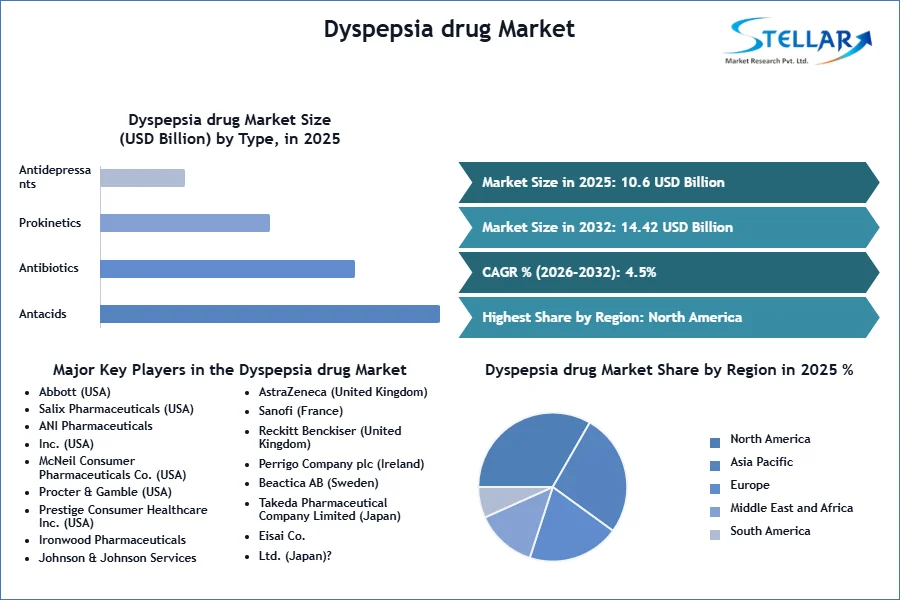
Dyspepsia Drug Market: Innovation in GI Therapies Shapes the Future of Digestive Healthcare
Digestive disorders have become one of the fastest-growing global healthcare concerns, driven by changing dietary habits, increasing stress levels, aging populations, and a rising prevalence of gastrointestinal diseases. Among these conditions, dyspepsia—commonly known as indigestion—affects millions of people worldwide, creating significant demand for effective pharmaceutical treatments. As healthcare providers increasingly emphasize early diagnosis and personalized treatment, the Dyspepsia Drug Market is witnessing notable growth supported by advancements in drug development, improved patient awareness, and expanding healthcare infrastructure.
According to the latest Dyspepsia Drug Market Report by Stellar Market Research, the industry is poised for sustained expansion throughout the forecast period as pharmaceutical companies invest in innovative therapies, combination treatments, and improved formulations to address both functional and organic dyspepsia.
Rising Burden of Gastrointestinal Disorders Fuels Market Growth
Dyspepsia is one of the most common gastrointestinal complaints globally, affecting approximately 20–30% of adults at some point in their lives. The condition is associated with symptoms such as upper abdominal discomfort, bloating, nausea, heartburn, and early satiety. While lifestyle factors remain major contributors, increasing cases linked to Helicobacter pylori infections, gastroesophageal reflux disease (GERD), peptic ulcers, and chronic medication use continue to drive demand for prescription and over-the-counter medications.
Healthcare systems are also placing greater emphasis on preventive digestive care, encouraging earlier diagnosis and treatment. This shift has expanded patient access to pharmacological therapies while creating new opportunities for pharmaceutical manufacturers.
𝐃𝐨𝐰𝐧𝐥𝐨𝐚𝐝 𝐅𝐫𝐞𝐞 𝐏𝐃𝐅 𝐁𝐫𝐨𝐜𝐡𝐮𝐫𝐞: https://www.stellarmr.com/report/req_sample/dyspepsia-drug-market/2826
Pharmaceutical Innovation Strengthens Competitive Advantage
The dyspepsia treatment landscape has evolved considerably beyond conventional antacids. Drug manufacturers are focusing on therapies that deliver faster symptom relief while addressing the underlying causes of digestive disorders.
Several therapeutic classes continue to dominate the market, including:
Proton Pump Inhibitors (PPIs)
Histamine-2 Receptor Antagonists (H2 Blockers)
Antacids
Prokinetic Agents
Antibiotic combinations for Helicobacter pylori eradication
Gastroprotective medications
The increasing adoption of combination therapies has significantly improved treatment outcomes, especially for patients with chronic and recurrent dyspepsia.
In parallel, research into novel drug delivery systems, extended-release formulations, and personalized medicine approaches is expected to reshape future treatment protocols.
Growing OTC Drug Adoption Expands Consumer Access
One of the most significant transformations in the market is the growing preference for over-the-counter (OTC) digestive medications. Consumers increasingly seek convenient solutions for managing mild to moderate symptoms without immediate physician consultation.
Factors accelerating OTC adoption include:
Increasing health awareness
Expansion of retail pharmacy networks
Growth of online pharmacies
Affordable pricing
Easy product availability
Strong consumer trust in established brands
Digital healthcare platforms have further simplified medication access through online consultations and home delivery services, particularly across emerging economies.
Technology Is Improving Gastrointestinal Disease Management
Digital transformation is influencing digestive healthcare beyond pharmaceuticals. Artificial intelligence-assisted diagnostics, electronic health records, telemedicine, and digital symptom-tracking applications are enabling physicians to identify gastrointestinal disorders earlier and recommend targeted treatment strategies.
Meanwhile, pharmaceutical companies are using advanced analytics and real-world evidence to optimize clinical trials, improve patient adherence, and accelerate new product development.
Manufacturing technologies have also enhanced production efficiency while ensuring regulatory compliance and consistent drug quality across global markets.
Asia-Pacific Emerges as a High-Growth Market
North America continues to represent a mature market owing to advanced healthcare infrastructure, high diagnosis rates, and strong pharmaceutical innovation.
However, Asia-Pacific is emerging as one of the fastest-growing regional markets due to several favorable factors:
Rapid urbanization
Increasing disposable income
Rising prevalence of digestive disorders
Expanding healthcare access
Government healthcare investments
Growing pharmaceutical manufacturing capacity
Countries such as China and India are witnessing substantial demand for affordable gastrointestinal medications, supported by expanding hospital networks and improved health insurance coverage.
Europe also maintains a strong position through established healthcare systems, aging demographics, and increasing awareness regarding gastrointestinal disease management.
Key Market Trends Influencing Industry Growth
Several structural trends are reshaping the global Dyspepsia Drug Market:
Personalized Treatment Approaches
Healthcare providers are increasingly tailoring therapy based on patient symptoms, medical history, and underlying causes rather than relying solely on standardized treatment protocols.
Growing Focus on H. pylori Eradication
Improved diagnostic testing has increased identification of Helicobacter pylori infections, leading to greater adoption of targeted antibiotic combination therapies.
Expansion of Digital Pharmacies
E-commerce platforms and online healthcare providers continue to simplify access to gastrointestinal medications, particularly in developing countries.
Increasing R&D Investments
Pharmaceutical companies are allocating greater resources toward developing innovative gastrointestinal therapies with improved safety profiles and enhanced efficacy.
Patient-Centered Healthcare
Healthcare providers increasingly emphasize symptom management, quality of life, and long-term disease prevention, supporting sustained pharmaceutical demand.
Competitive Landscape
The Dyspepsia Drug Market remains highly competitive, with leading pharmaceutical companies pursuing product innovation, strategic collaborations, regulatory approvals, and geographic expansion to strengthen their market positions.
Companies are actively investing in:
Research and development
Clinical trials
New drug formulations
Strategic acquisitions
Global commercialization strategies
Manufacturing expansion
Digital patient engagement
The growing availability of generic medications has intensified pricing competition while simultaneously expanding treatment accessibility across developing economies.
Opportunities for Investors and Healthcare Stakeholders
The market presents attractive opportunities across multiple segments, including pharmaceutical manufacturing, specialty gastrointestinal therapeutics, digital healthcare, and retail pharmacy networks.
Investment opportunities are expected to emerge from:
Expansion into emerging markets
Development of innovative digestive therapies
AI-assisted gastrointestinal diagnostics
Digital health integration
Advanced drug delivery technologies
Sustainable pharmaceutical manufacturing
Organizations capable of combining innovation with affordability are expected to gain long-term competitive advantages.
𝐃𝐨𝐰𝐧𝐥𝐨𝐚𝐝 𝐅𝐫𝐞𝐞 𝐏𝐃𝐅 𝐁𝐫𝐨𝐜𝐡𝐮𝐫𝐞: https://www.stellarmr.com/report/req_sample/dyspepsia-drug-market/2826
Future Outlook
The future of the Dyspepsia Drug Market will be shaped by continuous pharmaceutical innovation, increasing healthcare expenditure, expanding patient awareness, and improvements in digestive disease diagnosis. As gastrointestinal disorders become increasingly prevalent worldwide, demand for effective, accessible, and patient-friendly treatment solutions is expected to remain strong throughout the forecast period.
Technological advancements, regulatory support for innovative therapies, and the integration of digital healthcare platforms will further enhance treatment outcomes and market expansion. Pharmaceutical companies that prioritize research, personalized medicine, and global market expansion are well positioned to capitalize on the evolving opportunities within the digestive healthcare industry.
As healthcare systems continue shifting toward preventive care and early intervention, the Dyspepsia Drug Market is expected to remain a critical component of the broader gastrointestinal therapeutics landscape.
Explore the complete Dyspepsia Drug Market Report from Stellar Market Research to gain detailed insights into market size, competitive analysis, regional trends, growth opportunities, and future industry forecasts.
