The Mexico Bike Sharing Market is emerging as a key component of the country’s urban mobility transformation, driven by increasing traffic congestion, rising environmental concerns, and government initiatives promoting sustainable transportation. As cities across Mexico look to modernize their transit systems, bike-sharing programs are gaining traction as an efficient, eco-friendly, and cost-effective solution.
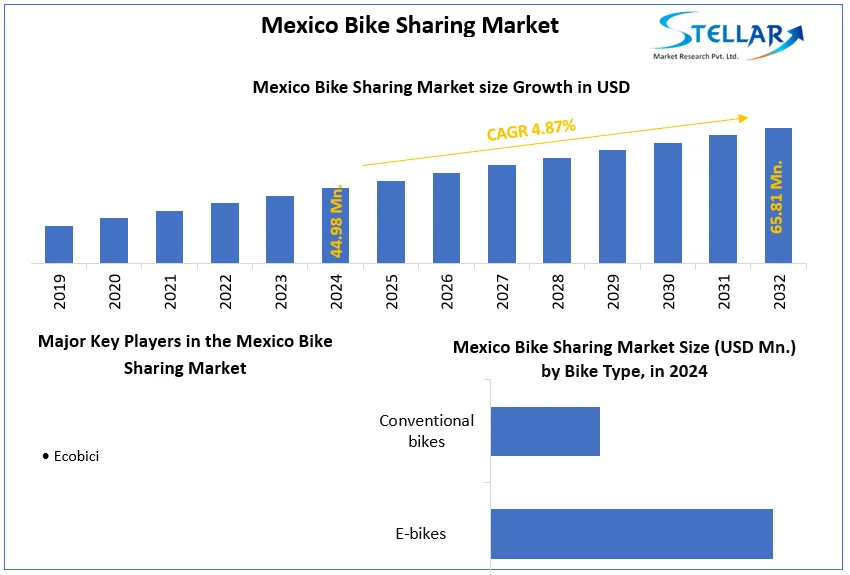
Mexico Bike Sharing Market size was valued at US$ 44.98 Million in 2024 and the total Mexico Bike Sharing Market revenue is expected to grow at 4.87% through 2025 to 2032, reaching nearly US$ 65.81 Million.
With growing adoption in major metropolitan areas and the integration of smart technologies, bike sharing is becoming an essential part of Mexico’s evolving mobility ecosystem.
A Market Shaped by Urbanization and Smart Mobility
A defining trend in the Mexico bike sharing market is the shift toward integrated and technology-driven urban mobility solutions. Rapid urbanization, particularly in cities like Mexico City, Guadalajara, and Monterrey, has led to increased congestion and demand for alternative transportation options.
Bike-sharing systems offer a flexible and sustainable mode of transport for short-distance travel, complementing public transit networks. The integration of mobile apps, GPS tracking, and digital payment systems has significantly improved user convenience and accessibility.
Docked and dockless bike-sharing models are both gaining popularity, catering to diverse urban needs and user preferences.
Key Market Insights
- Bike sharing is expanding rapidly in major Mexican cities.
- Government initiatives are supporting sustainable urban mobility solutions.
- Dockless systems are gaining traction due to flexibility and ease of use.
- Integration with public transport is improving accessibility.
- Mobile apps and digital payments are enhancing user experience.
- Demand is driven by urban commuters and tourists.
- Environmental awareness is increasing adoption rates.
𝐃𝐨𝐰𝐧𝐥𝐨𝐚𝐝 𝐅𝐫𝐞𝐞 𝐏𝐃𝐅 𝐁𝐫𝐨𝐜𝐡𝐮𝐫𝐞: https://www.stellarmr.com/report/req_sample/Mexico-Bike-Sharing-Market/98
Market Drivers Accelerating Growth
1. Rising Urban Congestion
Increasing traffic congestion in major cities is driving demand for alternative transportation solutions like bike sharing.
2. Government Support for Sustainable Transport
Policies promoting low-emission transport and smart city initiatives are boosting market growth.
3. Growth of Digital and Smart Technologies
Mobile apps, GPS tracking, and data analytics are enhancing operational efficiency and user convenience.
Market Challenges and Restraints
1. Infrastructure Limitations
Limited availability of dedicated cycling lanes and parking facilities can restrict market growth.
2. Operational and Maintenance Costs
Managing large fleets of bikes and ensuring maintenance can be challenging for operators.
Technology and Sustainability Trends
Technology is at the core of the Mexico bike sharing market. Companies are leveraging IoT-enabled bikes, GPS tracking, and real-time data analytics to optimize fleet management and improve user experience.
Sustainability is a major driver, with bike sharing contributing to reduced carbon emissions, improved air quality, and lower traffic congestion. Electric bikes (e-bikes) are also gaining popularity, offering extended range and convenience for users.
Integration with smart city platforms and public transport systems is further enhancing the efficiency of bike-sharing networks.
𝐃𝐨𝐰𝐧𝐥𝐨𝐚𝐝 𝐅𝐫𝐞𝐞 𝐏𝐃𝐅 𝐁𝐫𝐨𝐜𝐡𝐮𝐫𝐞: https://www.stellarmr.com/report/req_sample/Mexico-Bike-Sharing-Market/98
Regional Insights: Mexico City Leads Adoption
Mexico City is the largest and most developed bike-sharing market in the country, supported by strong government initiatives and a well-established cycling infrastructure. The city’s bike-sharing programs have become a model for other regions.
Guadalajara and Monterrey are also witnessing significant growth, driven by urban development and increasing awareness of sustainable transportation.
Other cities are gradually adopting bike-sharing systems, creating new opportunities for market expansion.
Recent Industry Developments
- Mexico City Government (2025): Expanded bike-sharing infrastructure and cycling lanes to promote sustainable mobility.
- Mobike (2024): Increased its presence in Latin America, including Mexico, enhancing urban mobility options.
- Lime (2025): Expanded its e-bike services in key Mexican cities.
- Bird (2024): Strengthened its micromobility offerings, including bike-sharing solutions.
- World Bank (2025): Supported sustainable urban mobility initiatives in Latin America.
Competitive Landscape
The Mexico bike sharing market is moderately competitive, with a mix of global micromobility companies and local operators. Companies are focusing on technology integration, fleet expansion, and partnerships with municipalities to strengthen their market position.
Operators are also exploring subscription models, dynamic pricing, and value-added services to attract and retain users. Collaboration with public transport authorities is a key strategy for improving accessibility and scalability.
Analyst Perspective
A senior market analyst notes:
“Mexico’s bike-sharing market is gaining momentum as cities prioritize sustainable and efficient mobility solutions. The integration of digital technologies and supportive government policies will be critical in driving long-term growth.”
Future Outlook
The Mexico Bike Sharing Market is expected to witness strong growth in the coming years, driven by urbanization, environmental awareness, and technological advancements. The expansion of cycling infrastructure and integration with public transport systems will further enhance market potential.
Electric bikes and smart mobility platforms are likely to play a significant role in shaping the future of the market. As competition intensifies, companies will need to focus on operational efficiency, user experience, and sustainability.
Overall, the Mexico bike sharing market represents a promising opportunity for operators, investors, and stakeholders looking to capitalize on the growing demand for sustainable urban mobility solutions.
