Key Highlights
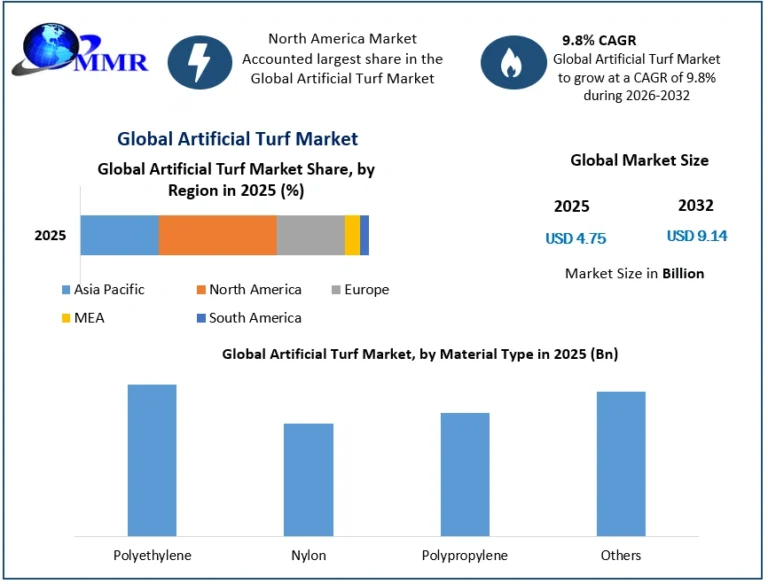
Global Market Scale and Valuation: Global Artificial Turf Market valued at USD 7.30 Billion in 2025.
Forward Projection: Projected to scale steadily to USD 13.70 Billion by 2033, advancing at an 8.3% CAGR.
Structural Cost Reconfiguration: Rising water utility tariffs and stringent climate regulations are driving a massive shift toward synthetic lawns, reducing long-term maintenance costs by up to 70% compared to natural grass.
Segment Leadership: The sports field application domain—spanning high-impact contact sports like football, soccer, and rugby—held a dominant market share of 63.1%, driving the absolute baseline of aggregate heavy-duty polyolefin extrusion.
Supply Chain Bottlenecks: Manufacturing processes rely directly on precise polymer compounding, specialized UV-stabilizer additives, and complex multi-layered backing structures, leaving operations exposed to oil-derived raw material price shocks.
Key Regional Locomotive: The Asia-Pacific region dominated the global marketplace with a 32.2% revenue share, fueled by aggressive civic greening programs and massive sports infrastructure targets across China and India.
Why This Matters Now
Global civil engineering groups and commercial landscaping procurement teams can no longer view synthetic grass through the lens of simple cosmetic flooring. For boardroom executives, municipal park planners, and large-scale architectural buyers, the artificial turf network represents a critical component under intense climate and environmental pressure. The rapid transition toward water-optimized urban zones and weather-resilient athletic complexes requires immediate asset optimization. Compounding facilities that successfully balance volatile polymer resin prices with rising demand for fully recyclable, plant-based turf fibers will protect their structural margins. Meanwhile, legacy distribution networks that fail to implement heat-reducing infills and advanced UV-resistant treatments risk facing rising material degradation costs and sudden project disqualifications.
Market Overview
The Global Artificial Turf Market is evolving from standard, low-tier recreational grass mats into a highly specialized material segment split between high-performance athletic surfaces and ultra-durable architectural landscape installations. Achieving a baseline valuation of USD 7.30 Billion in 2025, the industry’s projected expansion to USD 13.70 Billion by 2033 underscores a global corporate reliance on climate resilience, minimal irrigation requirements, and optimized lifecycle overheads. As a premium alternative to natural lawns, the material is actively displacing traditional turfgrass arrays in automated civic layouts due to its inherent capacity to withstand heavy foot traffic, resist extreme weather variations, and eliminate the need for chemical fertilizers or pesticides.
Advanced polymer chemistry and integrated multi-layer backing configurations are fundamentally altering the basic overhead costs of the industry. Processing facilities are implementing advanced tufting technologies and highly automated polyurethane/latex coating lines to maintain rapid production speeds without risking blade shedding or pile distortion during high-impact sports usage. These continuous processing updates, combined with a significant industry shift toward fully recyclable monofilament designs, enable advanced turf extrusion plants to maximize total volume yields. This operational evolution ensures full compliance with strict cross-border safety rules and international sports federation performance standards.
Key Trends Driving Growth
The systematic displacement of high-maintenance natural grass by advanced polyethylene (PE) and nylon synthetic surfaces across school athletic districts and professional stadiums serves as a powerful growth engine. Facility management teams prioritize automated turf extrusion systems because they provide consistent, weather-independent playing conditions and lower direct maintenance expenses over a field’s operational lifespan.
Rapid expansion within international residential construction and urban commercial complexes drives significant volume demand for specialized, soft-texture landscape lines. Landscape architecture teams rely on realistic, multi-tonal polyolefin compounds to build premium rooftop gardens, corporate courtyard retreats, and pet-friendly recreational spaces where year-round aesthetic appeal remains mandatory.
Escalating investment in regional water preservation infrastructure creates a steady pipeline of specialized municipal turf orders. The concentration of strict water-rationing framework codes and localized drought-management zones within major urban centers amplifies the continuous operational demand for low-irrigation landscaping arrays and durable public park surfacing.
Furthermore, shifting consumer safety priorities and rising ecological awareness force global operators to transition toward advanced, eco-friendly infill configurations. This structural shift drives manufacturing organizations to invest heavily in modern organic infills (like cork and coconut fibers) and non-toxic, recyclable backing systems to minimize chemical leaching risks and reduce overall heat retention across high-exposure outdoor arenas.
Segment Insights
Dominant Material Segment: Polyethylene (PE) Turf. Controlling over 63% of global volume demand due to its superior softness, realistic grass-like feel, excellent UV protection, and long-term value, this segment remains the central financial driver of the industry. Major buyers include professional sports complexes, residential developers, and landscape designers.
Dominant Application Segment: Sports Fields. Representing the largest single market application by value and volume, driven by rigid governing body testing manuals (such as the updated FIFA and NFL player safety guidelines) that prioritize shock absorption, vertical deformation control, and enhanced drainage performance.
Fastest-Growing Segment: Commercial and Residential Landscaping. This domain is expanding rapidly at an estimated 8.6% CAGR, propelled by the corporate integration of artificial turf walls, office greenery zones, and zero-water residential yard retrofits.
Regional Growth Story
The Asia-Pacific region maintains absolute volume dominance in the global marketplace, capturing a 32.2% revenue share in 2025. This expansion is driven by massive municipal urbanization programs and intensive sports infrastructure mandates across China, India, and Australia. Local development initiatives focused on installing tens of thousands of new soccer and multi-use community fields make the region the primary destination for top-tier global turf manufacturing networks.
North America holds a massive share of high-value, professional-grade athletic field revenue, supported by deep commercial sports frameworks and a highly integrated network of university athletic complexes. The United States market benefits from large-scale stadium renovations and strict water conservation policies in states like California and Arizona, which incentivize residential and commercial properties to replace decorative natural lawns with synthetic grass.
In Europe, industry development is heavily shaped by strict circular economy guidelines and changing microplastic infill regulations. European turf manufacturers focus on optimizing fully recyclable, single-polymer turf assemblies and developing plant-based, biodegradable yarn alternatives to satisfy regional environmental testing rules. Meanwhile, precision texturing and tufting clusters across Germany, the UK, and Italy continue to pioneer advancements in high-resilience, multi-sport indoor layouts and durable urban greening grids.
Competitive Landscape
The global competitive profile features a highly consolidated mix of multinational industrial material groups and specialized sports-flooring brands. Top-tier industry organizations rely on massive manufacturing scale, vertically integrated polymer extrusion and tufting systems, and extensive international installer networks to secure multi-year volume contracts with regional school districts and professional sports franchises.
To insulate their operational margins from volatile oil-derived polymer resin costs, leading producers focus on vertical asset integration and the optimization of large-scale manufacturing centers. Prominent global enterprises—including FieldTurf (Tarkett), AstroTurf, Shaw Sports Turf, TenCate Grass, and CCGrass—maintain dominant international supply routes. These major players deploy licensed formulation systems to deliver application-specific synthetic yarn designs directly to domestic landscape and athletic projects worldwide.
Smaller regional fabricators and localized independent turf laying groups capture targeted market share by providing custom pile heights, specialized DIY installation kits, and flexible shipping timelines. By serving localized residential landscaping and commercial interior design clusters, these mid-sized organizations—including Act Global, SportGroup, Edel Grass, Limonta Sport, Global Syn-Turf, and SIS Pitches—remain critical supply chain partners for domestic real estate developments.
Recent Developments
Vertical Infrastructure Mergers and Acquisitions (2025–2026): Major global private equity groups and material conglomerates close strategic asset buyouts of integrated turf manufacturers to scale sports surfacing operations across premium international commercial lines.
Eco-Friendly, Non-Plastic Turf Systems Scaled (Late 2025): Top-tier turf developers finalize massive product rollouts featuring 100% recyclable backing systems and bio-based fibers derived from post-consumer plastics, achieving a 16% sales jump in environmental procurement programs.
NFL and International Stadium Turf Upgrades (Late 2025): Leading sports surface providers secure prominent stadium re-installations, deploying advanced monofilament technologies engineered specifically to maximize shock absorption and minimize lower-extremity player injuries.
Smart Turf IoT Maintenance Solutions Deployed (Early 2026): Advanced technology suppliers introduce turf layouts embedded with real-time moisture and usage sensors, enabling predictive maintenance tracking and maximizing the operational life of high-traffic commercial installations.
Strategic Implications
For high-volume sports facility developers, automated landscape architectural firms, and precision civil engineering groups, maintaining a resilient and monitored synthetic turf supply chain represents an absolute business priority. Production groups must establish long-term volume agreements and optimize inventory strategies to protect delicate project delivery timelines from sudden upstream polymer resin shortages or international shipping bottlenecks.
National urban planning authorities must view domestic synthetic material processing systems and regional turf distribution networks as vital pillars of resource conservation. Governments that establish clear, uniform safety testing frameworks for non-toxic infills and provide upfront structural incentives for water-saving building designs will successfully attract premium real estate investments while protecting regional climate stability.
Future Outlook
The next competitive era will belong to artificial turf operators who successfully combine absolute manufacturing scale with bio-attributed, fully circular product designs. Corporate structures that direct their long-term development spending toward alternative plant-based raw materials, advanced heat-deflecting yarn profiles, and automated mechanical recycling systems will lock in high-volume supply contracts in tomorrow’s green building economy. Conversely, unhedged component suppliers that stick to unmonitored legacy, non-recyclable multi-material processing routes will face falling profit margins and shrinking access to modern municipal and institutional infrastructure projects.
Analyst Perspective
“The global artificial turf market is entering an era defined by non-negotiable smart integration and predictive processing rules,” says Ankita Kagwade, Analyst at Maximize Market Research. “While traditional high-volume sports field installations continue to secure huge, reliable baseline order volumes, future value expansion is shifting rapidly toward data-connected systems and verified sustainable filter designs. With the global market scaling toward USD 13.70 Billion by 2033, long-term commercial leadership belongs to producers who embed real-time condition sensors directly into their micro-extrusion systems. Moving beyond basic mat fabrication and moving toward automated, performance-driven resource management is now essential for defending processing margins in an increasingly regulated global construction landscape.” – Ankita Kagwade
About Maximize Market Research
Maximize Market Research Pvt. Ltd. (MMR) is a global market research and consulting company that provides reliable, data-focused, and practical business insights. The firm serves a wide range of industries, including healthcare, pharmaceuticals, technology, automotive, electronics, chemicals, personal care, and consumer goods. Through market forecasts, competitive analysis, strategic consulting, and industry impact assessments, MMR helps organizations understand changing market conditions, identify growth opportunities, and make informed business decisions for long-term success.
2nd Floor, Navale IT Park Phase 3
Pune Bangalore Highway, Narhe
Pune, Maharashtra 411041, India
+91 9607365656
