Key Highlights
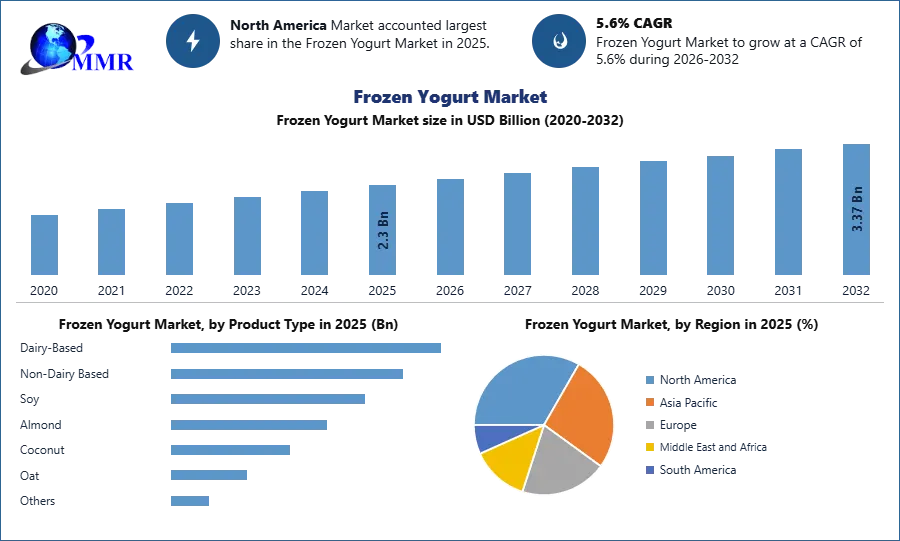
Market valuation expanding from USD 2.3 billion in 2025 to USD 3.37 billion by 2032 at a 5.6% CAGR.
Consumers aged 18–35 command approximately 42% of total sales volume, requiring rapid product customization.
Dairy-based frozen yogurt remains the leading structural variant across global production facilities.
Conventional formulations captured approximately 37% of global consumption metrics in 2025.
Major brands like Menchie’s hold a 13.6% market share, with TCBY following closely at 10.8%.
India’s yogurt processing infrastructure represents an expanding regional segment, targeting a USD 1 billion valuation.
Why This Matters Now The rapid scale-up of the global frozen yogurt market from USD 2.3 billion to USD 3.37 billion places unprecedented technical strain on existing sanitary cold-chain processing lines. Manufacturers can no longer depend on manual step-testing or legacy isolated systems without risking severe product variance or complete batch loss from compromised culture viability. As dominant brands expand their portfolios into non-dairy base matrices like almond and oat milk, plant managers face an immediate mandate to deploy integrated smart manufacturing networks to handle complex clean-in-place (CIP) and agile batch recipe changes.
Market Overview Frozen Yogurt Market Industrial manufacturing within the frozen yogurt market demands exact control over milk pasteurization, live-culture inoculation, precise fermentation times, and high-speed aeration freezing loops. Managing this multi-stage thermodynamic progression at a global scale requires rigid oversight of environmental variables, pasteurization heat curves, and shear rates during freezing.
Driven by an accelerating consumer preference for refreshing, low-fat dessert alternatives, international food conglomerates are consolidating operations. With the market moving toward a USD 3.37 billion valuation by 2032, processors are phasing out legacy, decentralized batch setups. Factories are adopting automated distributed control systems (DCS) to synchronize upstream fermentation with high-speed downstream packaging.
Key Trends Driving Growth A definitive shift is occurring within the global food processing landscape as consumers actively look for low-fat, low-sugar functional desserts that retain premium sensory textures. Demographics aged 18–35 dictate roughly 42% of overall consumption, creating a volatile, trend-driven purchasing pattern that forces manufacturers to rapidly pivot between indulgent flavors and dairy-free formulations.
This behavior requires the integration of industrial IoT (IIoT) sensors and automated dosing networks on the plant floor. Operators utilize these modern architectures to run precise non-dairy lines alongside conventional milk lines. Real-time monitoring allows plants to adjust overrun percentages and stabilizer distribution dynamically, preventing structural separation and ensuring uniform product quality across highly diverse SKUs.
Segment Insights
Dairy-Based Formulations (Dominant Segment): Retaining structural dominance across global factory lines, this segment requires advanced, continuous-churn heat exchangers and automated culture delivery pumps to maintain precise probiotic concentrations.
Conventional Frozen Yogurt (Dominant Category): Controlling nearly 37% of global consumption in 2025, this classification demands high-speed, automated filling systems and integrated case-packing machinery to support low-margin, high-volume retail supply chains.
Non-Dairy and Lactose-Free Variants (Fastest-Growing Segment): Driven by an escalating consumer appetite for plant-based alternatives like soy, almond, and oat bases, this segment requires sophisticated manufacturing execution systems (MES) to manage strict validation procedures and eliminate cross-contamination.
Regional Growth Story North America maintains its dominant position within the global arena, supported by a dense concentration of well-known franchise brands and modern, industrial cold-storage production lines. United States operations lead capital expenditure allocations for smart factory modernization, deploying advanced programmable logic controllers (PLCs) to manage shifting product footprints.
The Asia-Pacific region represents a fast-growing frontier for infrastructure modernization, powered by rapid urbanization and the entry of international franchise networks. India’s domestic yogurt market is on track to reach a USD 1 billion valuation, causing a massive wave of equipment purchases across the region. Regional manufacturers are actively installing automated blending and packaging solutions in China, India, and Japan to establish high-throughput operations capable of supplying both domestic and export channels.
Competitive Landscape The competitive structure of the frozen yogurt market shows a clear shift toward operational agility and precise market positioning. Top-tier operators such as Menchie’s at 13.6%, TCBY at 10.8%, Yogurtland at 10.6%, sweetFrog at 10.4%, and Red Mango at 7.8% are competing not just on flavor profiles, but on the efficiency of their production networks.
At the same time, major multi-national producers including General Mills, Amul, Nestlé, Groupe Lactalis, and The Hain Celestial Group are actively expanding their stock-keeping units (SKUs) to include functional, probiotic-rich variations. For automation providers, this indicates that these companies require flexible, software-driven batching platforms that can instantly modify raw material routing between bulk fermentation tanks.
Furthermore, prominent regional players like Mrs. Fields, Honey Hill Farms, Crest Foods, Nancy’s Yogurt, and Mixmi are optimizing their localized supply networks through targeted production upgrades. This ongoing ecosystem shift means that success is no longer determined by bulk mixing capacity alone. Market leadership is moving toward organizations that use advanced process control to run diverse product lines with minimal changeover downtime.
Recent Developments
Portfolio SKU Diversification: Leading global manufacturers like General Mills, Nestlé, and Amul expanded their active dairy-based production lines, introducing automated dosing systems to support functional, probiotic-rich product formulations.
Middle Eastern Network Expansion: International yogurt franchises executed strategic production and supply network expansions into the Middle East to revitalize mature brand assets across high-growth international hubs.
Plant-Based Line Upgrades: Tier-one processing facilities deployed dedicated non-dairy handling systems to accommodate the rising production volume of almond, soy, and coconut milk matrices.
Strategic Implications For operations executives and plant floor engineers, modern product trends introduce significant operational complexity. Running non-dairy bases like oat or almond milk alongside conventional milk introduces entirely different viscosity levels and freezing requirements into the system.
To prevent expensive product losses and long clean-out times, plants must deploy modern process optimization technologies that connect supervisory control and data acquisition (SCADA) platforms directly with the physical field instruments. This digital foundation enables operators to monitor thermal processing metrics in real time. Systems can adjust extrusion pressures and pumping speeds instantly based on the specific material profile running through the line.
Future Outlook Looking toward 2032, the global frozen yogurt market will separate along lines of factory digitization and software integration. The growing demand for specialized formulas requires strict adherence to food safety standards and reliable batch tracking across multiple distribution channels. Future market leaders will be defined by their ability to deploy predictive maintenance protocols and smart factory setups that adjust to changing recipes automatically while maintaining maximum asset efficiency.
Analyst Perspective “The rapid scale-up of the global frozen yogurt market is driving a direct transition toward highly automated, software-driven process control systems,” says Sidhhi Dole, Research Analyst at Maximize Market Research. “As multi-brand portfolios expand into highly delicate non-dairy and probiotic formulations, companies utilizing smart manufacturing systems to manage variable product runs will capture the highest market share.”
About Maximize Market Research
Maximize Market Research Pvt. Ltd. (MMR) is a global market research and consulting company that provides reliable, data-focused, and practical business insights. The firm serves a wide range of industries, including healthcare, pharmaceuticals, technology, automotive, electronics, chemicals, personal care, and consumer goods. Through market forecasts, competitive analysis, strategic consulting, and industry impact assessments, MMR helps organizations understand changing market conditions, identify growth opportunities, and make informed business decisions for long-term success.
2nd Floor, Navale IT Park Phase 3
Pune Banglore Highway, Narhe
Pune, Maharashtra 411041, India
+91 9607365656
sales@maximizemarketresearch.com
