Key Highlights
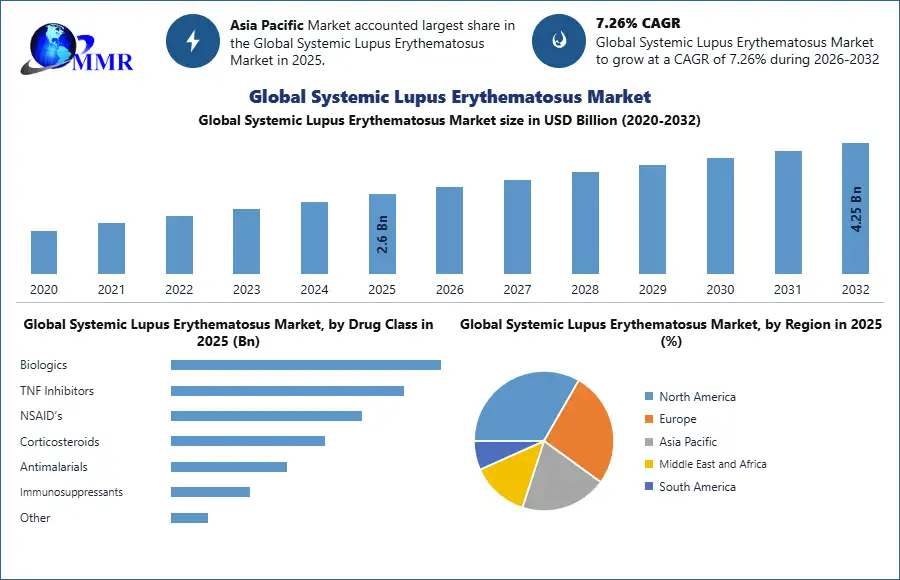
Market valuation expanding from USD 2.6 billion in 2025 to USD 4.25 billion by 2032 at a 7.26% CAGR.
Biologics designated as the dominant segment, forcing a structural migration toward advanced automated process control.
North America positions itself as the leading regional hub through extensive smart factory deployment and automated production infrastructure.
Subcutaneous and targeted self-injectable formulations require specialized, high-precision robotic fill-finish lines.
Industrial IoT and digital twin technologies optimize complex critical process parameters inside high-yield cell culture bioreactors.
Distributed Control Systems (DCS) and strict operational technology (OT) cybersecurity frameworks guarantee batches adhere to regulatory safety standard mandates.
Why This Matters Now
The manufacturing of targeted therapeutics for autoimmune diseases has arrived at a critical operational threshold where manual oversight can no longer satisfy demand or precision requirements. Escalating global disease prevalence requires a total overhaul of traditional pharmaceutical facilities into digitized, automated smart factories capable of high-fidelity molecular synthesis. For plant managers and operations executives, this transformation is driven by the immediate need to eliminate batch failures, lower production cycles, and sustain absolute regulatory compliance.
As the complexity of next-generation monoclonal antibodies and biological therapies increases, traditional batch processing presents massive financial risks. A single deviation in temperature, pH, or dissolved oxygen within a cell culture environment can destroy an entire production cycle, resulting in millions of dollars in lost revenue. Consequently, the adoption of Industry 4.0 principles, smart manufacturing frameworks, and automated process control is no longer a luxury but a core operational mandate to ensure commercial viability and market survival.
Market Overview
The global systemic lupus erythematosus treatment market Size was valued at USD 2.6 billion in 2025 and is projected to expand at a compound annual growth rate (CAGR) of 7.26%, reaching USD 4.25 billion by 2032. This sustained financial trajectory is structurally bound to the scaling up of advanced production lines across major pharmaceutical hubs. The complex, highly heterogeneous nature of SLE demands highly specialized, targeted molecular therapies that are difficult to synthesize without sophisticated automation frameworks.
What changed in this market is the shift from broad-spectrum small-molecule immunosuppressants to highly customized, cell-derived targeted biologics. Why now? The accelerating clinical validation of next-generation monoclonal antibodies requires manufacturing environments that operate with extreme environmental consistency, which can only be achieved via automated process controls. Who benefits from this transition are the manufacturing leaders and technology investors who deploy scalable industrial automation to lower total cost of ownership. What happens next is a comprehensive upgrade of legacy operational technology infrastructure, replacing isolated machinery with unified, hyper-connected industrial IoT ecosystems.
Key Trends Driving Growth
Industrial IoT (IIoT) adoption represents a major catalyst within the therapeutic manufacturing sector. Real-time sensor arrays are now directly integrated into the fermentation and cell harvest stages, streaming continuous operational data directly to centralized Supervisory Control and Data Acquisition (SCADA) networks. This granular level of environmental transparency allows plant operators to track critical process parameters instantly, stopping deviations before they ruin a batch.
Simultaneously, digital twin deployment is altering how production facilities scale up their operations from laboratory environments to full commercial execution. By creating an identical, virtual representation of a physical bioreactor, automation engineers can run predictive simulations to determine optimal agitation speeds, nutrient feed rates, and thermal profiles. This application of digital twins eliminates the trial-and-error approach to scale-up, reducing development timelines and maximizing facility throughput.
Predictive maintenance advancements are also keeping production facilities online by reducing unexpected mechanical downtime. Vibration sensors, thermal cameras, and acoustic monitoring tools are attached to high-speed centrifuges, formulation pumps, and sterile filtration units. Machine learning algorithms analyze this sensory output to identify early mechanical wear, allowing plant managers to schedule repairs during planned maintenance windows, safeguarding continuous production lines.
Segment Insights
Biologics (Dominant Segment): This product segment commands the largest share of the market, requiring intensive capital investments in automated continuous manufacturing architectures, automated perfusion bioreactors, and real-time analytical technology (PAT) to sustain high-yield monoclonal antibody production.
Targeted and Subcutaneous Formulations (Fastest-Growing Segment): Driven by expanding regulatory approvals for patient-administered home use, this segment requires the rapid integration of high-speed robotic fill-finish lines, vision-guided inspection systems, and automated packaging cells to handle fragile delivery systems safely.
Regional Growth Story
North America dominates the global systemic lupus erythematosus treatment market, a position sustained by massive capital allocations toward advanced manufacturing technologies and smart factory frameworks. In the United States, pharmaceutical operators are actively modernizing legacy facilities with modern Programmable Logic Controllers (PLC) and integrated DCS architectures to meet strict FDA data integrity mandates. This continuous injection of capital solidifies the region’s position as the leading epicenter for advanced automation integration.
Meanwhile, major manufacturing economies across Europe and Asia-Pacific, such as Germany, China, Japan, India, and South Korea, are rapidly accelerating their smart manufacturing initiatives. These nations are prioritizing the domestic production of complex biologics by subsidizing large-scale industrial digitization projects. The deployment of automated process controls and advanced robotics across these regions is driving down manufacturing costs, increasing global supply chain elasticity, and expanding access to vital autoimmune therapies.
Competitive Landscape
The competitive landscape is defined by a technological race to implement flexible, modular manufacturing platforms that can adapt to changing product demand. Top tier biopharmaceutical enterprises are moving away from traditional, single-product rigid piping systems, adopting single-use automated bioprocess systems instead. This operational shift signals a broader industry move toward greater production agility, allowing companies to transition lines between different therapeutic batches with minimal downtime.
Ecosystem positioning now depends on how effectively a company integrates its Manufacturing Execution Systems (MES) with enterprise-level resource planning software. Organizations that successfully bridge the gap between operational technology on the factory floor and information technology in the corporate office can achieve total supply chain visibility. This holistic integration allows manufacturers to optimize raw material usage, coordinate precise production schedules, and respond instantly to changing regulatory or market demands.
Recent Developments
In May 2024, GSK secured U.S. FDA approval for a 200 mg subcutaneous formulation of Benlysta (belimumab) for pediatric patients aged five years and older, driving an immediate manufacturing requirement for automated, high-precision subcutaneous syringe fill-finish assembly lines.
Global production plants are introducing automated inline buffer formulation modules, cutting down physical floor space requirements while utilizing precise dosing pumps to ensure chemical consistency.
Leading system integrators are actively embedding advanced industrial cybersecurity layers directly into SCADA networks, protecting proprietary batch recipes from external cyber threats and intellectual property theft.
Strategic Implications
The deployment of AI-driven automation trends across modern production floors represents a fundamental change in how manufacturing leaders view quality control. Machine learning models now monitor historical batch datasets alongside real-time sensor streams, predicting final product quality hours before a cycle ends. This predictive capability allows operators to make subtle, automated adjustments to nutrient or oxygen feeds, saving batches that would otherwise fail quality standards.
However, this increased connectivity introduces serious operational technology vulnerabilities, making industrial cybersecurity initiatives a major boardroom priority. As production lines become more reliant on cloud-based analytics and remote monitoring tools, the risk of disruptive cyberattacks grows. Manufacturers are deploying zero-trust network architectures, strict network segmentation, and hardware-based encryption protocols to shield critical DCS and PLC assets from unauthorized access.
Future Outlook
The manufacturing environment for autoimmune treatments will continue to move toward autonomous industrial operations. Over the next decade, facilities will rely less on manual human intervention, utilizing self-optimizing control loops that adjust process variables autonomously using real-time analytical data. This shift will allow companies to run highly efficient, continuous production cycles that maximize asset utilization and lower operational costs.
Ultimately, the market will split based on technological maturity, leaving no room for operational inefficiency. The industry is moving toward a defining milestone where true digital transformation separates agile, highly profitable market leaders from slow-moving laggards. Future market dominance belongs to operators who build fully automated, digitally integrated, and cyber-secure production ecosystems capable of delivering high-quality therapeutics at scale.
Analyst Perspective
“The global systemic lupus erythematosus treatment market has entered a phase where production efficiency is tied directly to process automation,” states Komal Patil, Research Analyst. “As the industry shifts toward specialized biologics and user-friendly subcutaneous formulations, manufacturers must move away from legacy batch architectures. Success requires adopting Industry 4.0 standards, utilizing digital twins for bioreactor scale-up, and installing advanced robotic fill-finish lines to protect product purity and drive long-term profitability.”
About Maximize Market Research
Maximize Market Research Pvt. Ltd. (MMR) is a global market research and consulting company that provides reliable, data-focused, and practical business insights. The firm serves a wide range of industries, including healthcare, pharmaceuticals, technology, automotive, electronics, chemicals, personal care, and consumer goods. Through market forecasts, competitive analysis, strategic consulting, and industry impact assessments, MMR helps organizations understand changing market conditions, identify growth opportunities, and make informed business decisions for long-term success.
2nd Floor, Navale IT Park Phase 3
Pune Banglore Highway, Narhe
Pune, Maharashtra 411041, India
+91 9607365656
sales@maximizemarketresearch.com
