Key Highlights
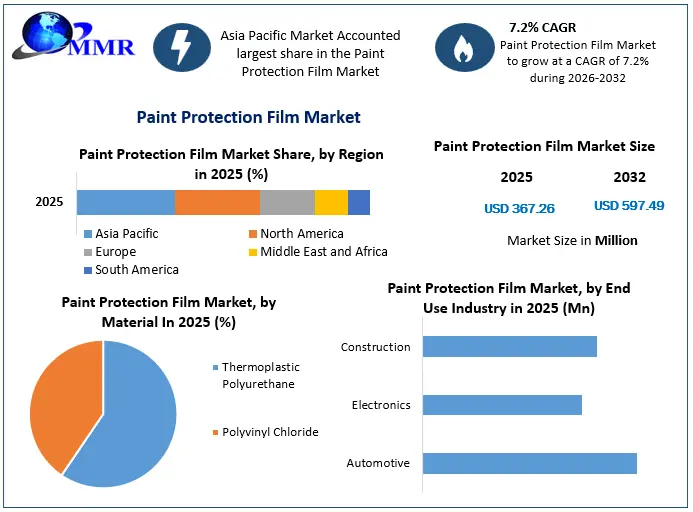
- The Paint Protection Film Market was valued at USD 367.26 million in 2025 and is projected to reach USD 597.49 million by 2032, expanding at a CAGR of 7.2%.
- North America held the largest market share in 2025, supported by premium vehicle ownership and a mature automotive aftermarket.
- Thermoplastic polyurethane-based films are expected to dominate because they offer durability, flexibility, impact resistance and self-healing capability.
- The automotive segment remains the primary demand source as buyers seek protection from scratches, chips, stains and weather exposure.
- Self-healing, hydrophobic and customized films are changing the market from a protective accessory into a higher-value vehicle-care product.
- Installer networks and aftermarket distribution are becoming as important as film chemistry in determining brand reach and customer retention.
Why This Matters Now
Automotive surface protection is moving from a niche detailing upgrade to a strategic aftermarket category. Premium vehicle owners, dealers and fleet operators are spending more to preserve resale value, reduce cosmetic damage and protect factory finishes against road debris, weather and daily use.
The Paint Protection Film Market Size was valued at USD 367.26 million in 2025 and is expected to reach USD 597.49 million by 2032, growing at a CAGR of 7.2%. The expansion creates a larger opportunity for film producers and installers, but it also raises pressure on suppliers to deliver consistent quality, reliable installation support and performance claims that hold up in real driving conditions.
For chemical and materials companies, the value is shifting toward advanced polyurethane film systems. Buyers are no longer choosing only clear protection. They are comparing self-healing behavior, stain resistance, gloss retention, hydrophobicity, thickness, installation ease and warranty support.
Market Overview
Paint protection film is a transparent or colored polymer film applied to painted vehicle surfaces to protect them from scratches, stone chips, abrasions, stains and environmental exposure. It is widely used on hoods, bumpers, fenders, mirrors, doors and other high-impact vehicle areas.
The market is closely linked to automotive production, premium vehicle ownership and the aftermarket detailing industry. New vehicle buyers use PPF to preserve factory paint, while used-car owners use it to improve appearance and protect refinished surfaces. Dealerships and professional installers provide a key route to market.
Thermoplastic polyurethane, or TPU, is the main material used in high-performance paint protection films. TPU films offer elasticity, impact resistance, optical clarity and the ability to recover from minor scratches in self-healing formulations. These features support higher pricing than basic vinyl films.
The report identifies growing demand for premium vehicles, rising automotive aftermarket activity and increasing consumer awareness as key market drivers. The commercial effect is that demand is being led by customers who see surface protection as an investment in vehicle appearance and resale value rather than a simple accessory purchase.
Key Trends Driving Growth
Self-healing technology is changing product expectations. Advanced films can recover from minor surface scratches when exposed to heat. This feature gives suppliers a way to justify premium pricing because it reduces visible wear and helps vehicles retain a newer appearance over time.
Hydrophobic and stain-resistant topcoats are also gaining importance. These coatings can improve water beading, reduce dirt adhesion and simplify cleaning. For installers and vehicle owners, this can make PPF a combined protection and maintenance solution rather than a single-purpose barrier film.
Customization is broadening demand. Matte, satin, colored and patterned films allow consumers to alter vehicle appearance while protecting the underlying paint. This creates opportunities beyond transparent films and supports higher-margin products in the personalization market.
Automotive aftermarket growth remains central. The market benefits from professional detailing centers, dealerships, vehicle customization shops and installer networks. Film manufacturers that provide training, cutting software, technical support and warranties can build stronger channel loyalty.
Premium and luxury vehicles remain important demand drivers. Owners of high-value vehicles are more likely to invest in protective films because repainting and cosmetic repairs can be expensive. However, demand is spreading to mid-range vehicles as awareness increases and installation options become more accessible.
Raw-material quality affects product performance. TPU film, adhesive systems, topcoats and release liners must work together to deliver clarity, durability and ease of installation. Supply disruptions or inconsistent inputs can create defects, reduce installer confidence and damage brand reputation.
Segment Insights
- Dominant Segment — Thermoplastic Polyurethane Films: TPU-based paint protection films are expected to dominate because they provide flexibility, impact resistance, optical clarity and self-healing performance. Their technical advantages support demand in premium automotive applications.
- Fastest-Growing Segment — Not specified in the supplied report: The report identifies strong interest in self-healing, hydrophobic and customized films but does not name a fastest-growing segment.
- Major Application — Automotive: Automotive applications dominate because vehicle owners use PPF to protect painted surfaces from road debris, scratches, weather exposure and daily wear. The segment benefits from new vehicle sales and the expanding aftermarket.
- Premium Vehicle Demand: Luxury and premium vehicles create higher-value demand because owners prioritize paint preservation and resale value. This supports premium film products and professional installation services.
- Aftermarket Channels: Professional installers, detailing centers and dealerships are key distribution channels. Their role gives technical support, installer training and warranty coverage strategic importance.
Regional Growth Story
North America held the largest share of the Paint Protection Film Market in 2025. The region benefits from strong premium vehicle ownership, established automotive aftermarket channels and high consumer awareness of vehicle detailing. This creates favorable conditions for premium film brands and installer-led sales models.
The United States is a major market because of its large vehicle base, strong car-care culture and broad network of dealerships and detailing businesses. Demand is supported by premium vehicle owners, automotive enthusiasts and consumers seeking to protect vehicle value.
Europe remains important because of premium automotive brands, established vehicle customization markets and strict quality expectations. Germany is relevant through its automotive manufacturing base and high-value vehicle segment. The supplied report does not provide country-specific market values, capacity figures or trade data.
Asia Pacific is expected to offer substantial growth opportunities as vehicle ownership, premiumization and automotive aftermarket services expand. China, India, Japan and South Korea are covered within the report’s regional framework, although no separate country figures are provided.
China is important because of its large automotive market and growing premium vehicle base. India offers potential as consumer awareness and vehicle customization activity rise. Japan and South Korea are relevant through advanced automotive manufacturing and strong interest in vehicle care and surface protection.
Competitive Landscape
The market is competitive because product performance must be matched by installer capability. Film manufacturers compete on TPU chemistry, topcoat technology, optical clarity, warranty coverage, distribution reach and installer support.
Established brands can build pricing power through trust. A film that performs consistently, installs cleanly and retains appearance over time can command a premium. Poor-quality films can create bubbling, yellowing, edge lifting or adhesive failure, making brand reputation critical.
Installer networks are a strategic asset. Professional application requires skill, cutting precision and surface preparation. Suppliers that offer training, digital cutting tools and technical support can reduce installation errors and improve channel loyalty.
Competition is also increasing in customized products. Matte, colored and specialty films create new revenue streams, but they require reliable color consistency and inventory management. Producers that can balance customization with supply efficiency may gain an advantage.
Sustainability is emerging as a longer-term issue. The supplied report does not provide specific recycling, carbon-reduction or circular-economy data for PPF. However, film durability can reduce repainting demand and extend vehicle surface life, which may support future environmental positioning.
Recent Developments
- The report identifies rising demand for self-healing paint protection films. This trend supports premium pricing because customers value films that can recover from minor scratches and preserve vehicle appearance.
- Hydrophobic and stain-resistant coatings are gaining attention in PPF products. The shift broadens film value from physical protection to easier cleaning and lower maintenance needs.
- Customized films, including matte, satin and colored options, are expanding the addressable market. This gives suppliers access to vehicle personalization demand while protecting original paint.
- Professional installer networks are becoming more important for market access. Training, cutting technology and warranty support can improve installation quality and strengthen brand loyalty.
- Automotive aftermarket demand is rising as consumers seek to maintain vehicle resale value and appearance. This supports recurring demand from detailing centers and dealerships.
- The supplied report does not provide verified acquisition, partnership, capacity-expansion, pricing or trade-flow announcements. These items are omitted to avoid unsupported claims.
Strategic Implications
For materials producers, film performance must be treated as a system issue. TPU quality, adhesive behavior, topcoat durability and release-liner consistency all affect installation and long-term customer satisfaction. Suppliers that control these variables can protect margins and reduce warranty risk.
For automotive buyers and dealers, PPF can support vehicle-value preservation and customer retention. Dealers can package paint protection with vehicle delivery, while fleet operators can use it selectively on high-wear surfaces. The value case depends on installation quality and film durability.
Supply-chain resilience matters because PPF requires specialized inputs and consistent quality. Manufacturers need reliable access to TPU, adhesives, coatings and liners. The supplied report does not provide feedstock pricing, trade-flow or capacity-expansion data, so these factors should be assessed separately before procurement or investment decisions.
The market also favors companies that can serve both product and channel needs. A strong film formulation without installer training can limit adoption. A broad installer network without dependable product quality can weaken brand trust.
Future Outlook
The Paint Protection Film Market will be driven by premium vehicle demand, aftermarket expansion and higher expectations for self-healing and easy-maintenance films. The market will increasingly reward suppliers that combine advanced materials with dependable installation ecosystems.
The strongest competitors will be those that turn TPU performance, customization and installer loyalty into a durable premium position.
Analyst Perspective
“Paint protection film is becoming a higher-value automotive materials category as vehicle owners prioritize appearance, durability and resale value. Suppliers that combine self-healing performance, reliable installation support and customized film options will be best placed to capture demand,” said Ankita Kagawade, Analyst at Maximize Market Research.
About Maximize Market Research
Maximize Market Research Pvt. Ltd. (MMR) is a global market research and consulting company that provides reliable, data-focused, and practical business insights. The firm serves a wide range of industries, including healthcare, pharmaceuticals, technology, automotive, electronics, chemicals, personal care, and consumer goods. Through market forecasts, competitive analysis, strategic consulting, and industry impact assessments, MMR helps organizations understand changing market conditions, identify growth opportunities, and make informed business decisions for long-term success.
2nd Floor, Navale IT Park Phase 3
Pune Banglore Highway, Narhe
Pune, Maharashtra 411041, India
+91 9607365656
sales@maximizemarketresearch.com
