Thyroid Eye Disease Treatment Market: Advancements in Biologics and Precision Medicine Transforming Patient Care
The Thyroid Eye Disease Treatment Market is experiencing significant growth as advancements in ophthalmology, biotechnology, and targeted therapies improve the management of thyroid eye disease (TED). Thyroid eye disease is an autoimmune condition commonly associated with thyroid disorders, particularly Graves’ disease, where immune system activity causes inflammation and tissue expansion around the eyes. The condition can lead to symptoms such as eye irritation, swelling, redness, double vision, and, in severe cases, vision impairment.
Increasing awareness about autoimmune eye disorders, rising prevalence of thyroid-related conditions, growing healthcare expenditure, and the introduction of advanced biologic therapies are driving market expansion. The treatment landscape is shifting from conventional symptom management toward disease-modifying therapies that address the underlying immune mechanisms responsible for TED progression.
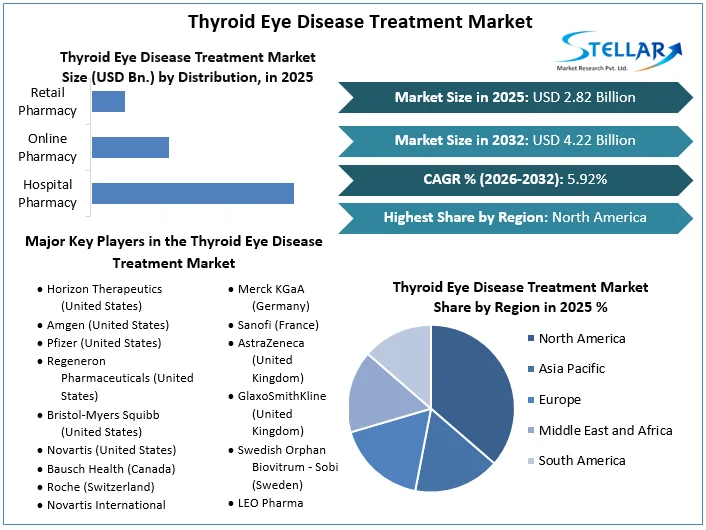
Thyroid Eye Disease Treatment Market size was valued at USD 2.82 Billion in 2025 and the total Global Revenue Thyroid Eye Disease Treatment Market is expected to grow at a CAGR of 5.92% from 2026 to 2032, reaching nearly USD 4.22 Billion by 2032
Growing Burden of Thyroid Eye Disease Driving Treatment Demand
The rising incidence of thyroid disorders worldwide is a major factor contributing to the growth of the thyroid eye disease treatment market. Autoimmune thyroid conditions are becoming increasingly common due to lifestyle changes, genetic factors, and environmental influences. As the number of patients diagnosed with Graves’ disease increases, the demand for effective TED treatment solutions is also expanding.
Traditionally, thyroid eye disease management involved approaches such as corticosteroids, radiation therapy, lubricating eye drops, and surgical procedures to reduce symptoms and restore eye function. However, these treatments often focused on controlling inflammation rather than directly targeting disease pathways.
The development of targeted therapies has changed the treatment approach by offering more effective options for patients with moderate-to-severe TED. Pharmaceutical companies are increasingly investing in innovative therapies designed to improve clinical outcomes and reduce long-term complications.
Impact of Biologic Therapies on Market Growth
One of the most important trends shaping the thyroid eye disease treatment market is the increasing adoption of biologic medicines. These therapies are designed to target specific molecules involved in autoimmune activity and inflammation.
The approval and commercialization of targeted biologic treatments have created new opportunities for pharmaceutical companies and healthcare providers. Unlike traditional therapies, biologics can help reduce disease progression by addressing the underlying immune response.
The growing acceptance of biologic therapies among physicians, combined with increasing patient awareness, is expected to accelerate market growth. Pharmaceutical companies are also focusing on developing next-generation therapies with improved safety profiles, longer-lasting effects, and better patient outcomes.
Key Factors Driving the Thyroid Eye Disease Treatment Market
Increasing Prevalence of Autoimmune Disorders
The growing global burden of autoimmune diseases is creating strong demand for specialized treatments. Thyroid eye disease is closely linked with immune system dysfunction, and the increasing diagnosis of thyroid disorders is contributing to a larger patient pool requiring ophthalmic care.
Healthcare systems are focusing more on early diagnosis and disease monitoring, helping improve treatment rates and reducing complications associated with delayed intervention.
Advancements in Drug Development
Innovations in molecular biology and immunotherapy are supporting the development of more precise treatment options. Research focused on immune pathways involved in TED progression is enabling pharmaceutical companies to introduce therapies that provide better disease control.
Clinical research activities, investment in biotechnology, and collaborations between pharmaceutical companies and research institutions are expected to support continued market growth.
Rising Healthcare Awareness and Improved Diagnosis
Improved access to healthcare services and advanced diagnostic technologies are increasing the identification of thyroid eye disease cases. Eye specialists and endocrinologists are increasingly collaborating to provide comprehensive treatment strategies for patients.
Awareness campaigns and improved patient education regarding symptoms of TED are encouraging individuals to seek medical attention earlier, creating additional demand for treatment solutions.
Challenges Limiting Market Expansion
Despite strong growth opportunities, the thyroid eye disease treatment market faces certain challenges. High treatment costs associated with advanced biologic therapies can limit accessibility, particularly in developing regions where healthcare budgets and reimbursement coverage may be limited.
Another challenge is the complexity of diagnosis. Symptoms of thyroid eye disease can overlap with other eye conditions, leading to delayed diagnosis and treatment initiation. Greater awareness among healthcare professionals and improved screening methods are required to overcome this challenge.
Additionally, regulatory requirements and lengthy clinical trial processes can increase the time and cost involved in bringing new therapies to market.
Technology and Innovation Trends
Technology is playing an increasingly important role in improving thyroid eye disease diagnosis and treatment. Advanced imaging techniques, including orbital imaging and digital ophthalmology tools, are helping physicians evaluate disease severity and monitor treatment responses more accurately.
Artificial intelligence (AI) is also emerging as a valuable tool in ophthalmology. AI-based diagnostic systems can analyze imaging data, identify disease patterns, and support clinical decision-making. These technologies may improve early detection and personalized treatment planning.
Personalized medicine is another important trend influencing the market. By understanding individual patient characteristics, healthcare providers can select therapies that offer better effectiveness and fewer adverse effects.
Regional Market Insights
North America currently represents a leading region in the thyroid eye disease treatment market due to advanced healthcare infrastructure, high adoption of innovative therapies, and strong pharmaceutical research capabilities. The presence of major biotechnology and pharmaceutical companies, along with favorable reimbursement systems, supports market development in countries such as the United States.
Europe is also witnessing steady market growth due to increasing awareness of autoimmune disorders, expanding healthcare programs, and rising investment in advanced therapies. Countries including Germany, the United Kingdom, and France are contributing significantly to regional growth.
The Asia-Pacific region is expected to experience substantial growth during the forecast period. Rising healthcare expenditure, improving medical infrastructure, increasing thyroid disorder prevalence, and growing access to specialty treatments are creating new opportunities in countries such as China, India, and Japan.
Competitive Landscape and Industry Strategies
The thyroid eye disease treatment market is characterized by increasing competition among pharmaceutical and biotechnology companies focusing on innovative therapies. Leading companies are investing in research and development programs, clinical trials, strategic collaborations, and product expansion initiatives.
Major participants include:
- Horizon Therapeutics (United States)
- Amgen (United States)
- Pfizer (United States)
- Regeneron Pharmaceuticals (United States)
- Roche (Switzerland)
- Novartis International (Switzerland)
- Merck KGaA (Germany)
- Sanofi (France)
- Takeda Pharmaceutical (Japan)
- Daiichi Sankyo (Japan)
Download Free PDF Brochure: https://www.stellarmr.com/report/req_sample/thyroid-eye-disease-treatment-market/2767
Future Outlook of the Thyroid Eye Disease Treatment Market
The future of the thyroid eye disease treatment market is expected to be shaped by continued innovation in biologics, personalized medicine, and digital healthcare solutions. As research improves understanding of autoimmune disease mechanisms, new therapeutic approaches are likely to emerge.
Increasing investment in clinical research, rising demand for targeted therapies, and improved healthcare accessibility will continue supporting market growth. The integration of AI-powered diagnostics and advanced monitoring technologies will further enhance patient management.
With a stronger focus on early detection, precision treatment, and patient-centered care, the thyroid eye disease treatment market is positioned for significant transformation. Pharmaceutical companies, healthcare providers, and investors are expected to find new opportunities as the industry moves toward more effective and personalized treatment solutions for individuals affected by thyroid eye disease.
