Food Intolerance Products Market: Innovation in Free-From Foods Reshaping the Future of Healthy Nutrition
The Food Intolerance Products Market is experiencing sustained growth as consumers increasingly seek specialized foods that support digestive health and accommodate dietary sensitivities. Food intolerance products—including gluten-free, lactose-free, diabetic-friendly, and allergen-free foods—have moved beyond niche offerings to become mainstream products available across supermarkets, specialty stores, and online retail channels. Rising awareness of food intolerances, improved diagnostic capabilities, and growing consumer interest in preventive healthcare are transforming purchasing habits worldwide.
According to industry trends, the market continues to expand steadily as manufacturers introduce innovative formulations that improve taste, texture, and nutritional value while meeting the dietary needs of health-conscious consumers. Growing demand for personalized nutrition and clean-label products is expected to remain a major growth catalyst over the coming years.
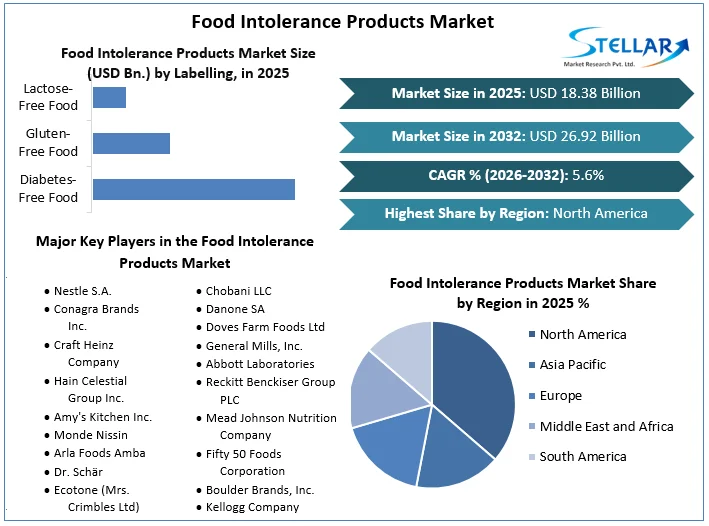
The Food Intolerance Products Market size was valued at USD 18.38 Bn in 2025. The market is expected to grow at a CAGR of 5.6 % during the forecast period from 2026-2032, reaching nearly USD 26.92 Bn by 2032
Rising Consumer Awareness Driving Market Expansion
Consumers are becoming increasingly aware of conditions such as lactose intolerance, gluten sensitivity, celiac disease, and other digestive disorders. This growing awareness has significantly increased demand for foods specifically designed to eliminate ingredients that trigger intolerance symptoms.
Unlike previous years, when free-from foods primarily targeted medically diagnosed consumers, today’s market also serves individuals pursuing healthier lifestyles, better digestive wellness, and preventive nutrition. As a result, manufacturers are expanding product portfolios to include bakery products, dairy alternatives, beverages, snacks, cereals, ready-to-eat meals, and confectionery items that meet diverse dietary preferences.
The rapid growth of online grocery platforms has further improved accessibility, enabling consumers to compare products, review ingredient labels, and purchase specialized foods more conveniently than ever before.
Innovation Transforming Food Intolerance Products
Product innovation has become one of the strongest competitive advantages within the food intolerance products market. Food manufacturers are investing heavily in research and development to improve flavor, texture, nutritional content, and shelf stability while eliminating common allergens.
Advanced food processing technologies have made it possible to create gluten-free bakery products with improved softness and taste, lactose-free dairy products with enhanced nutritional profiles, and plant-based alternatives that closely resemble conventional foods.
Clean-label formulations are another major trend. Consumers increasingly prefer products made with natural ingredients, minimal additives, and transparent labeling. Companies are responding by reducing artificial preservatives while incorporating functional ingredients such as probiotics, dietary fiber, vitamins, and plant proteins.
Personalized nutrition is also gaining momentum as brands develop products tailored to individual dietary needs, digestive health goals, and wellness preferences.
Key Market Growth Drivers
Increasing Prevalence of Food Intolerances
Growing diagnosis rates of lactose intolerance, gluten sensitivity, celiac disease, and digestive disorders are creating sustained demand for specialized food products. Improved healthcare awareness has encouraged earlier diagnosis, enabling consumers to adopt appropriate dietary solutions.
Growing Health and Wellness Trends
Consumers are becoming more proactive about maintaining long-term health through nutrition. Free-from foods are increasingly viewed not only as medical necessities but also as healthier alternatives supporting digestive comfort and overall well-being.
The popularity of preventive healthcare has encouraged retailers to expand their offerings of allergen-friendly and specialty food products.
Expansion of Retail and E-Commerce
Supermarkets, hypermarkets, specialty stores, and online grocery platforms are significantly increasing product availability. Digital retail channels allow manufacturers to reach broader customer bases while educating consumers about food intolerances and product benefits.
Subscription-based grocery services and direct-to-consumer business models are further supporting market expansion.
Challenges Facing the Market
Despite positive growth prospects, several challenges remain.
One of the primary obstacles is the relatively higher cost of food intolerance products compared with conventional food items. Specialized ingredients, dedicated manufacturing facilities, and stringent quality standards contribute to premium pricing, limiting affordability for some consumers.
Another challenge involves maintaining taste and texture while removing allergens. Consumers increasingly expect free-from products to deliver the same sensory experience as traditional foods, requiring continuous investment in food science and formulation technologies.
Regulatory compliance also remains important, as manufacturers must meet strict labeling requirements and food safety standards to ensure consumer confidence.
Emerging Technology and Sustainability Trends
Technology is playing an increasingly important role in the food intolerance products industry. Artificial intelligence is helping manufacturers analyze consumer preferences, optimize recipes, forecast demand, and accelerate product development.
Digital traceability systems are improving ingredient transparency throughout the supply chain, allowing companies to verify allergen-free manufacturing processes and strengthen consumer trust.
Sustainability has become another major industry priority. Manufacturers are investing in environmentally responsible packaging, renewable ingredients, sustainable agriculture, and energy-efficient production facilities. Plant-based ingredient innovation is also supporting both environmental objectives and growing consumer demand for healthier food alternatives.
Regional Market Insights
North America remains one of the leading markets for food intolerance products due to high consumer awareness, strong healthcare infrastructure, and widespread availability of gluten-free and lactose-free foods. The United States continues to lead regional growth as retailers expand their health-focused product portfolios.
Europe represents another significant market, supported by strict food labeling regulations, increasing diagnosis of food intolerances, and strong consumer demand for clean-label products. Countries including Germany, the United Kingdom, France, and Italy continue introducing innovative allergen-free food offerings.
Asia-Pacific is expected to witness the fastest growth over the coming years. Rising disposable incomes, urbanization, changing dietary habits, expanding retail infrastructure, and increasing awareness of digestive health are driving demand across China, India, Japan, South Korea, and Southeast Asia. (Research and Markets)
Competitive Landscape
- Nestle S.A.
- Conagra Brands Inc.
- Craft Heinz Company
- Hain Celestial Group Inc.
- Amy’s Kitchen Inc.
- Monde Nissin
- Arla Foods Amba
- Dr. Schär
- Ecotone (Mrs. Crimbles Ltd)
- General Mills Inc.
Download Free PDF Brochure: https://www.stellarmr.com/report/req_sample/food-intolerance-products-market/2472
Future Outlook
The future of the Food Intolerance Products Market appears highly promising as personalized nutrition, preventive healthcare, and consumer awareness continue to reshape global food consumption patterns. Advances in food science, ingredient technology, and digital retail will enable manufacturers to develop more nutritious, better-tasting, and widely accessible intolerance-friendly products.
Growing investments in research, expanding product availability, and increasing collaboration between food manufacturers, retailers, and healthcare professionals are expected to accelerate market growth. As consumers place greater emphasis on digestive wellness, transparency, and sustainability, food intolerance products will become an increasingly important segment of the global functional foods industry.
Companies that prioritize innovation, clean-label development, sustainable production, and personalized nutrition solutions will be well positioned to capitalize on the expanding demand for specialized dietary products in the years ahead.
Media Contact
Stellar Market Research
Website: Stellar Market Research – Global Research Reports & Consulting
Email: sales@stellarmr.com
