The mHealth Market has emerged as a vital component of the global digital healthcare ecosystem. Driven by the widespread adoption of smartphones, wearable health devices, high-speed internet connectivity, and mobile health applications, mHealth is enabling healthcare providers to deliver accessible, cost-effective, and patient-centric care. From chronic disease management and virtual consultations to fitness tracking and medication adherence, mobile health technologies are reshaping the way healthcare services are delivered and experienced.
As healthcare systems increasingly focus on preventive care, value-based healthcare, and digital transformation, mHealth solutions are becoming indispensable tools for improving patient engagement, reducing healthcare costs, and enhancing clinical outcomes.
Rising Smartphone Adoption Fuels Market Growth
The growing penetration of smartphones and mobile internet is one of the primary drivers of the mHealth Market. Millions of users now rely on mobile applications to monitor fitness, manage chronic diseases, schedule medical appointments, access electronic health records, and communicate with healthcare professionals.
Healthcare providers are also leveraging mobile platforms to improve patient education, encourage medication adherence, and facilitate continuous health monitoring. This widespread accessibility is expanding healthcare services to rural and underserved populations, reducing barriers to quality care.
𝐃𝐨𝐰𝐧𝐥𝐨𝐚𝐝 𝐅𝐫𝐞𝐞 𝐏𝐃𝐅 𝐁𝐫𝐨𝐜𝐡𝐮𝐫𝐞: https://www.stellarmr.com/report/req_sample/mHealth-market/2909
Remote Patient Monitoring Becomes a Key Growth Driver
Remote patient monitoring (RPM) has become one of the fastest-growing applications within the mHealth Market. Connected medical devices and wearable sensors enable healthcare professionals to monitor patients’ vital signs in real time, allowing early detection of health issues and timely medical intervention.
Common remote monitoring applications include:
Blood glucose monitoring
Blood pressure tracking
Cardiac rhythm monitoring
Pulse oximetry
Weight management
Sleep tracking
Respiratory monitoring
Medication adherence monitoring
RPM is particularly valuable for managing chronic diseases such as diabetes, hypertension, heart disease, and chronic respiratory disorders while reducing unnecessary hospital visits and readmissions.
Artificial Intelligence Enhances Personalized Healthcare
Artificial intelligence (AI) is significantly enhancing the capabilities of mobile health platforms. AI-powered algorithms analyze health data collected from smartphones and wearable devices to generate personalized health recommendations, predict disease risks, and support clinical decision-making.
Key AI applications include:
Predictive health analytics
Personalized wellness recommendations
Symptom assessment
Virtual health assistants
Mental health screening
Medication reminders
Clinical decision support
Population health management
By delivering real-time insights, AI helps both patients and healthcare providers make more informed healthcare decisions.
Wearable Devices Expand Mobile Health Ecosystems
The growing popularity of wearable health technologies is accelerating the adoption of mHealth solutions. Smartwatches, fitness bands, ECG monitors, smart patches, and biosensors continuously collect physiological data that can be integrated with mobile health applications.
These devices support preventive healthcare by tracking physical activity, heart rate, sleep quality, stress levels, oxygen saturation, and other health metrics. Integration with cloud-based healthcare platforms allows physicians to monitor patient progress remotely and intervene when necessary.
𝐃𝐨𝐰𝐧𝐥𝐨𝐚𝐝 𝐅𝐫𝐞𝐞 𝐏𝐃𝐅 𝐁𝐫𝐨𝐜𝐡𝐮𝐫𝐞: https://www.stellarmr.com/report/req_sample/mHealth-market/2909
Telemedicine Integration Improves Healthcare Accessibility
Telemedicine has become a cornerstone of the mHealth Market, enabling patients to consult healthcare professionals through mobile devices regardless of their location. Video consultations, digital prescriptions, online appointment scheduling, and secure messaging platforms improve convenience while reducing healthcare delivery costs.
The integration of telemedicine with mobile health applications creates a seamless digital care experience, particularly for patients requiring ongoing follow-up care or specialist consultations.
Data Security and Regulatory Compliance Gain Importance
As mobile health applications process increasing volumes of sensitive patient information, cybersecurity and data privacy have become top priorities. Healthcare organizations are implementing advanced encryption, multi-factor authentication, secure cloud infrastructure, and regulatory compliance frameworks to safeguard patient data.
Compliance with healthcare data protection regulations strengthens patient trust while supporting the responsible adoption of digital health technologies.
Regional Market Insights
North America
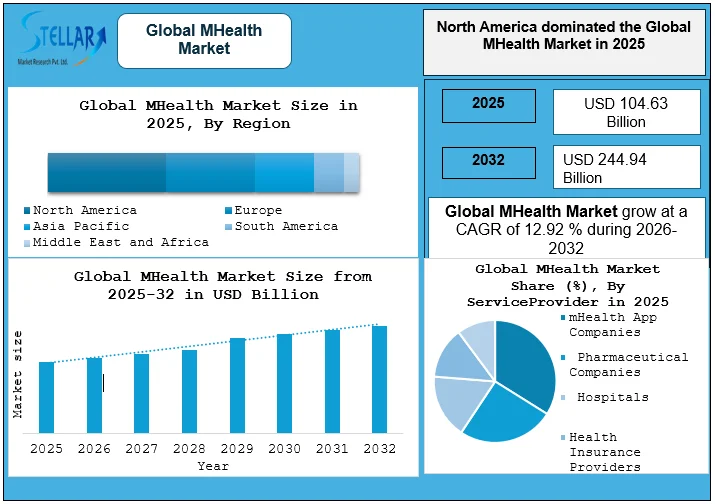
North America dominates the mHealth Market due to advanced healthcare infrastructure, widespread smartphone adoption, favorable reimbursement policies, and strong investments in digital health technologies. The region also benefits from high awareness of remote healthcare services and a mature health IT ecosystem.
Europe
Europe is experiencing robust market growth through expanding telemedicine services, increasing government support for digital healthcare, and rising demand for remote patient monitoring. Investments in electronic health records and connected care solutions continue to strengthen the regional market.
Asia-Pacific
Asia-Pacific is the fastest-growing regional market, driven by rising smartphone penetration, improving internet connectivity, expanding healthcare infrastructure, and increasing investments in digital health. Countries such as China, India, Japan, South Korea, and Australia are accelerating the adoption of mobile healthcare solutions to improve healthcare access and efficiency.
Latin America and Middle East & Africa
Emerging economies are increasingly adopting mHealth platforms to address healthcare accessibility challenges, particularly in remote and underserved communities. Mobile technology is helping bridge gaps in healthcare delivery while supporting preventive care initiatives.
Competitive Landscape
The mHealth Market is highly competitive, with healthcare technology companies, software developers, medical device manufacturers, telecommunications providers, and digital health startups investing in innovative mobile healthcare solutions.
Key competitive strategies include:
AI-powered health applications
Wearable device integration
Cloud-based healthcare platforms
Remote patient monitoring solutions
Telemedicine service expansion
Digital therapeutics development
Strategic healthcare partnerships
Mobile diagnostic innovations
Companies are also focusing on user-friendly interfaces, interoperability, cybersecurity, and personalized patient experiences to strengthen market positioning.
Emerging Opportunities
Several trends are expected to shape the future of the market:
AI-driven mobile diagnostics
Digital therapeutics
Connected wearable ecosystems
Mobile mental health platforms
Personalized wellness applications
Chronic disease management tools
5G-enabled healthcare services
Predictive population health analytics
These innovations are expected to improve healthcare outcomes while expanding access to quality medical services worldwide.
Future Outlook
The future of the mHealth Market remains highly promising as digital healthcare becomes an integral part of modern medical practice. Continued advancements in artificial intelligence, wearable technologies, cloud computing, and mobile connectivity will drive the development of more intelligent, personalized, and accessible healthcare solutions.
Increasing investments in preventive healthcare, aging populations, rising chronic disease prevalence, and supportive government initiatives are expected to sustain long-term market growth. Organizations that prioritize innovation, data security, interoperability, and patient engagement will be well positioned to lead the next generation of mobile healthcare services.
Conclusion
The mHealth Market is reshaping global healthcare by making medical services more connected, personalized, and accessible. Through the integration of smartphones, wearable devices, AI, telemedicine, and remote monitoring technologies, mobile health is empowering patients and healthcare providers with real-time insights and improved care delivery.
As healthcare systems continue embracing digital transformation, the mHealth Market is expected to remain a key driver of innovation, creating significant opportunities for technology providers, healthcare organizations, investors, and policymakers committed to improving health outcomes and expanding access to quality care.
