Key Highlights
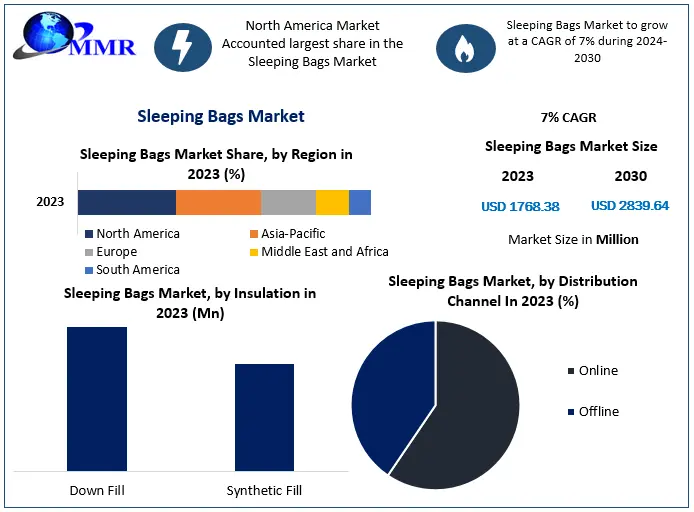
- The Sleeping Bags Market was valued at US$ 1768.38 Mn in 2023 and is expected to reach US$ 2839.64 Mn by 2030, creating a larger opportunity for outdoor gear brands and retailers.
- The market is forecast to grow at a 7% CAGR from 2024 to 2030, supported by hiking, hill walking, climbing, camping and other outdoor activities.
- North America dominated with 50% share in 2023, giving the region the strongest disclosed demand base for suppliers and distributors.
- Synthetic fill is expected to take over the market in the near future because it is comfortable and cost-effective in damp conditions.
- E-commerce, tourism growth, social media influence and rising per capita income are expanding sleeping bag demand beyond professional outdoor users.
Why This Matters Now
Outdoor recreation is turning sleeping bags from occasional camping gear into a broader consumer product. The demand signal is no longer limited to mountaineers; it now includes millennials, leisure travelers, teenagers and cost-conscious adventure buyers.
The Sleeping Bags Market move from US$ 1768.38 Mn in 2023 to US$ 2839.64 Mn by 2030 creates room for product innovation, but also raises pressure on brands to balance comfort, compactness, climate suitability and price.
Market Overview
Sleeping bags are designed to protect the body from extreme weather and can also be used as comforters, coverings or bedding. Their utility spans camping, hiking, hill walking, climbing and adventure tourism, making the category part of outdoor equipment, travel gear and consumer lifestyle products.
The market is segmented by product into rectangular sleeping bags and mummy sleeping bags. It is segmented by insulation into down fill and synthetic fill, and by distribution channel into online and offline channels.
The public MMR page does not disclose clean-label demand, sustainability initiatives, quantified e-commerce penetration, product-level market shares, pricing trends or capacity expansions. It does disclose outdoor activity demand, synthetic insulation momentum, e-commerce influence and regional leadership.
Key Trends Driving Growth
Adventure tourism is the main growth driver. Hiking, rafting, camping and related activities are increasing demand in developed and emerging economies, which benefits sleeping bag manufacturers selling across climate and terrain requirements.
Consumer behavior is shifting toward affordable outdoor experiences. MMR states that adventure activities bring consumers closer to nature and offer cost-effective vacation options, which raises demand for sleeping bags and related gear.
Health and wellness is visible through camping behavior. Millennials are becoming more aware of camping benefits such as stress reduction and improved mental and emotional health, making sleeping bags part of a wellness-adjacent outdoor routine.
Product design is becoming more important. Consumers value sleeping bags for weightlessness, compactness, convenience, comfort and cost-effectiveness, while manufacturers are developing products for different climatic conditions and user groups.
Social media is also lifting demand. MMR identifies social media as a major influence on consumer interest in camping, which means brand visibility, travel content and outdoor communities can push product discovery.
Request a Free Sample Report for Comprehensive Market Insights
Segment Insights
- Dominant Segment: The public MMR page does not identify a dominant product segment by share. Rectangular and mummy sleeping bags are covered, but no leadership ranking is disclosed.
- Fastest-Growing Segment : The source does not identify a fastest-growing product, insulation or distribution segment by CAGR. No fastest-growing segment is inferred.
- Key Insulation Signal Synthetic Fill: Synthetic fill is expected to take over the market in the near future because it is comfortable and cost-effective under damp conditions. That gives synthetic insulation suppliers a stronger position in weather-sensitive demand.
- Distribution Signal Offline and Online: The source states that offline channels are predicted to grow in market share through 2030, while also identifying e-commerce development, websites and online advertising as growth contributors. This mixed channel signal suggests physical retail and digital discovery both matter.
- Product Scope: Rectangular and mummy sleeping bags are the disclosed product categories. The public page does not disclose exact shares, margins or price ranges for either format.
Regional Growth Story
North America dominated with 50% share in 2023. The region benefits from a high number of professional rock climbers and mountaineers, plus rising camping trips, leisure activities and outdoor recreation.
The report states that North America is expected to develop considerably from 2024 to 2030. Rising raw material import rates and increasing outdoor activities are cited as influences on regional growth, but import volumes and country-level values are not disclosed.
Asia Pacific is expected to grow rapidly because leisure activities and camping are increasing among teenagers. That creates a youth-led demand opportunity for affordable, lightweight and easy-to-buy sleeping bags.
South America is expected to grow at a modest rate because countries such as Brazil, Peru, Colombia, Ecuador, Argentina and Chile have leading camping sites. The Middle East and Africa are expected to grow at an average rate as outdoor activities increase.
Competitive Landscape
The market includes Jarden Vaude, Johnson Outdoors, Oase Outdoors, Big Agnes, AMG Group, Columbia Sportswear, Exxel Outdoors, Jack Wolfskin, V.F. Corp, Snugpak, Sleepingo, Wildhorn, Blackpine Sports, Hyke & Byke, Browning Camping, Sierra Designs, Coleman, TETON SPORTS, Alpkit, Vango and MalloMe.
Competition is shaped by product portfolio, price, regional presence and growth strategies. Brands must serve both experienced climbers and value-focused leisure users, which pushes product development toward durability, climate suitability and cost-effective comfort.
The public page does not disclose dated M&A, partnerships, divestitures or company-level capacity expansions. It states that the full report includes competitive benchmarking, consolidation and key company developments, but transaction-level facts are not visible.
Over the next 12–24 months, rivals should expect pressure around synthetic fill, compact design, online merchandising and youth-focused outdoor positioning. Brands that cannot prove use-case fit across climate, terrain and budget will face stronger competition from broad outdoor portfolios.
Recent Developments
- Synthetic Fill Momentum: Synthetic fill is expected to take over the market because it performs better in damp conditions at a lower cost, making insulation choice a key product-development lever.
- E-Commerce Expansion: Sleeping bag makers and suppliers are offering products across e-commerce sites, widening access to customers and increasing product visibility.
- Social Media Influence: Social media is increasing consumer interest in camping, creating a demand funnel for outdoor equipment brands that can convert aspiration into purchase.
Strategic Implications
For manufacturers, climate-fit design is now central. Consumers want products suited to different weather conditions, while synthetic fill demand points to value and damp-weather performance as commercial priorities.
For retailers, channel strategy needs both store trust and online reach. The report points to offline channel growth, but also shows that websites, digital advertising and e-commerce platforms are drawing broad customer pools.
For investors, the opportunity is tied to participation growth in outdoor recreation. The risk is limited public data on segment-level profitability, sustainability initiatives, trade flows and pricing trends, which makes product-level diligence important.
Future Outlook
The Sleeping Bags Market is forecast to grow from US$ 1768.38 Mn in 2023 to US$ 2839.64 Mn by 2030 at a 7% CAGR. Growth will come from camping, hiking, climbing, tourism, social media influence, e-commerce access, synthetic fill adoption and rising per capita income.
Winners will combine lightweight design, climate-ready insulation and digital reach; losers will remain exposed to generic products that fail on comfort, weather performance and consumer discovery.
Analyst Perspective
“Sleeping bags are moving from niche expedition gear into a broader outdoor lifestyle category as camping, hiking and adventure travel gain traction,” said Siddhi Dole, Analyst at Maximize Market Research. “The strongest brands will combine synthetic-fill performance, compact design, price accessibility and online visibility.”
About Maximize Market Research
Maximize Market Research Pvt. Ltd. (MMR) is a global market research and consulting company that provides reliable, data-focused, and practical business insights. The firm serves a wide range of industries, including healthcare, pharmaceuticals, technology, automotive, electronics, chemicals, personal care, and consumer goods. Through market forecasts, competitive analysis, strategic consulting, and industry impact assessments, MMR helps organizations understand changing market conditions, identify growth opportunities, and make informed business decisions for long-term success.
Contact Us
2nd Floor, Navale IT Park Phase 3
Pune Banglore Highway, Narhe
Pune, Maharashtra 411041, India
+91 9607365656
sales@maximizemarketresearch.com
