Key Highlights
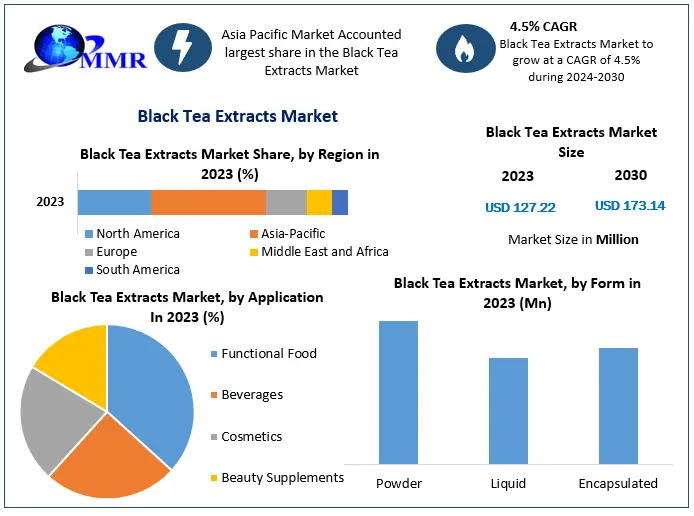
Black Tea Extracts Market size is expected to reach nearly USD 173.14 Mn by 2030, growing at a CAGR of 4.5% during the forecast period—a steady expansion for an ingredient category rather than a finished-goods market.
Growth is driven by rising demand for tea-based beverages, health-conscious formulations and natural flavour and caffeine sources across FMCG categories.
Black tea extracts are used in RTD teas, beverages, dietary supplements, functional foods, and flavour systems, offering concentrated tea taste and polyphenol content.
The market draws participation from global ingredient houses and tea-specialist firms, integrating with wider tea extract and botanical ingredient portfolios.
Why This Matters Now
Tea used to sit in a box or a loose-leaf tin; today, black tea extracts sit in industrial tanks and formulation sheets that determine what millions of consumers drink each day. With market size expected to reach about USD 173.14 Mn by 2030 at 4.5% CAGR, this is no longer a niche line for flavour houses—it is a growth platform for health-aware beverages and snacks.
For FMCG and food & beverage executives, the message is clear: tea is moving from kitchen ritual to scalable ingredient. Brands that treat black tea extracts as strategic—managing origin, processing, polyphenol content and claim architecture—will build defensible positions in natural, functional and clean-label segments. Those that keep buying generic “tea flavour” risk missing the pivot.
Market Overview
Black tea extracts size are concentrated preparations obtained from fermented tea leaves, designed to deliver the characteristic flavour, colour and bioactive compounds of black tea in a stable, convenient form. The market is forecast to reach nearly USD 173.14 Mn by 2030, growing at around 4.5% CAGR.
These extracts come in different forms—liquid concentrates, powdered extracts, spray-dried forms—and can be standardized for specific attributes: polyphenol content, caffeine level, flavour profile or solubility. This allows manufacturers to tailor usage to RTD teas, flavoured waters, juices, dairy beverages, confectionery, bakery items and supplements.
The market sits at the intersection of traditional tea consumption and modern functional beverage trends. It leverages existing tea supply chains while adding value through processing, standardization and application expertise.
Key Trends Driving Growth
Health & wellness positioning
Black tea extracts carry associations with antioxidant activity, cardiovascular support and general wellness, driven by their polyphenol content. While claims must respect regulatory limits, the broader wellness halo pushes demand for tea-based drinks as alternatives to carbonated soft drinks or high-sugar juices.
Natural caffeine and flavour
Consumers seeking natural energy sources look beyond synthetic caffeine and high-sugar energy drinks. Black tea extracts offer “from tea” caffeine and flavour, supporting more balanced RTD formats—tea lattes, tea-based energy drinks, sparkling teas. This gives brands a route to reposition stimulation as part of a more holistic wellness story.
Clean-label and botanical demand
Tea extracts fit neatly into clean-label expectations: short ingredient lines, plant-based origin, recognizable source. In RTD teas and flavoured waters, “black tea extract” reads better to consumers than generic “flavourings”. This drives reformulation and new product launches in better-for-you beverages and snacks.
Versatile applications across categories
Beyond beverages, black tea extracts feature in confectionery, bakery, ice creams and functional foods where tea notes or polyphenols add differentiation. This cross-category versatility makes the market more resilient and opens innovation routes for FMCG companies.
E-commerce and specialty health brands
Smaller health, sports and specialty beverage brands use black tea extracts in powders, shots and capsules sold online. Their success demonstrates consumer willingness to pay for tea-based functionality beyond traditional teacup formats, encouraging larger FMCG players to experiment.
Request a Free Sample Copy or View Report Summary: https://www.maximizemarketresearch.com/request-sample/20525/
Segment Insights
Dominant Segment – Application: Beverages (RTD Tea and Tea-Based Drinks)
Beverages—especially RTD teas, tea concentrates and tea-flavoured drinks—form the dominant application segment for black tea extracts. These products rely on extracts for consistent taste, colour and functional cues at industrial scale.This dominance matters because it ties the ingredient’s growth to broader RTD and functional beverage trends: if tea-based drinks win share from sugary sodas or juices, extract demand accelerates.
Fastest-Growing Segment – Application: Functional Foods and Nutraceuticals
Functional foods, dietary supplements and nutraceutical formats are among the fastest-growing users of black tea extracts, thanks to interest in antioxidant and metabolism-related benefits. Capsules, sachets, drink mixes and fortified snacks are leveraging tea extracts alongside other botanicals.This segment’s growth signals that black tea extracts are moving into more “clinical” and performance-oriented territories, where standardization, evidence and regulatory compliance become critical differentiators.
Other Segments – Food Flavour Systems and Industrial Ingredients
Extracts also support flavour systems in confectionery, bakery and dairy, and serve as industrial ingredients for large beverage and FMCG producers. These segments highlight the importance of B2B relationships, quality assurance and long-term contracts.
Regional Growth Story
Asia-Pacific
Asia-Pacific, with strong tea traditions, supplies much of the raw material and sees rising adoption of tea-based RTD drinks and functional formats. Local and regional brands experiment with heritage positioning—origin stories, specific tea gardens, and culturally relevant blends—backed by extract technology.
Europe
In Europe, tea extracts benefit from health-conscious trends and demand for reduced-sugar beverages. Premium RTD teas, organic ranges and botanical blends use black tea extracts for taste and functionality, often in combination with fruits and herbs.
North America
North American markets show interest in tea-based alternatives to coffee and energy drinks, plus “craft” and premium RTD teas. Here, black tea extracts help manage consistency and scale while allowing flavour innovation.
Competitive Landscape
The Black Tea Extracts Market features global ingredient companies and tea-focused specialists, including large agribusiness and botanical extract players. They compete on sourcing strength, extraction technology, standardization, cost and application support.
Major players offer portfolios that span black, green and other tea extracts alongside broader botanical lines. This signals that black tea extracts are part of a wider strategic bet on plant-based ingredients feeding both beverages and functional foods.
Over the next 12–24 months, competition will likely intensify around traceability (origin, farming practices), polyphenol standardization and low-caffeine or decaffeinated options. Ingredient providers that cannot prove consistent quality or support regulatory-compliant positioning risk being sidelined as FMCG companies consolidate suppliers.
Recent Developments
Expansion of standardized black tea extracts targeting specific polyphenol contents for functional beverages and nutraceuticals.
Development of instant, highly soluble extract forms tailored for RTD drinks, powders and concentrates.
Increased use of black tea extracts in sugar-reduced beverages as part of flavour and mouthfeel strategies.
Strategic moves by ingredient companies to integrate tea extracts into broader botanical platforms for health and wellness brands.
Strategic Implications for FMCG & Food & Beverage
Black tea extracts are becoming core building blocks in portfolios aimed at health, naturalness and differentiation. For beverage companies, the ingredient determines flavour stability, colour, health positioning and label appeal. For broader FMCG players, it opens routes into tea-flavoured and tea-functional foods.
Innovation teams should treat black tea extracts as modular components—varying strength, flavour and functionality across products. This enables layered ranges: everyday RTD tea, premium single-origin lines, and functional drinks with specific benefits. Sourcing strategies must align with brand narratives: origin stories and sustainability claims depend on traceable supply.
Clean-label and regulatory teams must jointly define claim strategies. Overpromising on health can trigger regulatory risk, while under-utilizing tea’s wellness halo wastes potential. A disciplined framework—anchored in standardized extracts and documented studies—can balance ambition and safety.
Future Outlook
With the Black Tea Extracts Market expected to reach nearly USD 173.14 Mn by 2030 at about 4.5% CAGR, tea extracts will remain a stable, growing ingredient category closely tied to beverage and wellness trends. As consumers continue to pivot toward natural, plant-based and moderately stimulating drinks, black tea extracts will be central to the reformulation agenda.
The next phase will likely bring more integration with other botanicals—adaptogens, fruits, spices—and more attention to sustainability and origin narratives. Brands that treat black tea extracts as strategic wellness infrastructure, not just flavour, will hold the advantage.
In this environment, the winners will build disciplined, traceable and innovation-rich platforms around black tea extracts, while the losers will keep buying generic tea solids—and discover that in a health-conscious world, “just tea flavour” is no longer enough.
Related Reports
Gaming Gadgets Market https://www.maximizemarketresearch.com/market-report/gaming-gadgets-market/125731/
Eyewear Market https://www.maximizemarketresearch.com/market-report/global-eyewear-market/21412/
Global Down and Feather Market https://www.maximizemarketresearch.com/market-report/global-down-and-feather-market/21816/
Analyst Perspective
“Black tea extracts are moving from the background of formulation sheets to the front lines of beverage and functional food strategy,” “With market size expected to reach nearly USD 173.14 Mn by 2030 at around 4.5% CAGR, FMCG and food & beverage players that treat tea extracts as strategic assets—linking origin, standardization and health positioning—will own the next wave of natural, clean-label growth.”-Siddhi Dole
About Maximize Market Research
Maximize Market Research Pvt. Ltd. (MMR) is a global market research and consulting company that provides reliable, data-focused, and practical business insights. The firm serves a wide range of industries, including healthcare, pharmaceuticals, technology, automotive, electronics, chemicals, personal care, and consumer goods. Through market forecasts, competitive analysis, strategic consulting, and industry impact assessments, MMR helps organizations understand changing market conditions, identify growth opportunities, and make informed business decisions for long-term success.
2nd Floor, Navale IT Park Phase 3
Pune Banglore Highway, Narhe
Pune, Maharashtra 411041, India
+91 9607365656
sales@maximizemarketresearch.com
