Key Highlights
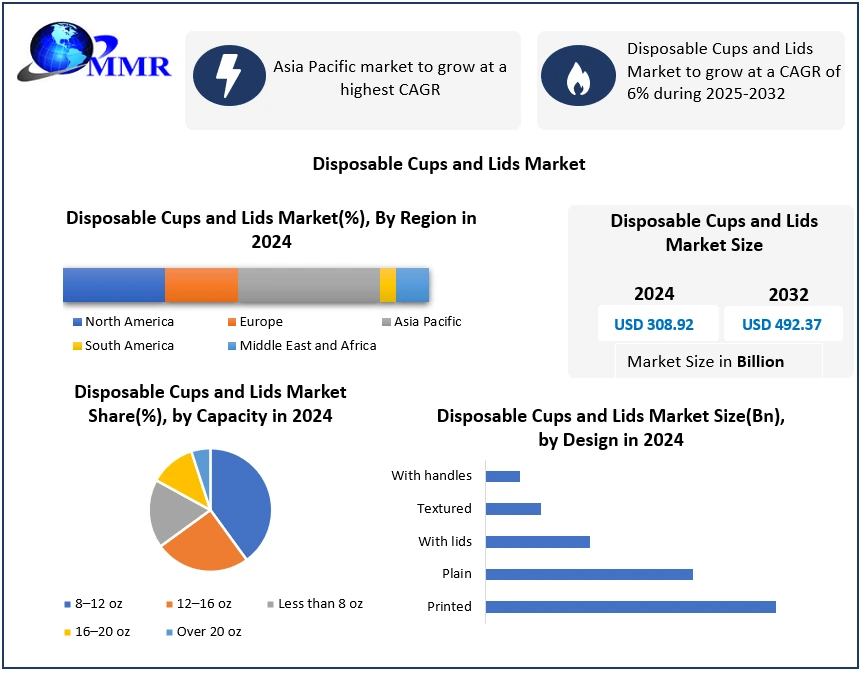
Market Expansion Profile: The global industry size climbs from USD 308.92 billion in 2024 to USD 492.37 billion by 2032, sustaining a steady 6% compound annual growth rate.
Segment Dominance: Paper and fiber cups command the primary volume allocation across institutional, commercial, and retail beverage distribution networks.
Growth Velocity Leader: The packaging cup segment establishes the fastest gains, driven by single-serving portable consumer retail product formatting.
Regional Stronghold: The Asia-Pacific geographic theater maintains structural dominance over global consumption, fueled by food service scaling, expanding commuter bases, and institutional demands.
Why This Matters Now
Procurement operations, corporate investors, and supply chain managers cannot afford to misjudge structural shifts in global high-volume packaging components. Fast-changing consumer mobility patterns and rising takeaway food distribution models require immediate infrastructure agility. Companies managing corporate food services, transportation hubs, and commercial operations must proactively realign their supply footprints today. Failing to adapt to shifting material demands and tightening regional regulatory restrictions will expose businesses to immediate distribution disruptions.
Market Overview
The global Disposable cups and lids market acts as an essential transactional infrastructure layer for commercial dining, quick-service networks, and transport systems. Valued at USD 308.92 billion in 2024, this global sector operates on micro-margin efficiency and high volume requirements. The industry is projected to reach USD 492.37 billion by 2032, expanding at an annualized 6% rate.
This steady trajectory reflects major underlying shifts in consumer behavior and regional commercial operations. Urbanization and fast-paced modern lifestyles continue to accelerate the adoption of single-serving, portable packaging. Disposable tableware products are shifting from simple commodities into highly engineered, brand-supporting containers that provide leak resistance, safety, and brand visibility.
Key Trends Driving Growth
Growing global environmental consciousness and tightening regional regulations are forcing manufacturers to actively shift away from traditional polymers. Stringent regulatory bodies are compelling global fast-moving consumer brands to secure alternative packaging formats. This policy shift accelerates the development and adoption of advanced biopolymer technologies for lid stock, hot-fill items, and protective overwraps. Bioplastic packaging is moving from niche applications directly into mainstream retail and food service supply lines.
Simultaneously, the widespread adoption of specialized on-the-go beverages fuels specialized lid architectures. Modern consumer demand requires high-performance designs featuring robust snap-fit closures, smooth rolled lips, and reliable leak resistance. These characteristics prevent product spilling and shield against external contaminants during transport. High-volume buyers now prioritize affordable, lightweight structures that maintain physical strength across varied delivery environments.
Segment Insights
Paper and Fiber Cups (Dominant Segment): This product segment controls the majority share of the global marketplace. Extensive integration across cafes, institutional campuses, retail shops, and commercial offices provides a massive, predictable consumption foundation.
Packaging Cup (Fastest-Growing Segment): This segment exhibits the highest growth velocity due to rapid expansion in commercial retail product formatting. Solid volume demands from commercial sectors like dairy products, instant oatmeal, fresh pre-cut fruits, and single-serving vegetables drive this fast acceleration.
Food Services (Dominant Application): Quick-service restaurants, specialty beverage bars, street vendors, and corporate food halls generate the most consistent demand for disposable cups and lids. On-the-go consumption habits ensure this segment remains the primary driver of market volume.
Regional Growth Story
The Asia-Pacific region maintains absolute dominance over global disposable cups and lids market volumes, retaining its leadership through 2032. Rapidly expanding middle-class demographics and quickening urbanization trends generate sustained demand across metropolitan areas. Escalating household incomes directly support increased spending on specialty teas, coffees, and restaurant delivery services.
Furthermore, institutional demand across the region continues to expand rapidly. Large-scale healthcare organizations, regional railway infrastructure networks, and educational institutions require high-volume, single-use solutions to meet strict hygiene protocols. Meanwhile, North American and European manufacturing centers are focusing their investments on structural bioplastics and high-yield fiber production lines. These efforts are designed to comply with evolving local material restrictions without compromising high-volume line speeds.
Competitive Landscape
The competitive environment operates as a highly consolidated space led by global packaging multi-nationals. Scale, raw material access, and distribution reach determine which players hold clear pricing power. Leading global enterprises control large-scale production facilities across both mature and emerging market regions.
Smaller regional companies maintain presence by serving local food service networks or focusing on niche customization options. However, these localized producers face severe pressure from high capital entry barriers and escalating equipment setup costs. To protect profit margins, major manufacturers are actively investing in highly automated, high-output production technologies.
Recent Developments
Production Fleet Modernization: Top tier global packaging enterprises are upgrading manufacturing facilities with advanced thermoforming machinery to process complex bioplastic formulations.
Fiber Form Extraction Upgrades: Corporate manufacturers are expanding specialized fiber processing capacity to meet corporate supply contracts with major quick-service restaurant brands.
Tightened Integration Alliances: Major raw material suppliers and high-output packaging firms are forming integrated partnerships to stabilize input costs during supply disruptions.
Strategic Implications
The shifting balance between paper, plastic, and biopolymer raw materials fundamentally alters operational dynamics for tier-one packaging firms and high-volume buyers. To mitigate sudden supply shocks, major market participants must diversify their material portfolios. Investing in manufacturing facilities that can quickly switch between traditional and bio-based resins provides a clear competitive advantage.
Large-scale corporate purchasers can leverage long-term multi-year supply contracts to secure predictable pricing amid fluctuating resin costs. At the same time, equipment manufacturers must optimize tooling systems to accommodate thinner, lightweight materials without sacrificing production throughput. Operational leaders who integrate these technical adjustments directly into their factories will secure strong defensive positions.
Future Outlook
Market volume will increasingly shift toward intelligent, material-optimized packaging structures that balance structural durability with corporate environmental goals. High-volume single-serving retail categories like grab-and-go snack items and specialty beverage delivery will remain primary growth engines. Ongoing manufacturing automation will help leading companies counter rising labor and raw material costs.
Looking ahead, tomorrow’s market leaders will be determined by a single factor: the ability to manufacture high-yield, high-performance bio-based packaging architectures at a total cost that matches legacy plastic alternatives.
Analyst Perspective
“The global disposable cups and lids market is undergoing a significant operational transformation driven by changing regulatory realities and consumer demands,” stated Tejaswini Kakade, Lead Analyst at Maximize Market Research.
About Maximize Market Research
Maximize Market Research Pvt. Ltd. (MMR) is a global market research and consulting company that provides reliable, data-focused, and practical business insights. The firm serves a wide range of industries, including healthcare, pharmaceuticals, technology, automotive, electronics, chemicals, personal care, and consumer goods. Through market forecasts, competitive analysis, strategic consulting, and industry impact assessments, MMR helps organizations understand changing market conditions, identify growth opportunities, and make informed business decisions for long-term success.
2nd Floor, Navale IT Park Phase 3
Pune Banglore Highway, Narhe
Pune, Maharashtra 411041, India
+91 9607365656
sales@maximizemarketresearch.com
