Key Highlights
Technological Re-engineering: The modern dehydration sector is migrating rapidly from legacy mechanical heating to automated, sensor-driven thermal processing units.
Precision Quality Control: Advanced optical sorting platforms, powered by integrated logic chip architecture, allow zero-defect raw material inspection at high speeds.
Supply Chain Resilience: High-efficiency dehydration processing serves as a strategic stabilizer for global logistics, significantly minimizing perishable food waste.
Energy Optimization: New machinery footprints are adopting embedded edge-computing nodes to cut utility overhead and improve system thermal efficiency.
Market Alignment: Shifting industrial demand favors equipment manufacturers who design fully vertical, internet-of-things (IoT) connected food manufacturing systems.
Why This Matters Now
The convergence of global food supply chains and automated electronic hardware has created an unexpected, high-stakes intersection for industrial component suppliers and technology providers. As agricultural processors face volatile weather conditions and fluctuating operating costs, old manual preservation methods are no longer economically viable. Modern food dehydration requires the exact type of high-precision electronic control, real-time data collection, and software-driven optimization that defines modern semiconductor fabrication and smart device factories. For electronics OEMs, contract manufacturers, and automation engineers, this represents a major, non-cyclical market vertical ripe for hardware monetization.
Market Overview
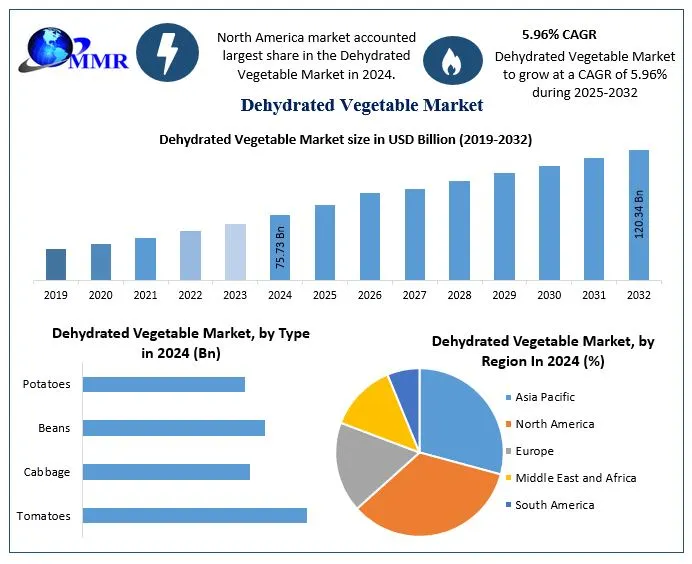
Dehydrated Vegetable Market Data indicates that the dehydrated vegetable market is undergoing a major technological upgrade, shifting from a traditional agriculture sector into a highly automated component of the global food security infrastructure. This transition is not driven by simple volume expansion alone, but by a systemic need for automated, long-term preservation methods that protect nutritional content while extending shelf life.
As processors scale their operations to handle international distribution channels, the demand for integrated electronics—such as thermal controllers, variable frequency drives, and precision moisture sensors—has risen sharply. These electronic sub-systems allow continuous, multi-stage processing lines to adjust parameters instantly based on raw input quality, protecting operating margins and stabilizing factory throughput.
Key Trends Driving Growth
IoT-Enabled Thermal Monitoring: Modern processing facilities are replacing open-loop drying ovens with sophisticated closed-loop dehydration tunnels equipped with arrays of ambient humidity and temperature sensors. These sensors feed continuous metrics to local edge-computing platforms, which instantly regulate airflow velocity and heater output to maintain exact quality metrics.
AI-Driven Optical Inspection: The integration of high-definition industrial webcams and specialized vision-processing chips at the intake stage allows automated sorting lines to discard defective raw materials instantly. This advanced automation minimizes human error, improves processing efficiency, and prevents contaminated batches from moving down the production line.
Strategic Sustainability Design: Energy management mandates are forcing processing equipment OEMs to design systems that maximize heat recovery. By utilizing intelligent motor starters and power-management semiconductors, modern dehydration machinery can reuse exhaust heat, directly lowering carbon footprints and helping multi-national brands achieve their strict ESG goals.
Segment Insights
Dominant Technology Segment: Continuous Conveyor Dehydrators. This segment commands the largest share of machinery investments due to its ability to handle massive, non-stop volumes of product required by large-scale enterprise food ingredient buyers.
Fastest-Growing Technology Segment: Vacuum and Freeze-Drying Automation Systems. This segment is expanding rapidly as processors prioritize premium nutrition preservation and require advanced electronic pressure controllers to handle delicate micro-environments within processing chambers.
Regional Growth Story
The geographical expansion of the automated dehydration landscape is concentrated around major agricultural production regions and advanced industrial automation hubs. In North America and Europe, the focus centers on installing ultra-high-efficiency processing systems capable of meeting strict occupational safety and environmental emission standards.
Concurrently, the Asia-Pacific region represents a massive consumption and production footprint, with countries like China, India, and Southeast Asian nations aggressively building out local processing infrastructure. Governments in these agricultural hubs are introducing structural incentives to modernize rural food processing zones, encouraging the purchase of advanced, automated sorting and drying lines to secure domestic supply chain resilience.
Competitive Landscape
The competitive dynamic among industrial food-processing equipment manufacturers is increasingly defined by software integration and sensor-fusion capabilities rather than simple steel metalwork. Leading machinery providers are forging strategic partnerships with industrial electronics design firms to embed native connectivity and predictive maintenance algorithms directly into their equipment dashboards.
This technical transformation separates advanced market participants from legacy hardware fabricators. Organizations that can deliver fully integrated, “plug-and-play” automation setups featuring remote diagnostic capabilities are capturing high-margin corporate procurement programs, while legacy players who continue to sell manually adjusted equipment are facing severe pricing pressure and losing market access.
Recent Developments
Smart Sensor Arrays: Equipment OEMs are integrating specialized multi-wavelength optical sensors that evaluate vegetable moisture content without making physical contact with the product line.
Decentralized Control Panels: Processing line updates now feature modular, IP67-rated electronic control boxes that can withstand high-pressure chemical washdowns without requiring expensive external enclosures.
Predictive Uptime Analytics: Software developers have rolled out specialized maintenance platforms that analyze vibration signatures from exhaust blowers to predict mechanical failures before they cause line stoppages.
Strategic Implications
For electronics manufacturing services (EMS) providers and semiconductor designers, the technical shift within the food processing space provides an excellent opportunity to diversify product applications away from volatile consumer electronics cycles. The components required for industrial food-processing environments must meet rigorous environmental standards, including high thermal tolerances, vibration resistance, and moisture sealing.
Firms that specialize in ruggedizing standard logic microcontrollers and power management ICs can position themselves as key tier-two partners to agricultural machinery giants. This structural relationship creates long-term, predictable component supply contracts that are completely decoupled from traditional tech-sector consumer retail downturns.
Future Outlook
The long-term trajectory of the automated processing market will be decided by the speed at which equipment manufacturers can transform their hardware lines into intelligent, data-driven edge platforms. As corporate buyers demand absolute transparency and precise quality metrics across every stage of the global ingredient supply chain, the underlying processing machinery must evolve to generate and store granular production data automatically. Ultimately, future technology leaders will secure dominant market positions by delivering fully automated, self-correcting dehydration lines that maximize yield through intelligent sensor networks, while laggards remaining bound to manual, single-speed mechanical designs will find themselves entirely locked out of premium global supply chains.
Analyst Perspective
“The evolution of the dehydration market highlights a reality where industrial processing value is increasingly created through embedded electronic intelligence, requiring deep collaboration between machinery designers and automation systems providers,” states Neha Nalawade, Research Analyst.
