Diet Candy Market: Healthy Indulgence Trend Drives Growth of Low-Sugar Confectionery Innovations
The Diet Candy Market is transforming the global confectionery industry as consumers increasingly seek healthier alternatives that allow them to enjoy sweet products without excessive sugar and calorie intake. Rising awareness about weight management, diabetes-friendly diets, clean-label ingredients, and functional nutrition is encouraging manufacturers to develop innovative sugar-free and low-calorie candy products.
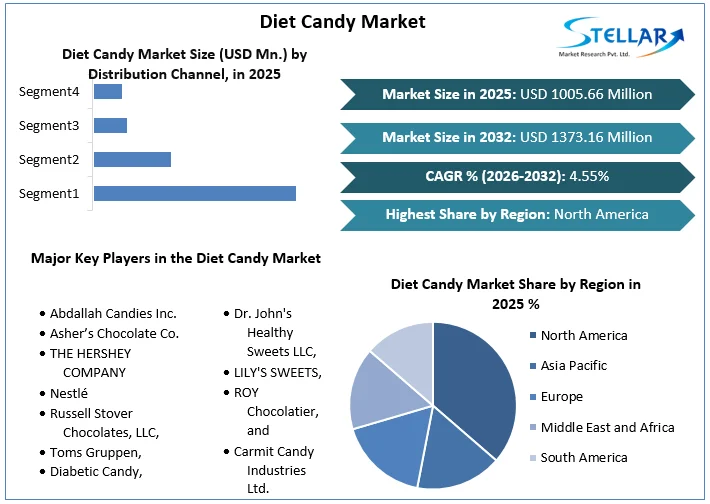
According to Stellar Market Research, the global Diet Candy Market was valued at USD 1,005.66 million in 2025 and is expected to reach USD 1,373.16 million by 2032, growing at a CAGR of 4.55% from 2026 to 2032. The market is being shaped by changing consumer preferences, increasing health consciousness, and the growing demand for healthier confectionery choices.
Download Free PDF Brochure: https://www.stellarmr.com/report/req_sample/Diet-Candy-Market/1435
Changing Consumer Preferences Reshaping the Confectionery Industry
Traditional candies have long been associated with high sugar content and indulgence. However, evolving consumer lifestyles are changing purchasing behavior across the food and beverage sector. Consumers are now looking for products that balance taste with nutritional benefits, creating new opportunities for diet-focused confectionery brands.
The rise in lifestyle-related health concerns, including obesity and diabetes, has accelerated demand for reduced-sugar alternatives. Consumers are increasingly reading product labels and preferring candies made with natural sweeteners, sugar substitutes, and functional ingredients.
This shift has encouraged confectionery manufacturers to move beyond traditional offerings and invest in healthier product development strategies. Diet candies are emerging as a solution for consumers who want to enjoy sweet flavors while maintaining dietary goals.
Growing Demand for Sugar-Free and Low-Calorie Candy Products
Sugar-free candy represents one of the most important growth areas within the diet candy segment. These products use alternative sweeteners such as stevia, erythritol, xylitol, and other sugar substitutes to provide sweetness while reducing sugar content.
The increasing prevalence of diabetes and growing consumer focus on blood sugar management are supporting the adoption of sugar-free confectionery products. Many consumers are also choosing low-calorie candies as part of weight-control programs and healthier snacking habits.
Manufacturers are continuously improving product formulations to overcome challenges related to taste, texture, and consumer acceptance. Advances in sweetener technology are helping companies create products that closely replicate the flavor experience of traditional candies.
Natural Ingredients and Clean Label Trends Create Opportunities
The clean-label movement is significantly influencing the diet candy market. Modern consumers are increasingly demanding transparency regarding ingredients, production methods, and nutritional value.
Brands are responding by introducing candies made with natural sweeteners, plant-based ingredients, organic components, and recognizable formulations. Products positioned as vegan, gluten-free, low-carb, and allergen-friendly are gaining popularity among health-focused consumers.
Natural ingredient innovation is also helping manufacturers differentiate their products in a competitive market. Companies that successfully combine taste, health benefits, and ingredient transparency are likely to gain stronger consumer loyalty.
Innovation in Flavors and Product Formats
Product innovation is becoming a major competitive strategy in the diet candy market. Manufacturers are expanding their portfolios with new flavors, textures, and formats to attract a wider consumer base.
Popular product categories include:
Sugar-free candies
Low-calorie candies
Gummies
Hard candies
Chocolate-based diet confectionery
Functional candies with added vitamins or minerals
Fruit flavors, mint varieties, and chocolate-inspired products continue to attract consumers seeking healthier alternatives without compromising taste.
The introduction of functional confectionery is creating additional growth opportunities as consumers increasingly view snacks as part of their overall wellness routines.
E-Commerce Expansion Supporting Market Growth
Digital retail platforms are playing an important role in expanding access to diet candy products. Online channels allow consumers to discover specialized health-focused brands that may not be widely available in traditional stores.
E-commerce platforms provide manufacturers with opportunities to reach targeted consumer groups, including fitness enthusiasts, diabetic consumers, and health-conscious shoppers.
Subscription models, direct-to-consumer sales, and digital marketing campaigns are also helping emerging brands compete with established confectionery companies.
Regional Market Insights
North America remains one of the leading markets for diet candy due to strong consumer awareness regarding sugar reduction, high adoption of health-focused food products, and increasing demand for diabetic-friendly confectionery. The United States has witnessed significant growth in reduced-sugar and functional snack categories due to changing dietary preferences.
Europe is another important region, supported by increasing demand for clean-label foods, strict nutritional awareness, and growing interest in healthier alternatives. Countries such as Germany, the United Kingdom, and France are experiencing rising consumer interest in sugar-free confectionery products.
The Asia-Pacific region is expected to offer significant future opportunities due to increasing urbanization, rising disposable incomes, expanding retail networks, and growing awareness of lifestyle-related health issues. Countries including China, India, Japan, and South Korea are witnessing increasing demand for healthier snack options.
Challenges Affecting the Diet Candy Market
Despite strong growth opportunities, the diet candy market faces several challenges. One of the major concerns is maintaining taste quality while reducing sugar content. Some consumers may perceive sugar substitutes as having different flavors or textures compared with traditional candies.
The higher cost of natural ingredients and advanced sweetener technologies can also increase production expenses. Manufacturers must balance affordability with premium positioning to attract a broader customer base.
Additionally, regulatory requirements related to food labeling, health claims, and sweetener approvals vary across regions, creating complexity for global market expansion.
Competitive Landscape and Industry Strategies
The diet candy market includes established confectionery companies as well as emerging health-focused brands. Companies are investing in research and development to create innovative formulations, expand product portfolios, and improve nutritional profiles.
Major industry participants are focusing on:
New sugar-reduction technologies
Plant-based sweeteners
Functional ingredients
Sustainable packaging solutions
Digital marketing strategies
Expansion into online retail channels
Companies such as Nestlé, The Hershey Company, and health-focused brands such as SmartSweets are contributing to innovation within healthier confectionery categories.
Download Free PDF Brochure: https://www.stellarmr.com/report/req_sample/Diet-Candy-Market/1435
Future Outlook of the Diet Candy Market
The future of the diet candy market will be driven by continued health awareness, product innovation, and changing consumer expectations. As consumers increasingly prioritize wellness while maintaining interest in indulgent foods, demand for healthier candy alternatives is expected to grow.
Technological advancements in sweetener development, improved flavor systems, and functional ingredient integration will help manufacturers create more appealing products. Sustainability initiatives, including eco-friendly packaging and responsible sourcing, will also become important factors influencing purchasing decisions.
The expansion of online retail, personalized nutrition trends, and increasing demand for specialized dietary products will provide new growth opportunities for market participants.
Conclusion
The Diet Candy Market is evolving from a niche health-oriented category into an important segment of the global confectionery industry. Rising demand for sugar-free products, clean-label ingredients, and healthier indulgence options is encouraging manufacturers to innovate and diversify their offerings. While challenges related to formulation costs, taste optimization, and regulatory compliance remain, continuous advancements in food technology and changing consumer lifestyles are expected to support long-term market growth. As the preference for balanced nutrition and guilt-free treats continues to rise, diet candy is positioned to become a significant contributor to the future of healthier snacking.
