Key Highlights
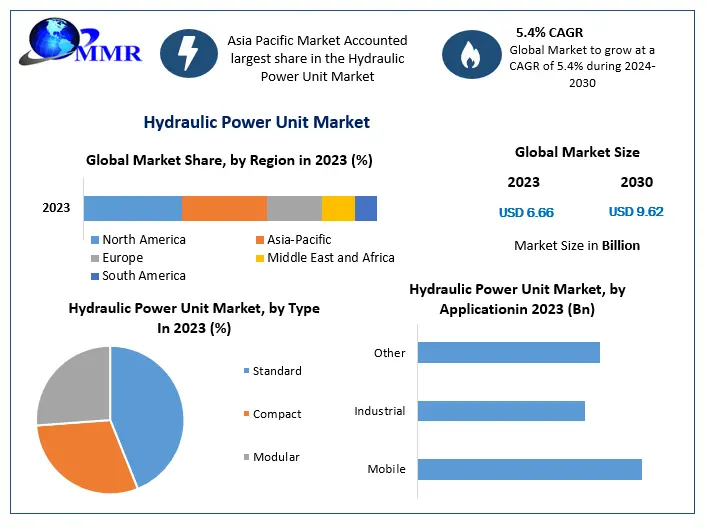
- Global Hydraulic Power Unit Market is forecast to grow at a CAGR of 5.4% during 2024–2030. This steady expansion signals continued capital investment across industrial, construction, mining, manufacturing, and energy infrastructure projects.
- Rising industrial automation is increasing demand for reliable hydraulic power systems capable of supporting high-load operations.
- Utility modernization and transmission infrastructure expansion are creating new opportunities for hydraulic equipment suppliers.
- Renewable energy installations and heavy infrastructure projects continue to strengthen long-term equipment demand.
- Digital monitoring, predictive maintenance, and energy-efficient hydraulic technologies are becoming important competitive differentiators.
- Manufacturers are investing in product innovation to improve efficiency, reliability, and lifecycle performance.
Why This Matters Now
Industrial investment cycles are shifting toward smarter factories, resilient infrastructure, and more reliable energy systems. Hydraulic power units remain fundamental wherever heavy mechanical force, precision control, and continuous industrial operation are required.
The Hydraulic Power Unit Market is forecast to expand at a 5.4% CAGR during 2024–2030. Rather than representing simple equipment replacement, this growth reflects sustained investment across construction, mining, manufacturing, utilities, and energy infrastructure. For equipment manufacturers, utilities, industrial operators, and infrastructure investors, the market signals continued capital deployment into productive industrial assets.
Market Overview
The Hydraulic Power Units Market Size remain essential components across industrial machinery, power generation facilities, manufacturing systems, construction equipment, offshore operations, mining assets, and utility infrastructure. Their ability to generate consistent hydraulic pressure makes them indispensable where mechanical reliability and operational precision are critical.
Industrial modernization is changing procurement priorities. Buyers increasingly seek systems that reduce downtime, improve energy efficiency, support remote diagnostics, and integrate with digital monitoring platforms. These requirements are transforming hydraulic power units from standalone mechanical assets into connected components within broader industrial automation ecosystems.
Electrification of industrial operations is also expanding opportunities. As manufacturers upgrade production facilities and utilities modernize critical infrastructure, hydraulic systems continue supporting applications where electric actuators alone cannot deliver required force or durability.
Key Trends Driving Growth
Industrial automation continues to reshape equipment investment strategies. Modern production facilities require hydraulic systems capable of delivering higher operational efficiency while integrating with intelligent control architectures. This creates demand for advanced hydraulic power units equipped with monitoring capabilities and improved energy management.
Grid modernization programs are generating another important growth avenue. Utilities upgrading transmission networks, substations, and maintenance equipment increasingly rely on hydraulic systems for heavy operational tasks. Infrastructure resilience has become a strategic priority across major economies, supporting sustained equipment demand.
Renewable energy deployment is creating indirect opportunities across the hydraulic equipment value chain. Wind energy manufacturing, hydroelectric infrastructure, and large-scale construction activities require hydraulic systems throughout manufacturing, installation, maintenance, and servicing operations.
Energy security initiatives further strengthen investment momentum. Governments continue expanding domestic infrastructure, improving industrial productivity, and supporting strategic manufacturing capacity. Hydraulic equipment suppliers benefit as these investments translate into higher machinery procurement.
Digitalization is becoming a defining competitive factor. Predictive maintenance, sensor integration, and real-time performance monitoring reduce maintenance costs while improving operational reliability. Customers increasingly evaluate lifecycle efficiency rather than only acquisition cost.
Segment Insights
- Dominant Segment: The report identifies the market’s leading segment based on its comprehensive segmentation analysis, reflecting the strongest contribution to overall industry demand.
- Fastest-Growing Segment: According to the report, the fastest-growing segment demonstrates accelerating adoption driven by expanding industrial applications and increasing investment priorities.
- Industrial applications continue generating broad demand across manufacturing, construction, mining, oil and gas, and utility operations.
- Product innovation increasingly focuses on efficiency improvements, operational reliability, and lower maintenance requirements.
- Digital integration and intelligent monitoring capabilities are becoming major purchasing criteria for industrial customers.
Regional Growth Story
The United States continues investing heavily in industrial modernization, manufacturing expansion, and energy infrastructure upgrades. Grid resilience programs, utility investments, and industrial automation initiatives support continued demand for hydraulic equipment across multiple sectors.
Germany remains an important industrial manufacturing hub where advanced automation, precision engineering, and energy efficiency continue influencing equipment procurement. Hydraulic technology suppliers benefit from modernization across manufacturing facilities and industrial production systems.
China maintains significant opportunities through ongoing infrastructure development, industrial manufacturing expansion, and equipment production. Large-scale construction activities and industrial investment continue supporting hydraulic equipment demand.
India is emerging as a major infrastructure growth market driven by industrial expansion, manufacturing initiatives, transportation projects, and power sector development. Continued investments in heavy industry create favorable conditions for hydraulic system suppliers.
Japan and South Korea emphasize manufacturing excellence, factory automation, robotics, and industrial productivity. These priorities encourage adoption of highly reliable hydraulic technologies integrated with advanced manufacturing systems.
The United Kingdom and other European markets continue prioritizing energy transition, infrastructure resilience, and industrial efficiency. Modernization of industrial assets and utility infrastructure supports replacement demand alongside new project installations.
Across all major regions, energy security, infrastructure investment, and industrial productivity remain common policy priorities supporting long-term equipment demand.
Competitive Landscape
Competition increasingly revolves around technology leadership rather than manufacturing scale alone. Companies investing in energy-efficient hydraulic systems, digital diagnostics, intelligent monitoring, and lifecycle optimization are strengthening long-term competitive positioning.
Innovation strategies increasingly focus on reducing operating costs while improving reliability. Equipment buyers are evaluating suppliers based on total ownership economics, maintenance performance, and system integration capabilities instead of component pricing alone.
Strategic investments across manufacturing capacity, product development, and digital technologies also indicate confidence in sustained industrial capital expenditure. Companies capable of supporting utilities, infrastructure developers, heavy industry, and advanced manufacturing simultaneously are positioned to benefit from diversified demand cycles.
The evolving competitive landscape also signals greater emphasis on integrated solutions. Customers increasingly prefer suppliers capable of delivering complete hydraulic systems alongside engineering support, maintenance services, and digital performance monitoring.
Recent Developments
- Manufacturers continue expanding portfolios featuring higher energy efficiency and improved operational performance.
- Digital monitoring and predictive maintenance capabilities are becoming standard components of new product development.
- Industrial automation initiatives continue encouraging hydraulic system integration with smart manufacturing platforms.
- Infrastructure investment programs across major economies are supporting long-term equipment procurement.
- Utility modernization and grid expansion projects continue creating opportunities for hydraulic equipment suppliers.
Strategic Implications
Industrial investment priorities are becoming increasingly interconnected. Factory automation, renewable energy deployment, grid modernization, and infrastructure development collectively create sustained demand for hydraulic power systems.
Equipment manufacturers that prioritize digital connectivity, operational efficiency, and lifecycle services will likely strengthen customer relationships. Utilities and industrial operators increasingly seek partners capable of improving reliability while reducing maintenance costs.
Investors should also recognize the market’s exposure to multiple long-term structural themes, including industrial automation, electrification, infrastructure renewal, and energy transition. This diversification helps reduce dependence on any single end-use industry.
Supply chain resilience will remain another strategic differentiator. Manufacturers capable of maintaining reliable component availability and responsive aftermarket support can strengthen competitive positioning as industrial customers prioritize operational continuity.
Future Outlook
Industrial transformation is entering a phase where mechanical performance alone is no longer sufficient. Hydraulic power units are becoming intelligent industrial assets that combine precision, reliability, digital monitoring, and operational efficiency.
As renewable energy projects expand, transmission infrastructure grows, manufacturing modernizes, and utilities strengthen grid resilience, hydraulic technologies will continue supporting critical industrial operations. Equipment innovation will increasingly focus on efficiency, predictive maintenance, and integration within digitally connected industrial environments.
The next competitive divide will not be determined by who manufactures the most hydraulic systems, but by who delivers the smartest, most energy-efficient, digitally connected solutions that enable resilient industrial and energy infrastructure while competitors struggle to keep pace.
Analyst Perspective
“The Hydraulic Power Unit Market continues to evolve alongside industrial modernization, infrastructure investment, and digital transformation. Organizations that align hydraulic innovation with automation, efficiency, and operational reliability will be best positioned to capture emerging opportunities across global industrial and energy sectors,” says Neha Nalawade, Analyst.
About Maximize Market Research
Maximize Market Research Pvt. Ltd. (MMR) is a global market research and consulting company that provides reliable, data-focused, and practical business insights. The firm serves a wide range of industries, including healthcare, pharmaceuticals, technology, automotive, electronics, chemicals, personal care, and consumer goods. Through market forecasts, competitive analysis, strategic consulting, and industry impact assessments, MMR helps organizations understand changing market conditions, identify growth opportunities, and make informed business decisions for long-term success.
2nd Floor, Navale IT Park Phase 3
Pune Banglore Highway, Narhe
Pune, Maharashtra 411041, India
+91 9607365656
sales@maximizemarketresearch.com
