Leisure Travel Market to Reach USD 9.41 Trillion by 2032 as Experiential Tourism and Digital Booking Transform the Travel Industry
The global Leisure Travel Market is experiencing remarkable growth as consumers increasingly prioritize travel experiences, relaxation, cultural exploration, and adventure activities. Rising disposable incomes, expanding digital travel platforms, improved connectivity, and changing lifestyle preferences are reshaping the global tourism landscape.
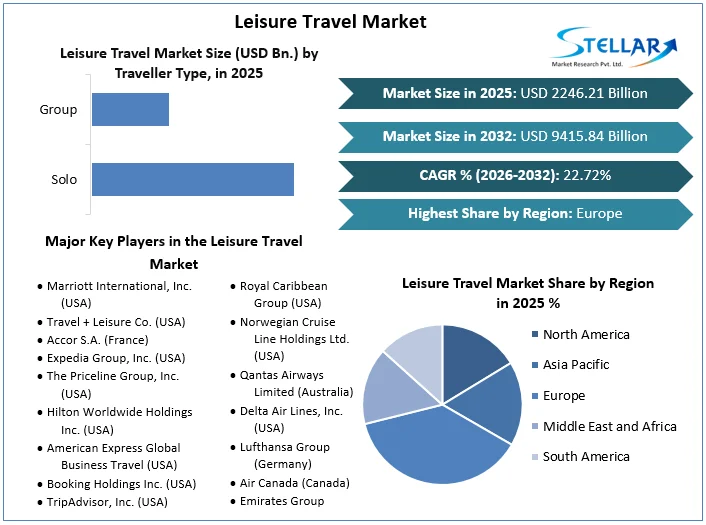
According to the latest industry analysis, the global Leisure Travel Market was valued at USD 2,246.21 billion in 2025 and is projected to reach nearly USD 9,415.84 billion by 2032, expanding at a CAGR of 22.72% during the forecast period 2026–2032.
Rising Travel Demand and Changing Consumer Lifestyles Drive Growth
Increasing disposable income, urbanization, and improved transportation infrastructure are major factors accelerating leisure travel demand worldwide. Consumers are allocating more spending toward vacations, entertainment, wellness retreats, cultural experiences, and adventure tourism.
Modern travelers are moving beyond traditional sightseeing and increasingly seeking personalized experiences, including local culture, nature-based activities, luxury vacations, and wellness-focused journeys. This shift toward experience-driven tourism is creating significant opportunities for travel companies, hospitality providers, and destination management organizations.
𝐃𝐨𝐰𝐧𝐥𝐨𝐚𝐝 𝐅𝐫𝐞𝐞 𝐏𝐃𝐅 𝐁𝐫𝐨𝐜𝐡𝐮𝐫𝐞: https://www.stellarmr.com/report/req_sample/Leisure-Travel-Market/1854
Digital Transformation Revolutionizes Travel Planning
Technology has become a major growth catalyst for the leisure travel industry. Online booking platforms, mobile travel applications, artificial intelligence-based recommendations, virtual tours, and digital payment solutions have simplified the travel planning process.
Travelers can now compare destinations, accommodations, flights, activities, and reviews through digital platforms, enabling more convenient and personalized travel decisions. Companies are increasingly adopting AI-powered tools to offer customized itineraries, dynamic pricing, and enhanced customer engagement.
The growing adoption of online travel channels is expected to remain a key factor supporting market expansion throughout the forecast period.
Growth of Experiential and Wellness Tourism
A major trend shaping the leisure travel market is the increasing demand for meaningful and immersive experiences. Travelers are showing greater interest in:
Adventure tourism
Eco-tourism
Cultural exploration
Wellness retreats
Food and culinary tourism
Heritage experiences
Wellness travel has gained significant popularity as consumers focus more on physical and mental well-being. Fitness-focused vacations, spa retreats, yoga programs, and nature-based travel experiences are becoming important segments within the broader leisure tourism industry.
Social Media Influences Travel Decisions
Social media platforms have become powerful tools influencing destination choices and travel trends. Travelers increasingly discover new destinations through videos, travel blogs, influencer recommendations, and user-generated content.
The popularity of visually appealing destinations and unique experiences has encouraged tourism companies to invest in digital marketing strategies. Social media campaigns, influencer partnerships, and virtual destination previews are helping brands attract younger generations, particularly Millennials and Generation Z travelers.
Market Segmentation Highlights
By Traveller Type
The market is segmented into solo travelers and group travelers. Group travel continues to represent a significant segment due to demand for family vacations, organized tours, and social travel experiences.
However, solo travel is gaining momentum as younger consumers seek independence, flexibility, and personalized experiences while exploring domestic and international destinations.
By Age Group
Millennials and Generation Z are becoming important contributors to leisure travel growth due to their preference for experiential travel, adventure activities, and digital-first booking experiences.
Baby Boomers and Generation X travelers continue to contribute significantly through premium vacations, luxury tourism, and longer-duration travel experiences.
By Expenditure Type
Major expenditure categories include:
Lodging
Transportation
Food & beverages
Events and entertainment
Other travel-related services
Accommodation and transportation remain major spending areas, while demand for unique experiences and entertainment activities continues to increase.
By Sales Channel
Online channels are witnessing rapid growth due to convenience, price comparison options, and easy access to travel services. Traditional travel agencies continue to serve customers seeking expert guidance and customized travel arrangements.
Regional Outlook
Europe is expected to maintain a leading position in the global leisure travel market due to its rich cultural heritage, diverse destinations, established tourism infrastructure, and strong international visitor base.
North America remains a major market supported by high consumer spending, advanced hospitality infrastructure, and strong domestic tourism activity.
The Asia-Pacific region is expected to witness significant growth due to rising middle-class populations, increasing disposable income, expanding airline connectivity, and growing interest in international travel. Countries such as China, India, Japan, and Southeast Asian nations are becoming important tourism markets.
Challenges Facing the Leisure Travel Industry
Despite strong growth opportunities, the market faces several challenges:
Rising travel costs and inflation
Geopolitical uncertainties
Environmental concerns related to tourism
Seasonal fluctuations in travel demand
Infrastructure limitations in emerging destinations
Sustainable tourism practices and responsible travel solutions are becoming increasingly important as destinations focus on balancing tourism growth with environmental protection.
𝐃𝐨𝐰𝐧𝐥𝐨𝐚𝐝 𝐅𝐫𝐞𝐞 𝐏𝐃𝐅 𝐁𝐫𝐨𝐜𝐡𝐮𝐫𝐞: https://www.stellarmr.com/report/req_sample/Leisure-Travel-Market/1854
Competitive Landscape
The leisure travel market is highly competitive, with companies focusing on digital innovation, customer personalization, partnerships, and global expansion.
Key players operating in the market include Marriott International, Travel + Leisure Co., Accor, Expedia Group, Booking Holdings, Hilton Worldwide Holdings, Tripadvisor, Airbnb, Royal Caribbean Group, Norwegian Cruise Line Holdings, and major global airlines. These companies are investing in technology, loyalty programs, and customized travel solutions to strengthen their market position.
Future Outlook
The future of the Leisure Travel Market remains highly promising as consumers continue prioritizing experiences, exploration, and personal well-being. Digital innovation, personalized travel services, sustainable tourism, and premium experiences will continue shaping the industry’s growth trajectory.
As travelers increasingly seek convenience, authenticity, and memorable experiences, companies that embrace technology, sustainability, and customer-centric strategies will be best positioned to capture emerging opportunities in the global leisure travel market through 2032.
