Pulmonary Edema Market: Advancements in Critical Care and Cardiovascular Treatment Drive Global Growth
The Pulmonary Edema Market is witnessing steady growth as healthcare systems worldwide focus on improving the diagnosis, treatment, and management of acute respiratory and cardiovascular disorders. Pulmonary edema, a condition characterized by fluid accumulation in the lungs, is most commonly associated with heart failure, coronary artery disease, kidney disorders, and acute respiratory distress syndrome (ARDS). As the global burden of cardiovascular diseases continues to rise, demand for advanced therapeutic solutions and critical care technologies is increasing significantly.
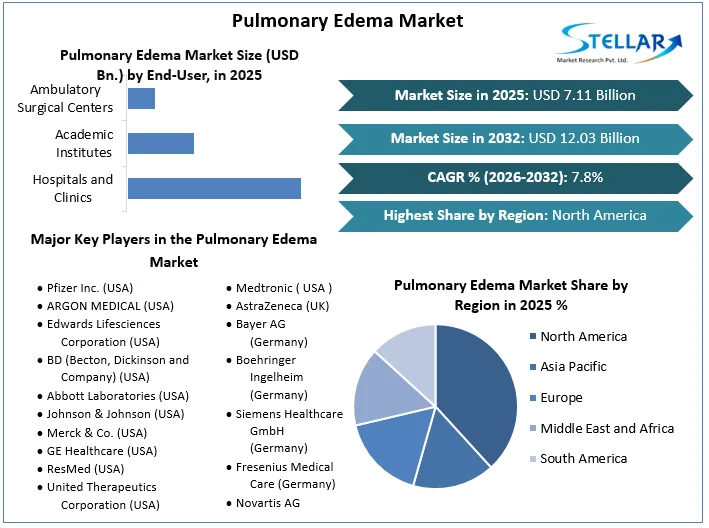
According to Stellar Market Research, the global Pulmonary Edema Market was valued at USD 7.11 billion in 2025 and is projected to reach approximately USD 12.03 billion by 2032, expanding at a CAGR of 7.8 % during the forecast period. Increasing investments in emergency healthcare infrastructure, technological innovation in diagnostic imaging, and improved treatment protocols are expected to support sustained market growth.
Download Free PDF Brochure: https://www.stellarmr.com/report/req_sample/pulmonary-edema-market/2673
Rising Cardiovascular Disease Burden Fuels Market Expansion
Cardiovascular diseases remain one of the leading causes of hospitalization and mortality worldwide. Heart failure, hypertension, coronary artery disease, and valvular heart disorders are among the primary causes of pulmonary edema. As aging populations continue to grow, healthcare providers are witnessing a higher incidence of chronic cardiovascular conditions that require rapid diagnosis and intensive medical intervention.
The increasing prevalence of diabetes, obesity, and sedentary lifestyles has further contributed to the rising number of patients requiring pulmonary edema treatment. Hospitals and emergency departments are expanding their critical care capabilities to manage these complex conditions more effectively.
Early Diagnosis and Advanced Treatment Improve Patient Outcomes
Early detection plays a crucial role in reducing complications associated with pulmonary edema. Healthcare providers are increasingly utilizing advanced diagnostic technologies such as chest X-rays, computed tomography (CT), lung ultrasound, echocardiography, and biomarker testing to identify the condition quickly and accurately.
Treatment strategies continue to evolve with improvements in pharmacological therapies, including diuretics, vasodilators, oxygen therapy, and medications that address the underlying cardiovascular disorder. Non-invasive ventilation systems, continuous positive airway pressure (CPAP), and high-flow oxygen therapy have significantly improved survival rates among critically ill patients.
Advances in intensive care monitoring technologies are also enabling physicians to deliver personalized treatment based on real-time patient data, reducing hospitalization time and improving recovery outcomes.
Growing Investments in Healthcare Infrastructure
Governments and healthcare organizations are investing heavily in emergency medicine and intensive care facilities to strengthen preparedness for cardiovascular emergencies and respiratory diseases. The expansion of critical care units, improved access to advanced medical devices, and greater availability of specialized healthcare professionals are supporting market growth globally.
Developing countries are also making substantial investments in healthcare modernization, improving access to diagnostic imaging equipment and life-saving respiratory support systems. These initiatives are expected to increase the adoption of pulmonary edema treatment solutions over the coming years.
Technological Innovation Reshaping Critical Care
Artificial intelligence and digital healthcare technologies are beginning to transform pulmonary edema diagnosis and patient management. AI-assisted medical imaging enables faster interpretation of chest scans, while remote patient monitoring systems allow physicians to track heart failure patients and detect early signs of fluid accumulation before severe complications develop.
Electronic health records integrated with predictive analytics are helping clinicians identify high-risk patients and optimize treatment pathways. Wearable health monitoring devices capable of tracking cardiovascular parameters are expected to further support preventive healthcare strategies.
In addition, pharmaceutical companies continue to invest in research aimed at developing safer and more effective therapies that reduce hospitalization rates and improve long-term cardiovascular outcomes.
Regional Market Outlook
North America continues to dominate the Pulmonary Edema Market due to its advanced healthcare infrastructure, high prevalence of cardiovascular diseases, widespread availability of diagnostic technologies, and significant healthcare spending. The United States remains a leading market for innovative cardiovascular therapies and critical care solutions.
Europe also represents a substantial share of the market, supported by strong public healthcare systems, aging populations, and increasing adoption of advanced respiratory care technologies. Countries including Germany, the United Kingdom, France, and Italy continue to invest in improving emergency medical services.
The Asia-Pacific region is expected to witness the fastest growth during the forecast period. Rapid urbanization, rising healthcare expenditure, expanding hospital infrastructure, and increasing awareness of cardiovascular health are driving demand across China, India, Japan, South Korea, and Southeast Asia.
Latin America and the Middle East & Africa are gradually emerging as promising markets due to improving healthcare access and increasing government investments in medical infrastructure.
Competitive Landscape
- Pfizer Inc. (USA)
- ARGON MEDICAL (USA)
- Edwards Lifesciences Corporation (USA)
- BD (Becton, Dickinson and Company) (USA)
- Abbott Laboratories (USA)
- Johnson & Johnson (USA)
- Bayer AG (Germany)
- Boehringer Ingelheim (Germany)
- Siemens Healthcare GmbH (Germany)
- Fresenius Medical Care (Germany)
Download Free PDF Brochure: https://www.stellarmr.com/report/req_sample/pulmonary-edema-market/2673
Emerging Trends Shaping the Market
Several key trends are expected to influence the future of the Pulmonary Edema Market:
Rising adoption of AI-assisted diagnostic imaging
Expansion of telemedicine and remote cardiac monitoring
Increasing use of non-invasive ventilation technologies
Development of precision medicine for cardiovascular diseases
Growing investment in emergency and intensive care facilities
Integration of predictive analytics in clinical decision-making
Continuous innovation in respiratory care devices
Greater emphasis on preventive cardiovascular healthcare
These trends are improving clinical efficiency while enabling earlier intervention and better patient outcomes.
Future Outlook
The future of the Pulmonary Edema Market appears highly promising as healthcare providers continue to prioritize rapid diagnosis, personalized treatment, and advanced critical care technologies. Growing investments in hospital infrastructure, increasing awareness of cardiovascular health, and continuous technological innovation are expected to sustain market expansion through 2032.
The integration of artificial intelligence, digital health platforms, and next-generation respiratory support systems will further enhance disease management while reducing healthcare costs. Companies that focus on innovation, clinical research, and global market expansion are likely to strengthen their competitive position in the coming years.
As the burden of cardiovascular and respiratory diseases continues to rise worldwide, the Pulmonary Edema Market is expected to remain an essential component of modern healthcare, creating significant opportunities for pharmaceutical manufacturers, medical device companies, healthcare providers, and investors seeking long-term growth in the global medical sector.
Media Contact
Stellar Market Research
Website: Stellar Market Research – Global Research Reports & Consulting
Email: sales@stellarmr.com
