Almond Drink Market Grows as Plant-Based Nutrition and Dairy-Free Lifestyles Drive Consumer Demand
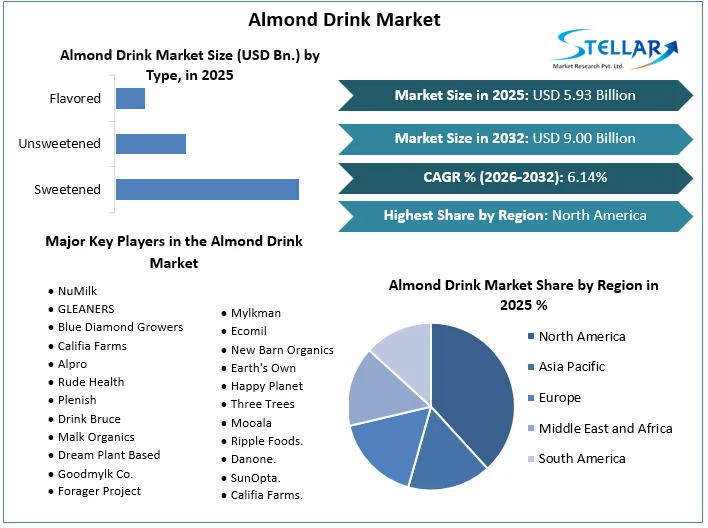
The global Almond Drink Market is experiencing robust growth as consumers increasingly embrace plant-based diets, lactose-free alternatives, and functional beverages. Rising health consciousness, expanding vegan populations, and growing demand for sustainable food choices are accelerating the adoption of almond drinks across retail, foodservice, and food manufacturing industries. According to Stellar Market Research, the global Almond Drink Market was valued at USD 5.93 billion in 2025 and is projected to reach nearly USD 9.00 billion by 2032, growing at a CAGR of 6.14% during the forecast period (2026–2032).
Consumer Shift Toward Plant-Based Beverages Fuels Market Expansion
Changing dietary preferences have positioned almond drinks as one of the most popular dairy alternatives worldwide. Consumers are increasingly choosing almond-based beverages because they are naturally lactose-free, cholesterol-free, and lower in calories than conventional dairy milk, making them suitable for vegans, lactose-intolerant individuals, and health-conscious consumers.
Growing awareness of nutrition, digestive health, and environmental sustainability has encouraged households to replace traditional dairy products with plant-based beverages. Almond drinks are now widely used in coffee, smoothies, breakfast cereals, baking, desserts, and cooking, further expanding their consumer base.
𝐃𝐨𝐰𝐧𝐥𝐨𝐚𝐝 𝐅𝐫𝐞𝐞 𝐏𝐃𝐅 𝐁𝐫𝐨𝐜𝐡𝐮𝐫𝐞: https://www.stellarmr.com/report/req_sample/Almond-Drink-Market/1895
Product Innovation Strengthens Market Opportunities
Manufacturers are continuously introducing new formulations to meet evolving consumer preferences. Fortified almond drinks enriched with calcium, vitamin D, vitamin B12, and protein are becoming increasingly popular among consumers seeking nutritional benefits alongside dairy-free alternatives.
Key trends shaping the Almond Drink Market include:
Unsweetened and low-sugar formulations
Organic almond beverages
Barista-style almond drinks
High-protein plant-based beverages
Vitamin- and mineral-fortified products
Clean-label ingredients
Sustainable packaging solutions
Functional wellness beverages
Companies are also expanding flavored product portfolios, including vanilla, chocolate, and coffee-inspired almond drinks to attract younger consumers and premium beverage buyers.
Retail and E-Commerce Expand Consumer Accessibility
The expansion of supermarkets, specialty health stores, and online grocery platforms has significantly improved the availability of almond drinks worldwide. E-commerce channels enable consumers to access a broader range of products while comparing nutritional profiles, ingredient lists, and pricing.
Foodservice operators, cafés, and coffee chains are increasingly offering almond drink options as consumers seek dairy-free alternatives in beverages. The growing popularity of specialty coffee and café culture continues to strengthen demand for barista-grade almond drinks.
Health and Sustainability Influence Purchasing Decisions
Health remains the primary purchasing factor in the almond drink industry. Consumers are increasingly choosing beverages that support weight management, heart health, and digestive wellness while avoiding lactose and dairy allergens.
Sustainability is also becoming a major competitive differentiator. Manufacturers are investing in responsibly sourced almonds, recyclable packaging, water-efficient production practices, and carbon reduction initiatives to meet evolving environmental expectations and strengthen brand loyalty.
Asia-Pacific Emerges as a Fast-Growing Market
North America and Europe remain well-established markets due to strong consumer awareness of plant-based nutrition and the widespread availability of dairy alternatives.
Meanwhile, Asia-Pacific is emerging as one of the fastest-growing regions. Rising disposable incomes, urbanization, increasing vegan adoption, and greater awareness of lactose intolerance are driving demand in countries such as India, China, Japan, and Southeast Asia. India has become one of the world’s largest importers of almond-based beverages, reflecting the growing popularity of plant-based nutrition.
Innovation and Premium Positioning Shape Competition
Manufacturers are differentiating themselves through premium ingredients, clean-label formulations, improved taste profiles, and enhanced nutritional value. Investment in research and development is helping companies improve texture, shelf life, and functionality while maintaining natural ingredient profiles.
Growing consumer demand for minimally processed products has also encouraged brands to reduce artificial additives and focus on transparent labeling.
Competitive Landscape
The Almond Drink Market remains highly competitive, with leading companies focusing on product innovation, geographic expansion, and sustainable sourcing strategies.
Major companies operating in the market include:
Blue Diamond Growers
Califia Farms
Alpro
Malk Organics
Plenish
Rude Health
NuMilk
GLEANERS
Drink Bruce
Pacific Foods
These companies continue introducing fortified beverages, expanding organic product lines, strengthening online distribution channels, and investing in environmentally responsible packaging to maintain their competitive positions.
𝐃𝐨𝐰𝐧𝐥𝐨𝐚𝐝 𝐅𝐫𝐞𝐞 𝐏𝐃𝐅 𝐁𝐫𝐨𝐜𝐡𝐮𝐫𝐞: https://www.stellarmr.com/report/req_sample/Almond-Drink-Market/1895
Future Outlook
The future of the Almond Drink Market remains highly promising as consumers increasingly prioritize healthier lifestyles, plant-based nutrition, and sustainable food choices. Continued innovation in fortified beverages, premium formulations, and functional ingredients is expected to create new opportunities across both developed and emerging markets.
According to Stellar Market Research, rising demand for dairy-free beverages, expanding retail availability, and continuous investment in product innovation will support sustained market growth through 2032. Companies that emphasize nutritional value, sustainability, and clean-label product development will be well positioned to capitalize on the evolving global plant-based beverage industry.
