Key Highlights
Consistent Sourcing Escalation: The global antimicrobial additives market is sustaining an upward valuation curve, showing continuous procurement growth across healthcare logistics and industrial polymer networks.
Stable Structural Growth: The market moves at a steady compound annual growth rate (CAGR), reflecting predictable, high-volume masterbatch consumption patterns across core global end-use verticals.
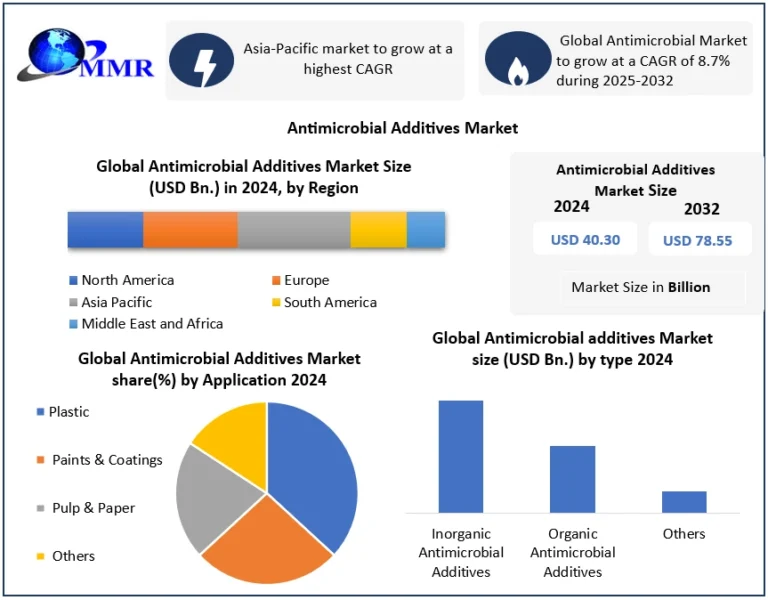
Inorganic Chemistry Dominance: Inorganic additives—primarily silver, zinc, and copper formulations—command more than 50% of global market value due to their ability to withstand intense extrusion and molding heat.
Paints & Coatings Expansion: The architectural and industrial coatings segment represents a primary application avenue, heavily utilized by property developers to stop mold, algae, and biofilm buildup.
Asia-Pacific Manufacturing Lead: The regional framework is dominated by Asia-Pacific economies, capturing a commanding share of global revenues backed by dense chemical casting footprints in China, India, and South Korea.
Why This Matters Now
Modern healthcare facility operators and commercial consumer goods groups are under massive operational pressure to control surface microbial growth without degrading structural base elements. Relying solely on short-term chemical liquid sanitizers presents tough maintenance limits because liquid agents evaporate quickly, leaving surfaces open to rapid cross-contamination and biofilm buildup between regular cleaning shifts. This hygiene challenge poses severe compliance risks for medical equipment designers, food processing plant managers, and transport infrastructure developers dealing with strict international cleanliness criteria.
Deploying high-efficiency antimicrobial additive matrices resolves these long-term surface sanitization limits directly. By compounding silver or zinc-based particles directly into base resins and coatings during early production phases, the finished structures gain continuous, life-long protection against bacteria, fungi, and mold. This permanent material defense allows product engineering teams to eliminate human cleaning errors, cut unexpected maintenance expenditures, extend consumer product lifespans, and fully comply with global biocidal product registries.
Market Overview
The antimicrobial additives market operates as a critical, highly regulated specialty chemical sector sitting at the crossroads of advanced particle stabilization, strict biological performance protocols, and global manufacturing supply lines. Because engineering effective low-leach masterbatches requires intense control over particle distribution, carrier resin matching, and surface migration mechanics, this market serves as a mandatory tier-one material provider for medical device producers, premium packaging converters, and heavy automotive interior component suppliers.
The market’s steady growth underscores a major transition toward active, self-sanitizing surfaces in public and private spaces alike. The commercial framework monitors continuous formulation developments across primary product classes (inorganic silver, zinc, copper vs. organic pyrithione and isothiazolinone compounds), application methods (plastics, paints & coatings, pulp & paper, textiles), and international regulatory verification frameworks.
Key Trends Driving Growth
The most powerful trend driving market expansion is the deep integration of low-leach silver and zinc additives within medical devices and hospital surfaces. Healthcare networks are prioritizing materials that reduce pathogen transfer paths on high-touch assets like ventilators, catheter tubes, surgical drapes, and clinical beds. This healthcare-driven shift directly increases the long-term consumption of validated, medical-grade inorganic additives designed to pass tough clinical safety audits.
Another primary driver is the rapid rise of functional “active packaging” matrices within the global food and beverage packaging sector. Food logistics managers are heavily utilizing customized antimicrobial films and container liners to block spoilage microbes like E. coli and Listeria, extending product shelf life without relying on heavy chemical food preservatives. This supply chain evolution guarantees a steady, high-volume recurring order book for plastic film extrusion networks and additive compounders worldwide.
Additionally, expanding real estate and commercial construction activities are prompting building material producers to offer built-in hygiene features. Leading coating manufacturers are incorporating advanced antimicrobial agents into premium wall paints, sealants, bathroom fixtures, and HVAC duct liners, helping property developers attract health-conscious commercial tenants and residential buyers.
Segment Insights
Inorganic Additives (Dominant Product Type): Hold the leading share of global market revenue. Their dominance is anchored by their exceptional structural durability, low human toxicity, and long-lasting antimicrobial action compared to older organic options.
Plastics & Polymers (Core Application Hub): Captures a major share of active material compounding, propelled by the rising demand for antimicrobial masterbatches used in single-use medical supplies, consumer electronics housings, and food wrap films.
Healthcare & Medical (Primary End-Use Driver): Accounts for a highly profitable slice of market volume, supported by strict hospital sanitation mandates and growing global investments in advanced clinical care facilities.
Regional Growth Story
The Asia-Pacific territory commands the largest revenue share of the global antimicrobial additives landscape. Rapid industrialization and expanding healthcare infrastructure across China, India, and Southeast Asia have positioned the region as a high-volume manufacturing center for treated consumer polymers and industrial packaging. This massive manufacturing footprint forces leading international chemical conglomerates to build major masterbatch production units close to these core Asian processing lines.
Simultaneously, North America and Europe are recording sustained growth, driven by mature regulatory frameworks and a strong corporate focus on high-tier packaging options. Strict enforcement of the European Biocidal Products Regulation (BPR) and US EPA guidelines creates a highly professional market that rewards suppliers offering well-documented, environmentally friendly additives. Furthermore, advanced biotechnology and aerospace firms in these regions keep localized demand for specialized low-haze, high-clarity antimicrobial films steadily rising.
Market Restraints & Challenges
Complex International Biocidal Regulations: Shifting safety registries and tough approval steps managed by the EPA, FDA, and European BPR can delay new product launches, increasing compliance costs for smaller chemical formulators.
Toxicity Concerns and Leaching Risks: Environmental questions surrounding the long-term leaching of certain metallic nanoparticles into aquatic ecosystems can lead to stricter usage limits in specific water-contact applications.
Competitive Landscape
The global marketplace is highly competitive, led by an established group of international chemical majors, specialized surface-protection brands, and independent compounding houses. Key industry participants are continually optimizing their particle dispersion methods and introducing recycled-content compatible formulations to protect their market shares against low-cost, uncertified chemical imports.
To maintain their market positions, leading players focus on developing multifunctional additives that offer odor control, UV protection, and stain resistance alongside core antimicrobial benefits. Companies compete directly on the transparency of their additive batches, compliance with international food-contact and medical testing standards, and the breadth of their technical support setups, allowing them to secure long-term raw material contracts with major global product brands.
Key Market Players
BASF SE (Germany)
Lanxess AG (Germany)
Clariant AG (Switzerland)
DuPont de Nemours, Inc. (United States)
Aviant Corporation (United States)
Sanitized AG (Switzerland)
Microban International (United States)
BioCote Ltd (United Kingdom)
Milliken Chemical (United States)
LyondellBasell Industries N.V. (Netherlands)
Strategic Implications
For plastic extrusion managers and architectural product development directors worldwide, relying entirely on post-production topical sanitizing sprays without a built-in material protection plan represents an inefficient approach. As commercial consumer spaces and healthcare networks continue to tighten their hygiene standards, untreated base materials will face increased market resistance and potential liability claims. Partnering early with certified antimicrobial additive suppliers is a key step to future-proof material catalogs and deliver self-sanitizing characteristics that handle demanding field use.
For specialty chemical formulators and masterbatch plant managers, treating antimicrobial options as basic, low-margin chemical powders limits future commercial success. As modern packaging lines and medical groups demand zero-haze finishes and precise, controlled-release nanoparticle mechanics, buyers favor vendors that offer tailored, process-ready additive blends. Strategic capital allocation toward advanced liquid and pelletized compounding systems is essential to securing high-volume supply contracts with major global manufacturing groups.
Future Outlook
The trajectory of the global antimicrobial additives market will be shaped by the development of plant-derived natural biocide compounds, the expanding use of bio-based carrier resins in active food packaging, and the integration of smart surface monitoring indicators that track real-time antimicrobial strength. As supply loops adapt to rising green chemical requirements and strict corporate environmental goals, long-term market leadership will belong to suppliers that master non-toxic, low-leach additive stabilization. Future sector leaders will be the chemical innovators that blend robust biological performance with streamlined international regulatory tracking.
Analyst Perspective
“The structural transformation of global hospital hygiene protocols and food logistics packaging formats is fundamentally shifting what material compounders require from chemical inputs,” states a specialty chemicals and polymer specialist. “Suppliers that proactively align their manufacturing layouts to deliver high-stability, low-haze inorganic additive lines will capture a larger market share as global clean-material mandates expand.”
About Maximize Market Research
Maximize Market Research Pvt. Ltd. (MMR) is a global market research and consulting company that provides reliable, data-focused, and practical business insights. The firm serves a wide range of industries, including healthcare, pharmaceuticals, technology, automotive, electronics, chemicals, personal care, and consumer goods. Through market forecasts, competitive analysis, strategic consulting, and industry impact assessments, MMR helps organizations understand changing market conditions, identify growth opportunities, and make informed business decisions for long-term success.
Office Address:
2nd Floor, Navale IT Park Phase 3,
Pune-Bangalore Highway, Narhe,
Pune, Maharashtra 411041, India.
Contact: +91 9607365656
