The Canada Carbon Neutral Market is gaining significant momentum as the country accelerates its transition toward a low-carbon economy. With a strong commitment to achieving net-zero emissions by 2050, Canada is investing heavily in renewable energy, carbon reduction technologies, and sustainable infrastructure.
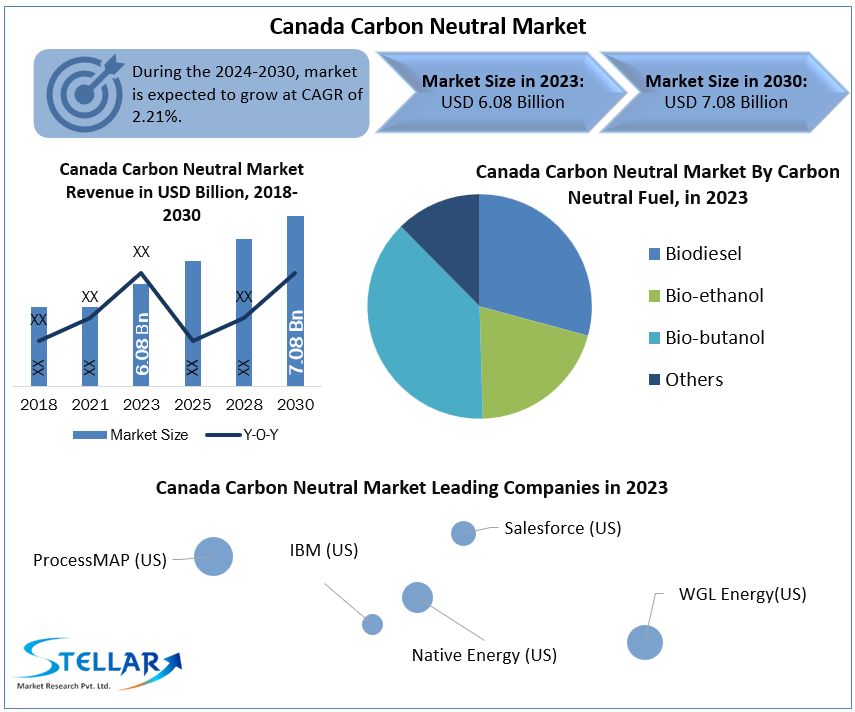
Canada Carbon Neutral Market size was valued at US$ 6.08 Bn. in 2023 and the total revenue is expected to grow at a CAGR of 2.21% through 2024 to 2030, reaching nearly US$ 7.08 Bn.
Driven by federal and provincial policies, corporate sustainability initiatives, and increasing public awareness, the market is evolving across key sectors including energy, transportation, construction, and manufacturing.
A Market Driven by Policy Commitment and Clean Energy Expansion
A defining trend in the Canada carbon neutral market is the alignment of national climate goals with aggressive policy frameworks and clean energy investments. Government initiatives such as carbon pricing, emissions reduction targets, and funding for green projects are accelerating the adoption of low-carbon technologies.
Canada’s abundant natural resources, including hydroelectric power, wind, and solar energy, provide a strong foundation for renewable energy development.
Key Market Insights
- Canada is a global leader in clean energy and sustainability initiatives.
- Hydroelectric power dominates the renewable energy mix.
- Carbon pricing policies are driving emissions reduction.
- Green hydrogen is emerging as a key growth area.
- Carbon capture technologies are gaining traction.
- Investments in clean infrastructure are increasing.
- Corporate ESG commitments are accelerating market adoption.
𝐃𝐨𝐰𝐧𝐥𝐨𝐚𝐝 𝐅𝐫𝐞𝐞 𝐏𝐃𝐅 𝐁𝐫𝐨𝐜𝐡𝐮𝐫𝐞: https://www.stellarmr.com/report/req_sample/Canada-Carbon-Neutral-Market/238
Market Drivers Accelerating Growth
1. Strong Government Policies and Net-Zero Targets
Canada’s commitment to achieving net-zero emissions by 2050 is a major growth driver.
2. Expansion of Renewable Energy Capacity
Hydro, wind, and solar energy projects are supporting decarbonization.
3. Corporate Sustainability Initiatives
Companies are adopting low-carbon strategies to meet ESG goals.
Market Challenges and Restraints
1. High Transition Costs
Shifting to clean energy and low-carbon technologies requires significant investment.
2. Infrastructure and Grid Limitations
Upgrading energy systems to support renewable integration can be complex.
Technology and Innovation Trends
Technological innovation is central to the Canada carbon neutral market. The adoption of carbon capture, utilization, and storage (CCUS), renewable energy systems, energy storage solutions, and hydrogen technologies is accelerating decarbonization efforts.
Canada is a leader in carbon capture projects, particularly in the oil sands sector, where CCUS is used to reduce emissions. Hydrogen energy—both blue and green—is gaining traction as a clean fuel alternative for industry and transportation.
Energy storage systems and smart grids are enhancing the integration of renewable energy into the power system. Digital technologies, including AI and data analytics, are improving energy efficiency and optimizing resource management.
Nature-based solutions, such as forest conservation and carbon offset programs, are also playing a significant role in achieving carbon neutrality.
𝐃𝐨𝐰𝐧𝐥𝐨𝐚𝐝 𝐅𝐫𝐞𝐞 𝐏𝐃𝐅 𝐁𝐫𝐨𝐜𝐡𝐮𝐫𝐞: https://www.stellarmr.com/report/req_sample/Canada-Carbon-Neutral-Market/238
Regional Insights: Alberta Leads, Ontario and Quebec Expand
Alberta is a key region in Canada’s carbon neutral market, driven by its focus on carbon capture and emissions reduction in the oil and gas sector.
Ontario and Quebec are major contributors, supported by strong industrial bases and investments in clean energy and infrastructure. Quebec, in particular, benefits from its extensive hydroelectric resources.
British Columbia is also advancing sustainability initiatives, including clean energy projects and carbon reduction strategies.
Recent Industry Developments
- Suncor Energy (2025): Invested in carbon capture and emissions reduction technologies.
- Enbridge (2024): Expanded renewable energy and hydrogen projects.
- Brookfield Renewable (2025): Strengthened clean energy investments.
- Environment and Climate Change Canada (2024): Promoted climate policies and sustainability initiatives.
- Canadian Net-Zero Emissions Accountability Act (2025): Reinforced national climate commitments.
Competitive Landscape
The Canada carbon neutral market is highly dynamic, with energy companies, technology providers, and government entities actively shaping the transition. Companies are focusing on renewable energy development, carbon management technologies, and strategic partnerships to strengthen their market presence.
Public-private collaborations and investments in innovation are key factors driving market growth.
Analyst Perspective
A senior market analyst notes:
“Canada’s carbon neutral market is positioned as a global leader in clean energy and sustainability. Continued policy support and technological advancements will be critical in achieving long-term climate goals.”
Future Outlook
The Canada Carbon Neutral Market is expected to witness strong growth in the coming years, supported by increasing investments in clean energy, advancements in low-carbon technologies, and robust policy frameworks.
The expansion of hydrogen infrastructure, development of carbon capture solutions, and integration of renewable energy systems will continue to shape the market.
As Canada progresses toward its net-zero goals, the carbon neutral market will present significant opportunities for investors, energy companies, and technology providers.
Overall, the market is set to play a crucial role in building a sustainable and low-carbon future.
