Drilling Polymers Market: Advanced Fluid Technologies Power the Future of Energy Exploration
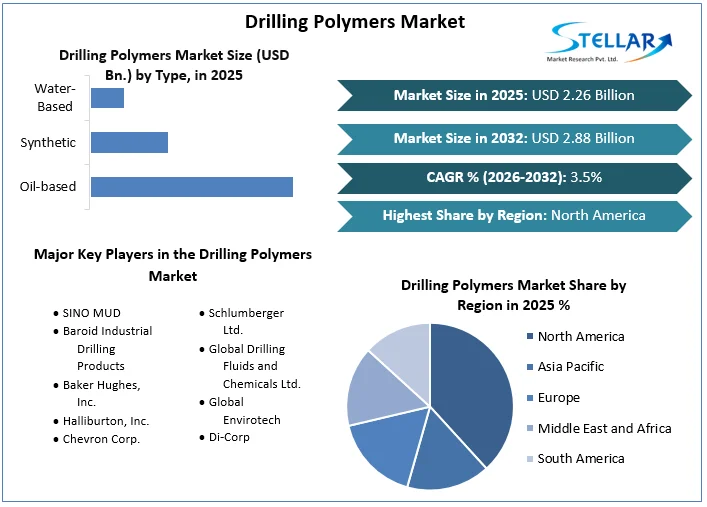
The global energy industry continues to invest in deeper, more complex, and technically challenging drilling operations, driving steady demand for high-performance drilling fluids. At the center of this evolution is the Drilling Polymers Market, where advanced polymer formulations are improving wellbore stability, drilling efficiency, and environmental performance. As exploration activities expand across oil & gas, mining, geothermal, and construction sectors, drilling polymers have become indispensable components of modern drilling operations. According to the Stellar Market Research report, the global market is projected to grow from USD 2.26 billion in 2025 to USD 2.88 billion by 2032, registering a CAGR of 3.5% during the forecast period.
What Are Drilling Polymers?
Drilling polymers are chemical additives used in drilling fluids (drilling muds) to enhance viscosity, control fluid loss, stabilize boreholes, suspend drill cuttings, and improve lubrication. Available in natural, synthetic, oil-based, and water-based formulations, these polymers help drilling operators increase operational efficiency while minimizing equipment wear and environmental impact.
As drilling projects become deeper and more technically demanding, the role of specialized drilling polymers continues to expand across multiple industries.
𝐃𝐨𝐰𝐧𝐥𝐨𝐚𝐝 𝐅𝐫𝐞𝐞 𝐏𝐃𝐅 𝐁𝐫𝐨𝐜𝐡𝐮𝐫𝐞: https://www.stellarmr.com/report/req_sample/Drilling-Polymers-Market/1477
Growing Energy Exploration Is Driving Market Growth
One of the primary factors supporting the Drilling Polymers Market is the continued investment in oil and gas exploration. Rising global energy demand has encouraged operators to develop conventional and unconventional reserves, including shale formations, offshore fields, and deepwater resources.
Modern drilling techniques such as horizontal drilling and hydraulic fracturing require advanced polymer systems capable of maintaining drilling fluid stability under extreme pressure and temperature conditions. These performance requirements are encouraging continuous innovation in drilling fluid chemistry.
Water-Based Drilling Fluids Gain Popularity
Environmental regulations and sustainability objectives are accelerating the shift toward water-based drilling fluids. Compared with oil-based alternatives, water-based systems offer lower environmental impact while meeting increasingly stringent regulatory requirements.
Manufacturers are developing high-performance water-compatible polymers that deliver improved shale inhibition, filtration control, and wellbore stability without compromising drilling efficiency.
This transition is expected to create long-term growth opportunities for polymer producers focused on environmentally responsible formulations.
Mining and Geothermal Applications Expand Market Potential
Although oil and gas remain the largest end-use industry, drilling polymers are finding increasing applications in mining, construction, and geothermal energy projects.
Mining companies utilize drilling polymers during mineral exploration and extraction, while construction firms rely on them for foundation drilling and piling operations. Growing investments in geothermal energy projects also support demand for specialized drilling fluids capable of operating under challenging geological conditions.
Diversification across industries helps reduce the market’s dependence on fluctuations in oil prices.
Technological Innovation Improves Drilling Performance
Research and development continue to produce more efficient drilling polymer formulations with enhanced thermal stability, biodegradability, and operational performance.
Recent innovations include:
High-temperature resistant polymers
Bio-based drilling additives
Improved shale stabilization technologies
Low-toxicity polymer formulations
Digital drilling fluid monitoring systems
Enhanced filtration control additives
These advancements help operators reduce drilling time, improve well productivity, and lower overall operational costs.
North America Maintains Market Leadership
North America remains the largest regional market, supported by extensive oil and gas exploration activities, particularly in the United States and Canada. The widespread adoption of horizontal drilling and hydraulic fracturing technologies continues to generate substantial demand for advanced drilling polymers.
Meanwhile, Asia-Pacific is expected to register the fastest growth due to increasing investments in energy infrastructure, mining projects, and industrial development across countries such as China, India, and Australia.
Sustainability Is Becoming a Competitive Advantage
Environmental considerations are reshaping product development across the drilling chemicals industry. Manufacturers are investing in sustainable polymer technologies that reduce waste generation, improve biodegradability, and support responsible resource extraction.
Growing interest in circular economy initiatives has also encouraged research into recycling drilling fluids and recovering polymer materials for reuse in future drilling operations.
Companies that successfully combine operational performance with environmental compliance are expected to strengthen their competitive position.
Challenges Facing the Industry
Despite stable growth prospects, the market faces several challenges.
Volatile Oil Prices
Demand for drilling polymers remains closely linked to oil and gas exploration activity. Fluctuating crude oil prices can delay drilling investments and reduce consumption of drilling chemicals.
Raw Material Price Fluctuations
Many drilling polymers rely on petrochemical feedstocks or agricultural raw materials whose prices can vary significantly, affecting production costs and profit margins.
Increasing Regulatory Requirements
Governments worldwide continue strengthening environmental regulations governing drilling fluids and chemical additives. Compliance with evolving standards requires ongoing research, product testing, and investment.
Competitive Landscape
The Drilling Polymers Market is characterized by continuous product innovation and strategic partnerships among drilling chemical manufacturers, oilfield service providers, and specialty chemical companies.
Leading market participants focus on:
Developing environmentally friendly polymer formulations
Expanding production capacity
Investing in research and development
Enhancing drilling fluid performance
Supporting digital drilling technologies
Expanding presence in emerging energy markets
Strategic collaboration between chemical manufacturers and energy companies is expected to remain a key competitive strategy.
Future Outlook
The outlook for the Drilling Polymers Market remains positive as global energy demand, infrastructure development, and mineral exploration continue to support drilling activity. While traditional oil and gas applications will remain the primary revenue source, expanding geothermal energy projects, mining operations, and sustainable drilling practices will create additional opportunities throughout the forecast period.
Growing investment in high-performance, environmentally responsible drilling fluids will encourage continued innovation in polymer chemistry, allowing operators to improve drilling efficiency while meeting increasingly stringent environmental standards.
𝐃𝐨𝐰𝐧𝐥𝐨𝐚𝐝 𝐅𝐫𝐞𝐞 𝐏𝐃𝐅 𝐁𝐫𝐨𝐜𝐡𝐮𝐫𝐞: https://www.stellarmr.com/report/req_sample/Drilling-Polymers-Market/1477
Conclusion
The Drilling Polymers Market continues to play a critical role in improving drilling performance across oil & gas, mining, construction, and geothermal industries. Advances in polymer technology, increasing adoption of water-based drilling fluids, and expanding exploration activities are supporting steady market growth.
As the energy sector evolves toward greater efficiency and sustainability, manufacturers that invest in innovative, cost-effective, and environmentally compliant drilling polymer solutions will be well positioned to capitalize on future market opportunities.
