Magnesium Raw Materials Market: Lightweight Materials Fuel the Next Wave of Industrial Innovation
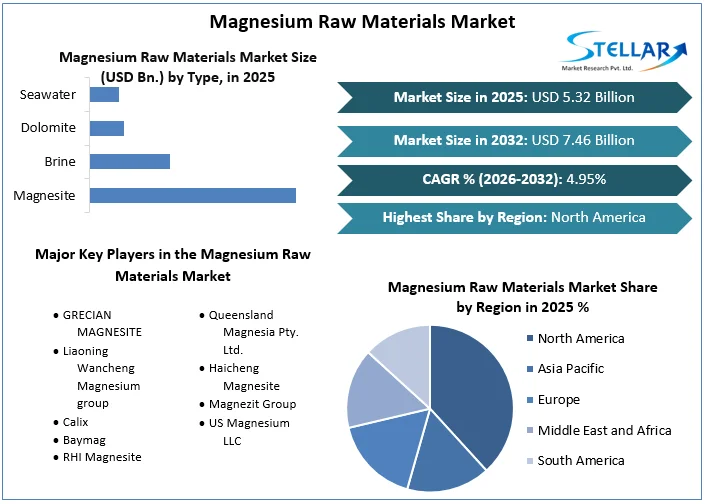
The growing demand for lightweight, high-strength, and sustainable materials is reshaping industries worldwide, placing magnesium at the center of modern manufacturing. From automotive and aerospace applications to electronics and renewable energy technologies, magnesium raw materials have become essential for improving performance while reducing weight and environmental impact. According to the Stellar Market Research report, the Magnesium Raw Materials Market was valued at USD 5.32 billion in 2025 and is projected to reach USD 7.46 billion by 2032, growing at a CAGR of 4.95% during the forecast period.
Understanding the Magnesium Raw Materials Market
Magnesium raw materials include naturally occurring resources such as magnesite, brine, dolomite, and seawater, which serve as primary feedstocks for magnesium extraction and processing. These materials are widely used to manufacture magnesium metal and alloys that deliver exceptional strength-to-weight ratios, corrosion resistance, thermal conductivity, and electromagnetic shielding properties.
The market supports numerous industries, including automotive, aerospace, electronics, medical devices, construction, and renewable energy, making magnesium one of the most strategically important industrial materials.
𝐃𝐨𝐰𝐧𝐥𝐨𝐚𝐝 𝐅𝐫𝐞𝐞 𝐏𝐃𝐅 𝐁𝐫𝐨𝐜𝐡𝐮𝐫𝐞: https://www.stellarmr.com/report/req_sample/Magnesium-Raw-Materials-Market/1479
Automotive Lightweighting Continues to Drive Demand
One of the strongest growth drivers for the Magnesium Raw Materials Market is the automotive industry’s transition toward lightweight vehicles. Automakers are increasingly replacing heavier materials with magnesium alloys to improve fuel efficiency, extend electric vehicle driving range, and reduce greenhouse gas emissions.
Magnesium components are commonly used in steering wheels, transmission housings, seat frames, dashboard structures, and engine components. As governments continue tightening vehicle emission standards, demand for lightweight materials is expected to remain strong throughout the forecast period.
Aerospace and Electronics Expand Market Opportunities
Beyond transportation, aerospace manufacturers continue adopting magnesium alloys because of their high strength and low density. Aircraft producers rely on magnesium components to reduce aircraft weight, improve fuel efficiency, and enhance overall performance.
The electronics industry also represents an important growth area. Magnesium is increasingly used in laptops, smartphones, cameras, and consumer electronics due to its lightweight characteristics, durability, and excellent heat dissipation capabilities. Growing demand for portable electronic devices is creating new opportunities for magnesium suppliers.
Renewable Energy and Sustainable Construction Boost Consumption
The global transition toward clean energy is generating additional demand for magnesium raw materials. Magnesium is used in wind turbines, solar energy systems, and emerging battery technologies, including magnesium-ion batteries being explored as alternatives to conventional lithium-ion solutions.
Sustainable construction is another promising application area. Magnesium-based building materials offer fire resistance, durability, and environmental benefits, making them attractive for green building projects focused on reducing carbon footprints.
Recycling and Advanced Extraction Technologies Improve Sustainability
Sustainability has become a key competitive factor across the magnesium industry. Manufacturers are investing in recycling technologies that recover magnesium from industrial scrap, reducing both production costs and energy consumption.
At the same time, advances in extraction and refining technologies are improving production efficiency while lowering environmental impact. These innovations help manufacturers comply with stricter environmental regulations and support long-term resource conservation.
Asia-Pacific Dominates Global Production
Asia-Pacific remains the leading region in the Magnesium Raw Materials Market due to abundant mineral reserves, large-scale production facilities, and strong industrial demand. China continues to play a dominant role in global magnesium production, influencing international supply dynamics and pricing.
North America is expected to experience significant growth as manufacturers invest in domestic production capabilities to strengthen supply chain resilience. Europe also continues expanding magnesium consumption, supported by automotive lightweighting initiatives and sustainability regulations.
Challenges Facing the Market
Despite favorable long-term prospects, several factors present challenges for industry participants.
Energy-Intensive Production
Magnesium production requires significant energy inputs, making manufacturers vulnerable to fluctuations in electricity and fuel prices while increasing environmental compliance costs.
Supply Chain Concentration
Global magnesium production remains concentrated in a limited number of regions. Geopolitical developments, mining regulations, and trade policies can affect raw material availability and pricing.
Price Volatility
Changes in supply-demand dynamics, transportation costs, and raw material availability contribute to periodic price fluctuations, creating uncertainty for downstream manufacturers.
Competitive Landscape
The Magnesium Raw Materials Market features both global and regional producers focused on expanding production capacity, improving extraction technologies, and enhancing product quality.
Leading companies are investing in:
Sustainable mining practices
High-purity magnesium production
Recycling and circular economy initiatives
Advanced processing technologies
Capacity expansion projects
Strategic partnerships with automotive and aerospace manufacturers
Continuous research and development remain essential for improving efficiency and meeting the growing demand for lightweight, high-performance materials.
𝐃𝐨𝐰𝐧𝐥𝐨𝐚𝐝 𝐅𝐫𝐞𝐞 𝐏𝐃𝐅 𝐁𝐫𝐨𝐜𝐡𝐮𝐫𝐞: https://www.stellarmr.com/report/req_sample/Magnesium-Raw-Materials-Market/1479
Future Outlook
The outlook for the Magnesium Raw Materials Market remains positive as industries increasingly prioritize lightweight engineering, energy efficiency, and sustainable manufacturing. Growing adoption of electric vehicles, expanding renewable energy infrastructure, and ongoing technological innovation are expected to support steady market growth over the coming years.
Emerging applications such as magnesium-ion batteries, advanced medical devices, and environmentally friendly construction materials could further diversify market opportunities. Companies that invest in efficient extraction technologies, supply chain resilience, and sustainable production practices will be well positioned to capitalize on future demand.
Conclusion
The Magnesium Raw Materials Market is becoming increasingly important as manufacturers across multiple industries seek lighter, stronger, and more sustainable material solutions. Rising demand from automotive, aerospace, electronics, renewable energy, and construction sectors continues to create attractive growth opportunities for producers and suppliers.
With technological advancements improving production efficiency and recycling capabilities, magnesium is expected to play an even greater role in the global transition toward cleaner transportation, advanced manufacturing, and sustainable industrial development. As investment in lightweight materials accelerates, the market is well positioned for stable long-term expansion.
