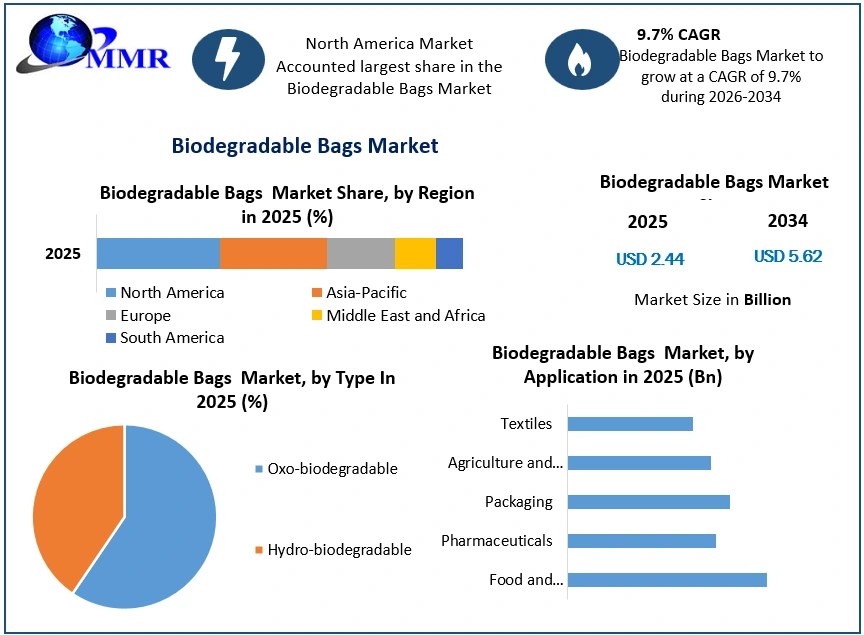
Key Highlights
Market Dynamics: Driven by regulatory shifts and corporate sustainability commitments.
Key Growth Driver: Escalating bans on traditional single-use plastic bags.
Dominant Material: Starch-based blends for grocery and waste collection applications.
Regional Leadership: North America maintains a strong share due to advanced retail compliance and municipal waste mandates.
Primary Challenge: The gap between high raw material costs and price-sensitive retail demand.
Why This Matters Now
Chemical manufacturers and industrial packaging buyers are witnessing the erosion of the “cheap plastic” model. As governments impose levies on conventional plastics, the total cost of ownership—including regulatory fines and brand devaluation—now favors biodegradable alternatives. Procurement leaders who pivot to standardized, certified compostable materials today secure a first-mover advantage in a market where supply chains are increasingly constrained by the demand for sustainable, plant-based feedstocks.
Market Overview
The Biodegradable Bags Market serves as the high-volume frontline of the broader bioplastics transition. These products, ranging from retail carrier bags to heavy-duty industrial waste liners, are designed to integrate into existing composting infrastructure. The current market state is defined by a transition from “green-washing” alternatives to scientifically validated, certified compostable materials (such as those meeting EN 13432 standards). This evolution is critical for aligning with the circular economy goals currently dominating the strategic agendas of both EU and North American retailers.
Key Trends Driving Growth
Legislative Pressure: The widespread implementation of single-use plastic bans has forced retailers to reconsider their entire packaging portfolio. This policy-driven demand provides a predictable, high-volume growth floor that commodity plastics no longer offer.
Material Innovation: R&D efforts are focusing on balancing tensile strength with decomposition rates. The integration of starch-based blends and PLA (Polylactic Acid) is enabling manufacturers to bridge the performance gap between conventional polyolefins and eco-friendly alternatives.
Retail Sourcing Policies: Leading grocery chains are mandating the use of biodegradable bags to satisfy consumer demand for eco-conscious shopping experiences. This “top-down” pressure is shifting the procurement power from individual franchise owners to centralized, sustainable sourcing departments.
Get a free sample
Segment Insights
Dominant Segment (Material): Starch-Based Blends. These materials currently dominate due to their optimal balance between processability on existing extrusion machinery and cost-effectiveness compared to more advanced biopolymers.
Fastest-Growing Segment (Application): Garbage and Waste Collection Bags. Driven by municipal mandates to divert organic waste from landfills, this segment benefits from high-volume, recurring institutional contracts.
Regional Growth Story
North America remains a cornerstone of the global market, underpinned by mature waste-handling infrastructure and aggressive state-level bans on conventional plastics. While Europe is a leader in regulatory-driven adoption, the Asia-Pacific region is emerging as the fastest-growing hub for production. In nations like India and China, the local availability of starch feedstocks and an expanding manufacturing base are positioning the region to transition from a consumer to a global supplier, effectively scaling down production costs through localized vertical integration.
Competitive Landscape
The competitive environment is consolidating. Strategic partnerships between chemical giants and localized packaging converters are becoming the norm. Large manufacturers are acquiring smaller, innovative biopolymer startups to secure proprietary “drop-in” solutions that do not require massive capital expenditure (CapEx) to modify existing production lines. This trend signals a shift toward a market where pricing power is held by those who control the raw material supply chain rather than those who simply convert it.
Recent Developments
Process Efficiency: Manufacturers are implementing advanced extrusion technology that allows for thinner, stronger film gauges, directly addressing the “high-cost” barrier that previously limited market penetration.
Certification Focus: Producers are investing heavily in third-party testing and certification systems. Clear labeling is now a vital sales tool to avoid the “contamination” of recycling streams, a major risk factor for municipal waste managers.
Strategic Sourcing: Major retailers are signing multi-year, fixed-price supply agreements with manufacturers to hedge against the inherent price volatility of biopolymer resins.
Strategic Implications
For boards and procurement leaders, the primary risk is not adoption, but infrastructure misalignment. Biodegradable bags are only effective if the destination is a certified composting facility. Future-proofing a company’s packaging strategy requires mapping sourcing to regional waste-management capabilities. Companies that successfully collaborate with local municipalities to ensure “closed-loop” bag disposal will mitigate the risk of regulatory backlash and enhance their environmental, social, and governance (ESG) reporting metrics.
Future Outlook
The global biodegradable bags market is moving toward a standardization phase where performance, price, and compostability-compliance define the winners. The long-term survivors will be firms that effectively manage feedstock costs through local, agricultural-based partnerships while aggressively investing in thin-film technologies that make bioplastics cost-competitive with conventional alternatives.
Analyst Perspective: “The shift toward biodegradable bags is an structural necessity. Companies that view this as a simple supply-chain swap are missing the bigger picture: the winners will be those who integrate their packaging lifecycle directly into the municipal circular economy. The competitive edge lies in the ability to balance high-volume manufacturing with the certification requirements of local and international regulatory bodies.” — Ankita Kagwade, Analyst.
About Maximize Market Research
Maximize Market Research Pvt. Ltd. (MMR) is a global market research and consulting company that provides reliable, data-focused, and practical business insights. The firm serves a wide range of industries, including healthcare, pharmaceuticals, technology, automotive, electronics, chemicals, personal care, and consumer goods. Through market forecasts, competitive analysis, strategic consulting, and industry impact assessments, MMR helps organizations understand changing market conditions, identify growth opportunities, and make informed business decisions for long-term success.
2nd Floor, Navale IT Park Phase 3
Pune Banglore Highway, Narhe
Pune, Maharashtra 411041, India
+91 9607365656
sales@maximizemarketresearch.com
