Market Overview
The Lager Market is experiencing steady expansion as consumer preferences shift toward diverse beer experiences, premium-quality products, and innovative brewing techniques. Lager remains one of the most widely consumed beer categories worldwide due to its refreshing taste, affordability, and broad appeal among different consumer groups. Increasing urbanization, rising disposable incomes, changing lifestyles, and growing demand for low-alcohol and craft-inspired beverages are reshaping the competitive landscape of the global lager industry.
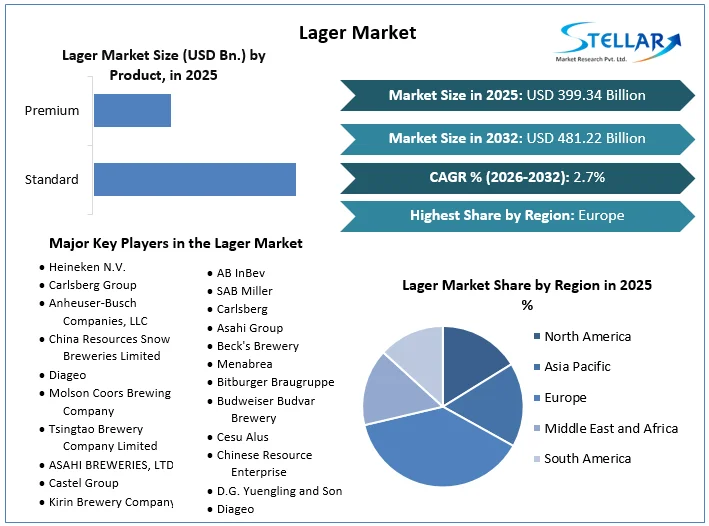
According to market analysis, the Lager Market was valued at USD 399.34 billion in 2025 and is expected to grow at a CAGR of 2.70% from 2026 to 2032, reaching nearly USD 481.22 billion by 2032. The market growth is supported by expanding beer consumption in emerging economies, product diversification by manufacturers, and increased investment in sustainable brewing operations.
Download Free PDF Brochure: https://www.stellarmr.com/report/req_sample/Lager-Market/2093
Growing Demand for Premium and Specialty Lager Products
One of the major trends influencing the Lager Market is the rising consumer preference for premium and specialty beer products. While traditional mass-produced lagers continue to maintain strong market demand, consumers are increasingly exploring products with unique flavors, higher-quality ingredients, and distinctive brewing processes.
Millennials and younger consumers are particularly contributing to this transformation by seeking new beverage experiences. Premium lagers, craft-style lagers, organic variants, and flavored options are gaining popularity as breweries focus on creating differentiated products. This trend has encouraged major beer manufacturers to expand their product portfolios and introduce innovative offerings targeting evolving consumer expectations.
The growing influence of social gatherings, restaurants, bars, and entertainment industries is also supporting lager consumption. As hospitality sectors continue recovering and expanding globally, demand for beer products, including lagers, is expected to remain strong.
Key Growth Drivers of the Lager Market
Rising Beer Consumption in Emerging Economies
Emerging markets across Asia Pacific, Latin America, and Africa are becoming important growth centers for the lager industry. Economic development, increasing middle-class populations, and rising disposable incomes are encouraging consumers to spend more on recreational beverages.
Countries such as China, India, Brazil, and Southeast Asian nations are witnessing increasing demand for beer products due to changing social habits and expanding urban populations. International and regional breweries are investing in these markets through local production facilities, distribution networks, and targeted marketing strategies.
Product Innovation and Flavor Diversification
Innovation is playing a crucial role in strengthening market growth. Breweries are introducing new lager varieties, including low-calorie, alcohol-free, organic, and flavored options to attract health-conscious and experimental consumers.
The increasing demand for healthier beverage choices has encouraged companies to develop low-alcohol and zero-alcohol lagers that provide similar taste experiences without traditional alcohol content. These products are gaining attention among consumers who prefer balanced lifestyles while still enjoying beer-based beverages.
Expansion of E-Commerce and Digital Marketing Channels
Digital transformation has created new opportunities for lager manufacturers. Online retail platforms and direct-to-consumer delivery models have improved product accessibility and allowed brands to reach wider audiences.
Breweries are also using digital marketing campaigns, social media engagement, and influencer collaborations to strengthen brand awareness. These strategies are particularly effective in attracting younger consumers and building long-term customer relationships.
Challenges Affecting Market Growth
Despite positive growth prospects, the Lager Market faces several challenges. Increasing health awareness and concerns regarding excessive alcohol consumption are influencing consumer behavior in several regions. Governments worldwide are implementing stricter regulations related to alcohol advertising, labeling requirements, and taxation, which can impact market expansion.
Additionally, fluctuations in raw material prices, including barley, hops, and packaging materials, create cost pressures for manufacturers. Supply chain disruptions and climate-related challenges affecting agricultural production may also influence production costs and profitability.
Competition from alternative alcoholic and non-alcoholic beverages is another factor affecting market dynamics. Consumers are increasingly exploring products such as ready-to-drink beverages, spirits, and functional drinks, encouraging lager producers to continuously innovate.
Sustainability Trends Transforming Lager Production
Sustainability has become a significant focus area for breweries worldwide. Companies are investing in environmentally responsible production methods, renewable energy adoption, water conservation, and recyclable packaging solutions.
Brewing requires significant water and energy resources, making sustainability initiatives essential for long-term operational efficiency. Many leading breweries are implementing advanced wastewater treatment systems, reducing carbon emissions, and improving resource management throughout their supply chains.
Packaging innovation is also influencing the industry, with manufacturers increasingly adopting lightweight bottles, aluminum cans, and eco-friendly packaging materials. These initiatives not only reduce environmental impact but also align with growing consumer demand for sustainable brands.
Regional Analysis
Europe remains one of the leading regions in the global Lager Market due to its strong beer culture, established brewing industry, and high per-capita consumption. Countries such as Germany, Belgium, and the Czech Republic have historically contributed to lager innovation and production. The region continues to witness demand for premium and craft-inspired lagers as consumers move toward higher-quality beverages.
North America is another significant market, supported by increasing interest in craft beverages, premium lagers, and innovative brewing methods. The United States has experienced strong growth in specialty beer segments, with breweries focusing on unique flavors and sustainable production practices.
Asia Pacific is emerging as a high-growth region due to rising disposable incomes, urbanization, and changing consumer lifestyles. Countries such as China and India present substantial opportunities for international and domestic breweries. Expanding retail networks, increasing brand awareness, and growing interest in social drinking occasions are expected to support regional market growth.
Latin America and the Middle East & Africa are also witnessing gradual expansion as beverage companies increase investments in local production capabilities and distribution infrastructure.
Competitive Landscape
The Lager Market is highly competitive, with global and regional breweries focusing on innovation, strategic partnerships, and geographic expansion. Major companies are strengthening their market positions through product launches, acquisitions, sustainability programs, and investments in production facilities.
Leading players operating in the market include Anheuser-Busch InBev, Heineken N.V., Carlsberg Group, Molson Coors Beverage Company, and Asahi Group Holdings.
Companies are focusing on premium product lines, alcohol-free alternatives, sustainable manufacturing, and expansion into developing economies. Partnerships with distributors and investments in digital sales channels are also becoming important strategies for improving market reach.
Download Free PDF Brochure: https://www.stellarmr.com/report/req_sample/Lager-Market/2093
Future Outlook
The future of the Lager Market is expected to be shaped by premiumization, sustainability, and evolving consumer preferences. While traditional lagers will continue to maintain a strong global presence, manufacturers that adapt to changing demand patterns through innovation and responsible production will gain competitive advantages.
The increasing popularity of healthier beverage alternatives, digital commerce, and environmentally conscious brands will influence future market strategies. Emerging economies will remain important growth areas as breweries expand their presence and introduce products designed for local consumer preferences.
From advanced brewing technologies to sustainable supply chain practices, the global lager industry is entering a period of transformation. Companies that successfully combine product innovation, operational efficiency, and consumer-focused strategies will be well-positioned to capitalize on future opportunities in the expanding Lager Market.
Media Contact
Stellar Market Research
Website: Stellar Market Research – Global Research Reports & Consulting
Email: sales@stellarmr.com
