Market Overview
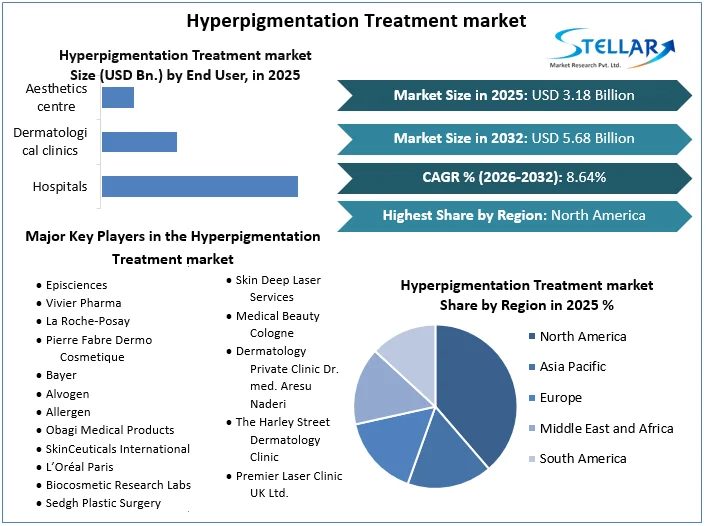
Hyperpigmentation Treatment market Size was valued at USD 3.18 Billion in 2025. The market is expected to grow at a CAGR of 8.64% during the forecast period of 2026-2032. Reaching nearly USD 5.68 Billion by 2032
The Hyperpigmentation Treatment Market is witnessing significant growth as consumers increasingly seek advanced dermatological solutions for skin pigmentation concerns. Hyperpigmentation, characterized by the darkening of specific areas of the skin due to excess melanin production, affects millions of people worldwide and has become a major focus area within aesthetic medicine and skincare industries.
The rising awareness about skincare, increasing demand for aesthetic treatments, and growing availability of minimally invasive procedures are accelerating market expansion. Hyperpigmentation treatments include topical products, chemical peels, laser therapies, intense pulsed light (IPL) treatments, microdermabrasion, and other dermatological procedures designed to improve skin tone and appearance.
The increasing influence of social media, beauty consciousness among consumers, and advancements in dermatology technologies are reshaping the market landscape. Consumers are moving beyond traditional skincare products and showing greater interest in personalized treatment approaches that address specific pigmentation concerns such as melasma, sunspots, post-inflammatory hyperpigmentation, and age-related pigmentation.
Download Free PDF Brochure: https://www.stellarmr.com/report/req_sample/hyperpigmentation-treatment-market/2468
Rising Demand for Advanced Skin Health Solutions
Skin health has become an important component of overall wellness, driving increased investment in cosmetic dermatology and aesthetic procedures. Hyperpigmentation concerns are becoming more widely recognized, leading consumers to seek professional treatments and scientifically developed skincare solutions.
Factors such as increased exposure to ultraviolet radiation, hormonal changes, aging populations, and lifestyle-related skin issues contribute to the rising prevalence of pigmentation disorders. As awareness improves, individuals are becoming more proactive about prevention and treatment.
Dermatology clinics, aesthetic centers, and skincare brands are responding by expanding their product portfolios and offering innovative solutions that combine clinical effectiveness with improved patient experiences.
Key Growth Drivers of the Hyperpigmentation Treatment Market
Growing Consumer Focus on Aesthetic Appearance
Increasing beauty awareness and demand for youthful-looking skin are major factors supporting market growth. Consumers across different age groups are investing in skincare products and professional treatments to achieve clearer and more even skin tones.
The growing popularity of cosmetic dermatology procedures, particularly among younger consumers, is expanding the customer base for hyperpigmentation treatments. Social media platforms and beauty influencers are also increasing awareness of skincare routines and advanced aesthetic procedures.
The shift from corrective treatments to preventive skincare is encouraging consumers to adopt regular skin maintenance practices, supporting long-term market demand.
Increasing Prevalence of Pigmentation Disorders
The rising occurrence of skin pigmentation problems is creating strong demand for effective treatment options. Conditions such as melasma, post-inflammatory hyperpigmentation, and sun-induced pigmentation are becoming common due to environmental factors, hormonal changes, and increased UV exposure.
Aging populations are also contributing to market growth, as age-related pigmentation concerns become more prevalent. Individuals are increasingly seeking professional dermatological solutions to manage visible signs of skin aging.
Healthcare professionals are recommending customized treatment plans based on skin type, pigmentation severity, and individual patient requirements, further supporting market development.
Advancements in Dermatology Technologies
Technological innovation is transforming the hyperpigmentation treatment industry. Advanced laser systems, light-based therapies, and energy-based devices are improving treatment accuracy and patient outcomes.
Laser treatments such as fractional laser therapy and Q-switched laser technology are gaining popularity due to their ability to target pigmentation effectively while minimizing skin damage. Intense pulsed light (IPL) treatments are also being widely adopted for managing various pigmentation concerns.
Artificial intelligence and digital skin analysis technologies are emerging as valuable tools for personalized skincare recommendations. These technologies allow dermatologists to assess skin conditions more accurately and develop customized treatment approaches.
Market Segmentation Trends
The Hyperpigmentation Treatment Market is segmented based on treatment type, pigmentation condition, distribution channel, and end user.
By treatment type, topical treatments represent a significant segment due to their accessibility, affordability, and widespread consumer adoption. Products containing ingredients such as hydroquinone, retinoids, vitamin C, niacinamide, and botanical extracts are commonly used for pigmentation management.
Laser and light-based therapies are expected to experience strong growth due to increasing preference for advanced clinical procedures and faster treatment results. Dermatology clinics and aesthetic centers are adopting innovative devices to provide more effective pigmentation solutions.
Based on end users, dermatology clinics and aesthetic centers hold a significant position due to growing demand for professional skincare treatments. However, online platforms and retail channels are also expanding as consumers increasingly purchase skincare products digitally.
Challenges Affecting Market Growth
Despite strong growth opportunities, the Hyperpigmentation Treatment Market faces several challenges. One major challenge is the high cost associated with advanced aesthetic procedures such as laser therapy and professional dermatological treatments. These costs may limit accessibility among price-sensitive consumers.
Another challenge is the risk of side effects associated with certain treatments. Improper use of chemical products or unsuitable procedures can cause irritation, skin sensitivity, or worsening pigmentation conditions.
Regulatory requirements related to cosmetic ingredients and dermatological devices may also influence product approvals and market expansion. Companies must ensure compliance with safety standards while developing innovative solutions.
Technology, Sustainability, and Innovation Trends
Technology continues to play an important role in improving hyperpigmentation treatments. AI-powered skin analysis tools are helping dermatologists provide more accurate assessments and personalized treatment recommendations.
Non-invasive procedures are gaining popularity as consumers increasingly prefer treatments with shorter recovery periods and reduced discomfort. Advances in laser technology, combination therapies, and regenerative skincare approaches are expected to create new opportunities.
Sustainability is also becoming relevant within the skincare industry. Consumers are showing greater interest in environmentally responsible brands that use sustainable packaging, clean ingredients, and ethical production methods.
Skincare companies are increasingly focusing on developing products that combine effectiveness with sustainability, responding to changing consumer expectations.
Regional Analysis
North America
North America represents a significant market for hyperpigmentation treatments due to high awareness of aesthetic procedures, advanced healthcare infrastructure, and strong adoption of cosmetic dermatology services. The United States is a major contributor, supported by a large consumer base interested in skincare innovation and professional treatments.
The region’s strong presence of dermatology clinics, aesthetic centers, and skincare companies continues to support market expansion.
Europe
Europe is another important market, driven by increasing demand for cosmetic procedures, advanced skincare products, and regulatory focus on product safety. Countries such as Germany, France, Italy, and the United Kingdom have well-established beauty and dermatology industries.
Growing interest in anti-aging solutions and personalized skincare treatments is contributing to regional growth.
Asia Pacific
Asia Pacific is expected to experience strong growth due to rising disposable incomes, increasing beauty awareness, and expanding access to dermatological services. Countries including China, India, Japan, and South Korea are witnessing growing demand for advanced skincare products and aesthetic treatments.
The popularity of Korean skincare trends and increasing investment in cosmetic technology are further supporting market development in the region.
Competitive Landscape
The Hyperpigmentation Treatment Market includes global skincare companies, pharmaceutical manufacturers, aesthetic device providers, and dermatology solution developers. Companies are focusing on research and development, product innovation, strategic partnerships, and geographic expansion.
Key players operating in the broader skincare and dermatology industry include L’Oréal S.A., Estée Lauder Companies Inc., Galderma S.A., AbbVie Inc., and Beiersdorf AG.
These companies are investing in advanced formulations, clinical research, digital skincare platforms, and aesthetic technologies to strengthen their market positions.
Download Free PDF Brochure: https://www.stellarmr.com/report/req_sample/hyperpigmentation-treatment-market/2468
Future Outlook
The future of the Hyperpigmentation Treatment Market will be shaped by rising skincare awareness, technological innovation, and increasing demand for personalized dermatology solutions. Consumers are expected to continue shifting toward scientifically backed treatments that provide effective and long-lasting results.
Advancements in laser technology, AI-driven skin assessment, combination therapies, and sustainable skincare formulations will create new growth opportunities. Dermatology clinics and skincare brands that focus on personalization, safety, and innovation will be better positioned to compete in the evolving market.
With increasing consumer investment in appearance and skin health, the Hyperpigmentation Treatment Market is expected to maintain strong growth, supporting continued innovation across the global dermatology and aesthetic care industry.
Media Contact
Stellar Market Research
Website: Stellar Market Research – Global Research Reports & Consulting
Email: sales@stellarmr.com
