Tomato Processing Market: Fueling Growth Through Innovation and Rising Demand for Processed Foods
Tomatoes are among the world’s most widely cultivated crops, but their short shelf life makes processing essential for reducing post-harvest losses and ensuring year-round availability. Processed tomato products—including sauces, ketchup, paste, canned tomatoes, juices, and powders—have become indispensable ingredients in households, restaurants, and the food manufacturing industry. As consumer demand for convenience foods continues to rise, the global tomato processing market is experiencing steady expansion.
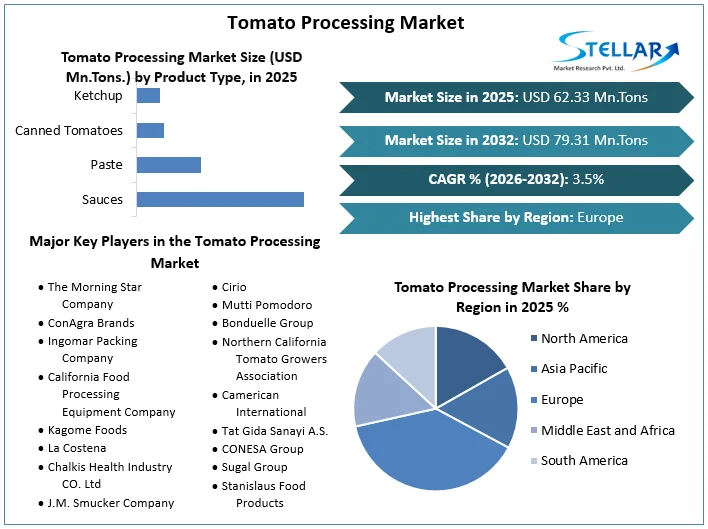
According to Stellar Market Research, the Global Tomato Processing Market reached 62.33 million tons in 2025 and is projected to grow to nearly 79.31 million tons by 2032, registering a CAGR of 3.5% during the forecast period.
What is Tomato Processing?
Tomato processing involves converting fresh tomatoes into value-added products that have a longer shelf life while preserving their taste, texture, and nutritional value. Processing methods include canning, pureeing, drying, and concentration, enabling manufacturers to supply tomato products throughout the year regardless of seasonal harvests.
Common processed tomato products include:
- Tomato paste
- Tomato sauces
- Ketchup
- Canned tomatoes
- Tomato juice
- Tomato powder
- Purees and soups
These products are widely used in ready-to-eat meals, pizzas, pasta, soups, snacks, and various packaged food applications.
𝐃𝐨𝐰𝐧𝐥𝐨𝐚𝐝 𝐅𝐫𝐞𝐞 𝐏𝐃𝐅 𝐁𝐫𝐨𝐜𝐡𝐮𝐫𝐞: https://www.stellarmr.com/report/req_sample/Tomato-Processing-Market/1833
Market Growth Drivers
Rising Demand for Convenience Foods
Rapid urbanization and increasingly busy lifestyles have boosted the consumption of ready-to-cook and ready-to-eat foods. Processed tomato products offer convenience, consistent quality, and extended shelf life, making them essential ingredients for both consumers and food manufacturers.
Expansion of the Food Processing Industry
The continuous growth of the global food and beverage industry has increased the demand for tomato-based ingredients used in sauces, soups, frozen foods, snacks, and restaurant chains. The expansion of quick-service restaurants and packaged food production further supports market growth.
Longer Shelf Life and Reduced Food Waste
Fresh tomatoes are highly perishable due to their high moisture content. Processing helps preserve tomatoes for extended periods, reducing food waste while ensuring stable supplies throughout the year.
Growing Export Opportunities
The globalization of the food industry has opened new export markets for processed tomato products. Manufacturers are expanding internationally to diversify revenue streams and meet rising global demand. Strategic partnerships across the food value chain are also supporting market expansion.
Emerging Market Trends
Several trends are reshaping the tomato processing industry:
- Growing demand for clean-label and organic tomato products
- Premium sauces, salsas, and gourmet cooking ingredients
- Automation in sorting, peeling, and packaging
- Sustainable and recyclable packaging solutions
- Energy-efficient processing technologies
- AI-driven quality control and manufacturing optimization
These innovations are helping companies improve production efficiency while meeting changing consumer preferences.
Market Segmentation
By Product Type
The market includes:
- Tomato Sauces
- Tomato Paste
- Canned Tomatoes
- Ketchup
- Tomato Juice
- Others
Tomato sauces and tomato paste account for a significant market share due to their widespread use across households, restaurants, and food manufacturing industries.
By Distribution Channel
Major distribution channels include:
- Business-to-Business (B2B)
- Retail Market
The B2B segment dominates the market as food manufacturers, hotels, restaurants, and institutional kitchens purchase processed tomato products in large volumes.
Regional Insights
North America and Europe
These regions continue to maintain strong demand due to:
- Established food processing industries
- High consumption of packaged foods
- Advanced manufacturing infrastructure
- Strong retail and distribution networks
Asia-Pacific
Asia-Pacific is expected to witness substantial growth owing to:
- Rising urbanization
- Increasing disposable incomes
- Expanding food processing sector
- Growing demand for Western-style cuisine
- Higher consumption of packaged and convenience foods
Countries such as India and China are investing heavily in food processing infrastructure, creating significant opportunities for tomato processors.
𝐃𝐨𝐰𝐧𝐥𝐨𝐚𝐝 𝐅𝐫𝐞𝐞 𝐏𝐃𝐅 𝐁𝐫𝐨𝐜𝐡𝐮𝐫𝐞: https://www.stellarmr.com/report/req_sample/Tomato-Processing-Market/1833
Market Challenges
Despite favorable growth prospects, the industry faces several challenges.
Fluctuating Raw Material Prices
Tomato production is highly dependent on weather conditions. Droughts, floods, pests, and diseases can reduce crop yields, causing supply shortages and volatility in raw material prices.
Quality Control Requirements
Maintaining consistent flavor, texture, color, and nutritional quality across production batches requires stringent quality assurance processes and modern processing technologies.
Health-Conscious Consumer Preferences
Consumers increasingly seek products with lower sugar, salt, and artificial preservatives, encouraging manufacturers to reformulate products with healthier ingredients and clean-label claims.
Competitive Landscape
Leading companies are strengthening their market position through:
- Product innovation
- Automation of manufacturing facilities
- Sustainable production practices
- Strategic partnerships and collaborations
- Investment in research and development
- Expansion into emerging export markets
Many companies are also introducing organic and premium tomato-based products to meet evolving consumer demands.
Future Outlook
The Tomato Processing Market is expected to maintain steady growth as demand for convenient, nutritious, and shelf-stable food products continues to increase.
Key future opportunities include:
- Organic and clean-label tomato products
- Functional and fortified tomato-based foods
- AI-powered manufacturing systems
- Smart food processing technologies
- Sustainable packaging innovations
- Expansion into high-growth emerging markets
These developments will help manufacturers improve operational efficiency while delivering high-quality products to a growing global customer base.
Conclusion
The Tomato Processing Market remains a vital segment of the global food industry, supporting year-round availability of tomato-based products while minimizing post-harvest losses. Rising demand for convenience foods, expanding food processing industries, and continuous advancements in manufacturing technologies are driving long-term market growth.
As consumers increasingly prioritize quality, sustainability, and healthier food options, companies that invest in innovative processing technologies, premium product development, and efficient supply chains will be well positioned to capitalize on the market’s future growth.
