Vitamin K Market: Rising Focus on Bone Health and Preventive Healthcare Fuels Global Growth
The global Vitamin K market is witnessing strong growth as consumers become increasingly aware of the importance of essential nutrients for bone health, blood clotting, and cardiovascular wellness. Growing adoption of dietary supplements, fortified foods, and pharmaceutical formulations, coupled with the rising prevalence of chronic diseases, is driving demand worldwide. Continuous research into the health benefits of Vitamin K and increasing preventive healthcare practices are further supporting market expansion.
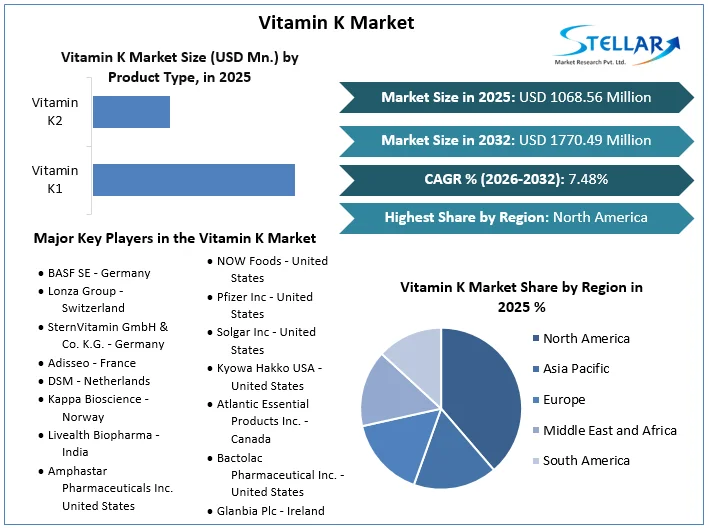
According to Stellar Market Research, the Global Vitamin K Market was valued at USD 1,068.56 million in 2025 and is projected to reach USD 1,770.49 million by 2032, growing at a CAGR of 7.48% during the forecast period.
What is Vitamin K?
Vitamin K is a fat-soluble vitamin that plays a critical role in blood coagulation, bone metabolism, and cardiovascular health. It exists primarily in two forms:
- Vitamin K1 (Phylloquinone): Found mainly in green leafy vegetables and plant-based foods.
- Vitamin K2 (Menaquinone): Found in fermented foods, animal-based products, and produced by beneficial gut bacteria.
Vitamin K is widely used in dietary supplements, fortified foods, pharmaceutical products, and medical treatments for vitamin K deficiency and certain bleeding disorders.
𝐃𝐨𝐰𝐧𝐥𝐨𝐚𝐝 𝐅𝐫𝐞𝐞 𝐏𝐃𝐅 𝐁𝐫𝐨𝐜𝐡𝐮𝐫𝐞: https://www.stellarmr.com/report/req_sample/Vitamin-K-Market/2188
Market Growth Drivers
Rising Prevalence of Chronic Diseases
Increasing cases of osteoporosis, cardiovascular diseases, arthritis, diabetes, and vitamin K deficiency disorders are driving demand for Vitamin K supplements and therapeutic products. Adequate Vitamin K intake supports bone mineralization and healthy blood clotting, making it increasingly important in preventive healthcare.
Growing Consumer Awareness
Consumers are becoming more aware of the role vitamins play in maintaining long-term health. Educational campaigns and healthcare recommendations have encouraged greater consumption of Vitamin K through supplements, fortified foods, and functional nutrition products.
Aging Global Population
The expanding elderly population is increasing demand for bone health supplements and preventive nutritional products. Older adults are more susceptible to osteoporosis and fractures, making Vitamin K supplementation an important component of healthy aging.
Expansion of Functional Foods
Food manufacturers are increasingly incorporating Vitamin K into fortified dairy products, beverages, cereals, and nutritional foods to meet growing consumer demand for health-enhancing products. Government fortification programs in several countries are also supporting market growth.
Emerging Market Trends
Several innovations are reshaping the Vitamin K Market:
- Growing demand for Vitamin K2 supplements
- Functional foods enriched with Vitamin K
- Combination supplements with Vitamin D and calcium
- Natural and plant-based vitamin sources
- Personalized nutrition products
- Expanded pharmaceutical applications
- Research into cardiovascular and cognitive health benefits
Manufacturers are also investing in advanced production technologies to improve product stability, absorption, and bioavailability.
Market Segmentation
By Product Type
The market includes:
- Vitamin K1 (Phylloquinone)
- Vitamin K2 (Menaquinone)
Vitamin K2 is gaining popularity due to increasing research supporting its role in bone density, calcium metabolism, and cardiovascular health.
By Route of Administration
Major administration methods include:
- Oral
- Topical
- Parenteral (Injectable)
Oral supplements account for a significant market share because of their convenience and widespread use in preventive healthcare.
By Application
Vitamin K products are used for:
- Osteoporosis
- Vitamin K Deficiency Bleeding (VKDB)
- Vitamin K Dependent Clotting Factor Deficiency (VKCFD)
- Prothrombin Deficiency
- Dermal Applications
- Other Medical Conditions
The osteoporosis segment dominates the market due to Vitamin K’s essential role in maintaining bone strength and reducing fracture risk, particularly among older adults. Dermatological applications are also expanding as Vitamin K is increasingly used in skincare products to reduce bruising, improve wound healing, and support skin health.
Regional Insights
North America Leads the Market
North America held the largest share of the Vitamin K Market in 2025, supported by:
- High healthcare expenditure
- Strong dietary supplement industry
- Growing aging population
- Increasing prevalence of osteoporosis and cardiovascular diseases
- High consumer awareness regarding preventive healthcare
The United States continues to lead regional growth due to advanced healthcare infrastructure and increasing demand for nutritional supplements.
𝐃𝐨𝐰𝐧𝐥𝐨𝐚𝐝 𝐅𝐫𝐞𝐞 𝐏𝐃𝐅 𝐁𝐫𝐨𝐜𝐡𝐮𝐫𝐞: https://www.stellarmr.com/report/req_sample/Vitamin-K-Market/2188
Asia-Pacific Shows Significant Growth Potential
Asia-Pacific is expected to experience robust growth because of:
- Expanding healthcare infrastructure
- Rising disposable incomes
- Growing health awareness
- Increasing demand for functional foods
- Government nutrition initiatives
Countries such as China, India, Japan, and South Korea are witnessing growing consumption of dietary supplements and fortified food products.
Market Challenges
Despite favorable growth prospects, several challenges remain.
Limited Consumer Awareness
Although awareness is improving, many consumers still associate Vitamin K primarily with blood clotting and remain unaware of its broader benefits for bone and cardiovascular health. Continued education will be important for expanding market adoption.
Regulatory Variations
Different countries maintain varying regulations for dietary supplements, fortified foods, and pharmaceutical products, creating compliance challenges for manufacturers operating globally.
Production Costs
Extraction, formulation, and manufacturing of high-quality Vitamin K products can be expensive, particularly for premium nutraceutical and pharmaceutical applications. Manufacturers continue investing in production technologies to improve efficiency and reduce costs.
Competitive Landscape
Leading companies are strengthening their market positions through:
- Development of advanced Vitamin K formulations
- Expansion of fortified food products
- Investment in nutritional research
- Strategic partnerships
- Sustainable manufacturing practices
- New pharmaceutical applications
Companies are also focusing on innovative delivery systems and combination supplements that pair Vitamin K with calcium and Vitamin D to improve bone health outcomes.
Future Outlook
The Vitamin K Market is expected to maintain healthy growth as preventive healthcare and nutritional wellness continue to gain importance worldwide.
Key future opportunities include:
- Personalized nutrition solutions
- Functional foods and beverages
- Advanced nutraceutical formulations
- Expanded cosmetic and dermatology applications
- Improved bioavailability technologies
- Greater adoption in emerging healthcare markets
Ongoing scientific research into Vitamin K’s role in cardiovascular health, healthy aging, and immune support is expected to create additional opportunities for market expansion.
Conclusion
The global Vitamin K Market is benefiting from growing consumer awareness, increasing demand for preventive healthcare, and expanding applications across dietary supplements, pharmaceuticals, functional foods, and skincare. Rising cases of osteoporosis and cardiovascular diseases, together with advancements in product formulation and nutrition science, are supporting long-term market growth.
As manufacturers continue investing in innovative formulations, sustainable production, and scientific research, the Vitamin K Market is expected to play an increasingly important role in supporting global health and wellness in the years ahead.
