Market Overview
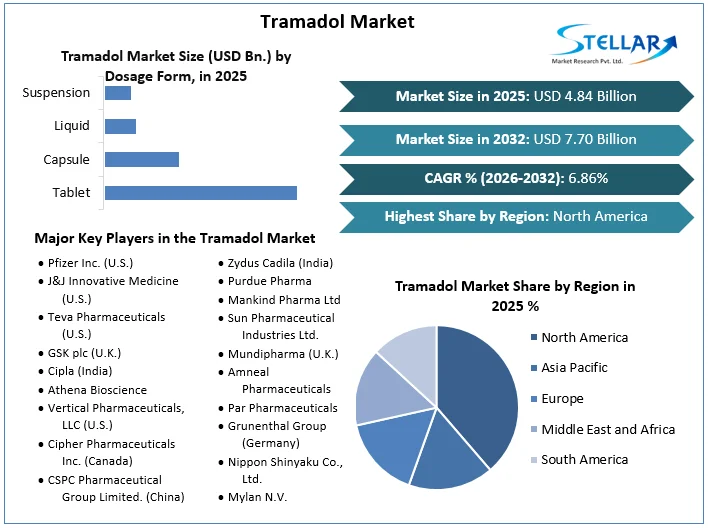
The Tramadol Market size was valued at USD 4.84 Bn. in 2025 and the total Global Tramadol revenue is expected to grow at a CAGR of 6.86% from 2026 to 2032, reaching nearly USD 7.70 Bn. by 2032.
The Tramadol Market is witnessing steady growth due to increasing demand for effective pain management solutions across various healthcare settings. Tramadol is a centrally acting opioid analgesic widely prescribed for the treatment of moderate to moderately severe pain associated with surgical procedures, injuries, chronic conditions, and musculoskeletal disorders. The rising prevalence of chronic pain conditions, growing aging population, and increasing number of surgical interventions are among the key factors supporting market expansion.
Healthcare systems worldwide are focusing on improving pain management approaches as the burden of conditions such as arthritis, cancer-related pain, neurological disorders, and post-operative complications continues to rise. Tramadol remains an important therapeutic option because of its dual mechanism of action, combining opioid receptor activity with the inhibition of norepinephrine and serotonin reuptake.
However, the market operates within a highly regulated environment due to concerns regarding opioid misuse, dependency, and safety risks. Regulatory authorities and healthcare organizations are implementing stricter monitoring practices while encouraging responsible prescribing methods to balance patient needs with public health considerations.
Download Free PDF Brochure: https://www.stellarmr.com/report/req_sample/Tramadol-Market/2230
Increasing Prevalence of Chronic Pain Conditions Driving Demand
One of the primary factors influencing the growth of the Tramadol Market is the increasing global prevalence of chronic pain disorders. Millions of people experience long-term pain caused by conditions such as osteoarthritis, lower back pain, neuropathy, and inflammatory diseases. As healthcare providers seek effective treatment options, demand for prescription analgesics continues to increase.
The aging population is another significant contributor to market growth. Elderly individuals are more likely to suffer from degenerative joint diseases, postoperative pain, and chronic medical conditions requiring pain management. As life expectancy increases across developed and developing economies, the need for reliable pain relief therapies is expected to grow.
Additionally, the expansion of surgical procedures worldwide is supporting demand for analgesic medications. Improvements in healthcare infrastructure, increasing access to surgical care, and rising investments in hospitals are contributing to the broader adoption of pain management therapies, including tramadol-based treatments.
Expanding Applications in Pain Management
Tramadol is widely used across multiple healthcare applications due to its effectiveness in managing different types of moderate pain. It is commonly prescribed after orthopedic surgeries, dental procedures, trauma cases, and other medical interventions where pain control is essential.
The growing prevalence of musculoskeletal disorders is creating additional opportunities for tramadol manufacturers. Conditions such as osteoarthritis and rheumatoid arthritis often require long-term pain management strategies, particularly among older adults. Healthcare professionals may consider tramadol as part of a broader pain management approach when other therapies are insufficient.
The pharmaceutical industry is also focusing on developing improved formulations, including extended-release tablets and combination therapies. These innovations aim to enhance patient convenience, improve treatment outcomes, and provide controlled pain relief over longer durations.
Regulatory Environment and Opioid Safety Concerns
Despite its therapeutic importance, the Tramadol Market faces challenges due to concerns associated with opioid medications. Governments and regulatory agencies worldwide have increased monitoring of opioid prescriptions to reduce misuse, addiction risks, and illegal distribution.
Several countries have introduced stricter guidelines regarding prescription practices, dosage limitations, and tracking systems for controlled medications. These regulations are influencing pharmaceutical companies to adopt stronger compliance measures throughout manufacturing, distribution, and marketing processes.
Healthcare providers are increasingly emphasizing responsible prescribing practices, patient education, and monitoring programs. These initiatives are aimed at ensuring that patients who genuinely require pain relief can access treatment while minimizing potential risks.
The regulatory landscape is expected to remain a critical factor shaping market strategies. Companies operating in this sector must continuously adapt to changing healthcare policies and compliance requirements.
Technological Advancements in Pharmaceutical Manufacturing
Technology is playing an important role in improving pharmaceutical production processes and enhancing the quality of tramadol-based medications. Advanced manufacturing technologies are helping companies improve efficiency, maintain consistent product quality, and comply with strict regulatory standards.
Automation, digital quality control systems, and advanced formulation techniques are being increasingly adopted by pharmaceutical manufacturers. These technologies support better production management while reducing manufacturing errors.
Research and development activities are also focusing on alternative drug delivery methods and improved formulations. Extended-release technologies, combination medications, and patient-focused dosage forms represent potential growth areas for market participants.
Furthermore, digital healthcare solutions are improving prescription management and patient monitoring. Electronic health records, digital prescription platforms, and medication tracking systems are helping healthcare providers improve the safe use of pain medications.
Regional Market Insights
North America represents a significant region in the Tramadol Market due to the high prevalence of chronic pain conditions, advanced healthcare infrastructure, and strong pharmaceutical industry presence. The region has a large patient population requiring pain management therapies, although regulatory oversight regarding opioid medications remains strict.
The United States has implemented various initiatives focused on opioid safety, prescription monitoring, and alternative pain management approaches. These measures are influencing market dynamics while encouraging responsible utilization of tramadol.
Europe is another important market supported by an aging population, increasing healthcare expenditure, and demand for effective pain treatment options. Countries with developed healthcare systems continue to invest in pain management solutions while maintaining strict pharmaceutical regulations.
The Asia-Pacific region is expected to experience significant growth opportunities due to improving healthcare infrastructure, increasing access to medical treatments, and rising awareness regarding pain management. Countries such as India, China, and Japan are witnessing increased healthcare investments, creating opportunities for pharmaceutical companies.
Emerging markets in Latin America and the Middle East are also showing potential as healthcare systems continue to develop and access to prescription medicines improves.
Competitive Landscape and Industry Strategies
- Athena Bioscience
- Vertical Pharmaceuticals, LLC (U.S.)
- Cipher Pharmaceuticals Inc. (Canada)
- CSPC Pharmaceutical Group Limited. (China)
- Zydus Cadila (India)
- Purdue Pharma
- Mankind Pharma Ltd
- Sun Pharmaceutical Industries Ltd.
- Mundipharma (U.K.)
Download Free PDF Brochure: https://www.stellarmr.com/report/req_sample/Tramadol-Market/2230
Future Outlook of the Tramadol Market
The future growth of the Tramadol Market will be shaped by increasing healthcare demand, advancements in pharmaceutical technology, and evolving approaches to pain management. Rising cases of chronic diseases, expanding surgical procedures, and aging populations will continue to support demand for analgesic treatments.
At the same time, regulatory scrutiny and opioid safety initiatives will remain important factors influencing market development. Pharmaceutical companies are expected to focus on responsible production, improved formulations, and compliance-driven strategies.
Innovation in drug delivery technologies, digital healthcare integration, and personalized pain management approaches will create new opportunities for market growth. As healthcare providers continue seeking effective and controlled pain relief solutions, the Tramadol Market is expected to maintain a significant role within the global pharmaceutical industry while adapting to changing medical and regulatory requirements.
Media Contact
Stellar Market Research
Website: Stellar Market Research – Global Research Reports & Consulting
Email: sales@stellarmr.com
