Hemp Fabric Market: Sustainable Textiles Reshape the Future of the Fashion Industry
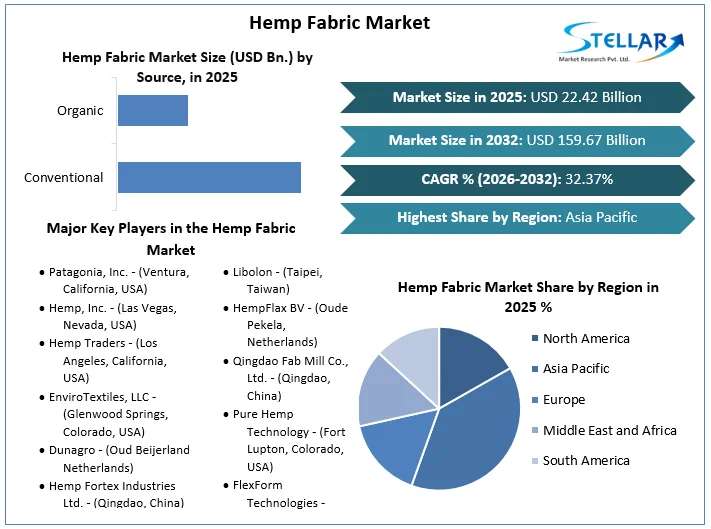
As sustainability becomes a top priority for consumers and manufacturers alike, the global textile industry is rapidly embracing environmentally friendly materials. Among these, hemp fabric has emerged as one of the most promising natural fibers due to its durability, biodegradability, and low environmental impact. Growing demand for eco-conscious fashion, supportive government policies, and innovations in textile processing are driving strong growth in the Hemp Fabric Market. According to Stellar Market Research, the global Hemp Fabric Market was valued at USD 22.42 billion in 2025 and is projected to reach USD 159.67 billion by 2032, expanding at an impressive CAGR of 32.37% during the forecast period.
What Is Hemp Fabric?
Hemp fabric is produced from the fibers of the Cannabis sativa plant. It belongs to the family of bast fibers, alongside flax, jute, and bamboo. Hemp is valued for its exceptional strength, breathability, moisture-wicking properties, and biodegradability, making it an increasingly popular alternative to conventional textiles.
Hemp fabric is widely used in:
- Clothing and fashion apparel
- Home textiles
- Footwear
- Bags and accessories
- Upholstery
- Industrial textiles
Its ability to combine durability with environmental sustainability has positioned hemp as a preferred material for next-generation textile products.
𝐃𝐨𝐰𝐧𝐥𝐨𝐚𝐝 𝐅𝐫𝐞𝐞 𝐏𝐃𝐅 𝐁𝐫𝐨𝐜𝐡𝐮𝐫𝐞: https://www.stellarmr.com/report/req_sample/Hemp-Fabric-Market/1926
Sustainability Drives Market Growth
The strongest growth driver for the Hemp Fabric Market is the increasing demand for sustainable textiles. Consumers are becoming more aware of the environmental impact of conventional cotton and synthetic fibers, encouraging brands to adopt eco-friendly alternatives.
Hemp cultivation offers several environmental advantages:
- Requires less water than cotton
- Needs fewer pesticides and fertilizers
- Improves soil quality
- Absorbs significant amounts of carbon dioxide
- Produces biodegradable fibers
These benefits align with global sustainability initiatives and the fashion industry’s transition toward circular economy practices.
Growing Demand for Sustainable Fashion
Fashion brands are increasingly incorporating hemp into their collections as consumers seek ethically produced clothing.
Hemp fabric offers several performance benefits, including:
- Excellent durability
- Natural breathability
- UV resistance
- Antibacterial properties
- Moisture absorption
- Softness after repeated washing
Luxury brands, outdoor apparel companies, and sustainable fashion labels are expanding their use of hemp to meet rising consumer demand for environmentally responsible products.
Organic Hemp Fabric Gains Popularity
The market is segmented into conventional and organic hemp fabric, with organic hemp witnessing particularly strong demand.
Organic hemp appeals to consumers because it is produced without synthetic pesticides or chemical fertilizers, making it suitable for:
- Organic clothing
- Baby garments
- Premium fashion
- Home furnishing textiles
- Eco-friendly lifestyle products
Growing consumer awareness of ethical sourcing and clean production methods is expected to further accelerate the adoption of organic hemp fabrics.
Technological Advancements Improve Fabric Quality
Innovations in fiber processing and textile manufacturing are making hemp fabrics softer, more versatile, and easier to produce at scale.
Recent technological developments include:
- Advanced fiber softening techniques
- Enzyme-based processing
- Improved spinning technologies
- Sustainable dyeing methods
- Blended hemp fabrics with cotton and other natural fibers
These advancements are helping manufacturers create high-quality hemp textiles suitable for premium apparel and home furnishing applications.
Expanding Applications Beyond Fashion
While apparel remains the largest application, hemp fabric is finding new opportunities across multiple industries.
Growing applications include:
- Furniture upholstery
- Automotive interiors
- Home décor
- Industrial fabrics
- Geotextiles
- Reusable shopping bags
The versatility of hemp continues to attract manufacturers looking for durable, lightweight, and environmentally friendly materials.
Challenges Facing the Market
Despite its strong growth potential, the Hemp Fabric Market faces several challenges.
Large-scale hemp processing infrastructure remains limited in many regions, affecting production efficiency and supply. In addition, maintaining consistent fiber quality and educating consumers about the differences between industrial hemp and psychoactive cannabis remain ongoing industry priorities.
However, continued investments in processing technologies and supportive regulatory frameworks are expected to reduce these barriers over time.
Regional Outlook
North America is experiencing rapid market growth due to favorable regulations supporting industrial hemp cultivation, increasing domestic fiber production, and strong demand for sustainable fashion. The legalization of industrial hemp production has encouraged investment throughout the textile value chain.
Meanwhile, Asia-Pacific remains a major production hub thanks to its well-established textile industry, abundant raw material availability, and skilled manufacturing workforce. Countries such as China and India continue to play a significant role in global hemp fabric production and exports.
𝐃𝐨𝐰𝐧𝐥𝐨𝐚𝐝 𝐅𝐫𝐞𝐞 𝐏𝐃𝐅 𝐁𝐫𝐨𝐜𝐡𝐮𝐫𝐞: https://www.stellarmr.com/report/req_sample/Hemp-Fabric-Market/1926
Competitive Landscape
Leading companies are expanding production capacity and investing in sustainable textile innovation to strengthen their market positions.
Key competitive strategies include:
- Developing organic hemp fabrics
- Expanding sustainable apparel collections
- Investing in advanced fiber processing technologies
- Forming partnerships with fashion brands
- Improving supply chain traceability
Manufacturers are also focusing on blended hemp fabrics that combine sustainability with enhanced comfort and performance.
Future Outlook
The Hemp Fabric Market is poised for exceptional growth as sustainability becomes a defining factor in the global textile industry. Increasing consumer demand for eco-friendly apparel, advances in textile processing, and supportive government policies are expected to accelerate adoption across fashion, home textiles, and industrial applications.
With its durability, environmental benefits, and expanding range of uses, hemp fabric is well positioned to become one of the leading sustainable materials shaping the future of the global textile market.
