Key Highlights
Market valuation is on track to achieve US$ 10.04 billion by 2026, advancing at a compound annual growth rate of 9% from the 2019 base year.
Electronic Power Steering represents the dominant steering type segment, driven by legislative efficiency targets and driver ergonomics.
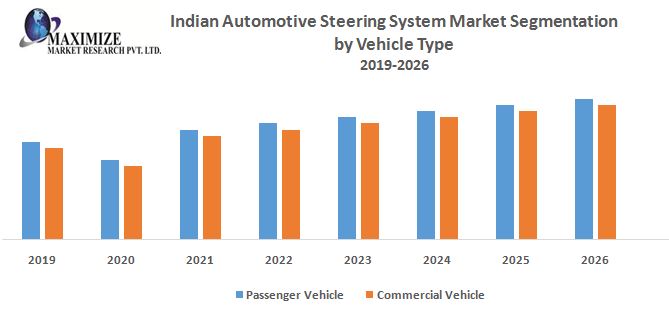
Passenger vehicles represent both the dominant and fastest-growing vehicle segment, propelled by expanding middle-class disposable income.
A temporary sales contraction in early 2019 saw passenger vehicle sales decline by 2.96% and commercial vehicles by 0.28%, followed by a sharp structural market recovery.
Component manufacturing localization is accelerating via the federal Make in India campaign, redefining regional supplier positioning.
Why This Matters Now
Disruptive regulatory mandates and aggressive fuel-efficiency targets are forcing automotive original equipment manufacturers to entirely re-engineer their chassis platforms. Decoupling steering components from direct engine power draws has transitioned from an engineering preference to a regulatory survival mechanism for Tier-1 suppliers.
As vehicle complexity increases, steering architectures are shifting from simple mechanical connections to highly complex electronic networks. This structural pivot opens immediate capitalization pockets for electronic component providers while exposing mechanical component suppliers to severe structural risks.
Market Overview
The Indian automotive steering system market is experiencing a profound transition, moving rapidly from legacy manual steering mechanisms to advanced power assist technologies. Data compiled by Maximize Market Research shows the total market valuation is set to reach US$ 10.04 billion by 2026. This trajectory represents a steady compound annual growth rate of 9% across the forecast timeline.
This sustained expansion follows a short-term correction observed during the first two quarters of 2019. In March 2019, passenger vehicle sales contracted by 2.96% and commercial vehicles dipped by 0.28%. Furthermore, the two-wheeler sector decreased by 17.31% and the three-wheeler ecosystem dropped by 8.54%. Despite these temporary contractions, structural macroeconomic drivers triggered a swift market recovery, stabilizing the long-term outlook for component manufacturers.
The fundamental core of a vehicle steering architecture includes the hand-operated steering wheel, steering column, universal joints, and the rack and pinion mechanism. Managing these critical mechanical variables determines the directional motion and maneuvering safety of modern vehicles. As manufacturers invest heavily in localized production lines, the market is adjusting to handle intense domestic demand and global export requirements.
Key Trends Driving Growth
The primary catalyst for this industrial transformation is the rapid expansion of the broader Indian automotive sector. Rising disposable incomes across the middle-class demographic are directly escalating consumer investments in high-spec personal mobility options. Consequently, international and domestic vehicle manufacturers are expanding their local capital expenditures to build modern vehicle platforms.
Furthermore, the federal Make in India campaign is aggressively lowering manufacturing barriers, encouraging deeper localization of critical component supply chains. Original equipment manufacturers are leveraging these policy incentives to restructure their manufacturing facilities. This structural change shifts production models away from imported component assembly toward complete domestic manufacturing lifecycles.
Engineering requirements for enhanced vehicle fuel efficiency are also accelerating the replacement of traditional hydraulic pumps. Modern steering configurations alter the vehicle weight distribution and eliminate persistent parasitic energy losses from the engine. By reducing continuous fuel consumption, these optimized steering systems allow original equipment manufacturers to meet tightening emission mandates without compromising vehicle performance.
Concurrently, end-user expectations regarding driving comfort and cabin ergonomics are reshaping vehicle specifications. Consumers demand effortless vehicle operation, particularly within highly congested urban traffic environments. Delivering this level of driving comfort requires the integration of reactive power assist technologies, ensuring sustained demand for advanced steering system architectures.
However, high capital costs associated with advanced power steering systems continue to present a clear market barrier. The initial integration expenses and secondary maintenance complexities of electronic configurations restrain adoption within low-margin vehicle classes. Tier-1 suppliers are forced to optimize their manufacturing costs to prevent these affordability constraints from slowing market penetration.
Segment Insights
Electronic Power Steering (EPS): [Dominant Segment / Fastest-Growing Segment] This architecture is projected to command the highest market share during the forecast period. By eliminating heavy hydraulic fluids and pumps, EPS directly improves fuel economy and allows seamless integration with driver assistance software.
Hydraulic Power Steering (HPS): This traditional system retains a stable position within heavy commercial platforms due to high torque output needs, though it faces long-term pressure from electronic alternatives.
Electro-Hydraulic Power Steering (EHPS): This hybrid solution provides high power assist for specific commercial vehicle segments, combining hydraulic force with electronic control efficiency.
Passenger Vehicles: [Dominant Segment / Fastest-Growing Segment] The dynamic outlook of the Indian economy and expanding consumer purchasing power drive this segment. It remains the absolute volume leader, accelerating the market penetration of premium steering technologies.
Commercial Vehicles: This segment tracks closely with macro industrial growth and infrastructure expansion, experiencing a 0.28% dip in early 2019 before stabilizing around renewed freight logistics demands.
Regional Growth Story
India has solidified its position as a major automotive manufacturing hub within the global landscape, matching production standards seen in markets like China, Japan, and Germany. The regional industrial strategy relies on expanding domestic component capacity to reduce reliance on vulnerable global trade pathways. This focus on domestic sourcing insulates the local automotive ecosystem from international logistics disruptions.
State-level manufacturing zones across India are benefiting from clustered infrastructure investments by global Tier-1 suppliers. This clustering allows for immediate logistics optimization and accelerated technology sharing between regional partners. As a result, the domestic market is transforming into a highly competitive export base capable of serving mature Western automotive operations.
Competitive Landscape
The competitive landscape features a mix of global engineering corporations and established domestic manufacturers. The prominent market participants include JTEKT Corporation, Nexteer Automotive, Mando Corporation, ThyssenKrupp Presta AG, Showa Corporation, and NSK Ltd. These players face competition from Mitsubishi Electric Corporation, Sona Koyo Steering Systems Ltd, Hyundai Mobis Co. Ltd., WABCO, Rane Holdings Limited, and Knorr-Bremse. Additionally, companies like ZF Steering gear India, Nexteer Automotive Group Limited, Bosch Auto Parts, Thyssenkrupp Business Area Components Technology, and DENSO CORPORATION influence the market.
This intense corporate field signals a major shift in supplier dynamics and manufacturing competitiveness. Global leaders are forming strategic partnerships and joint ventures with local entities to leverage established domestic distribution networks. For local suppliers, these alliances provide access to advanced electronic steering designs and automated production patents.
Furthermore, capital investments are shifting rapidly toward production facilities dedicated to electronic control units and sensor integrations. The ability of a supplier to manufacture these high-margin components locally determines its long-term pricing power with original equipment manufacturers. Companies that fail to transition their production lines from cast iron components to electronic systems face rapid obsolescence.
Recent Developments
Tier-1 suppliers are expanding their domestic electronics manufacturing lines to produce steering control units locally, directly reducing reliance on imported microcontrollers.
Original equipment manufacturers are incorporating advanced electronic power steering systems into their entry-level passenger vehicle portfolios to secure higher safety ratings.
Strategic partnerships between chassis component manufacturers and software development firms are accelerating, focusing on optimizing steering sensor algorithms.
Production capacity for lightweight steering columns has increased across major industrial clusters to support strict vehicle weight reduction initiatives.
Strategic Implications
For senior executives at vehicle manufacturing firms, steering system procurement is no longer just a basic component purchasing decision. It represents a core element of vehicle platform development that directly affects corporate fleet emission compliance. Executives must choose supplier partners who can guarantee stable delivery of advanced steering systems amid volatile electronic component supply chains.
For Tier-1 component suppliers, the strategic priority must be rapid investment in digital engineering capabilities. Developing highly responsive electronic steering systems requires a deep understanding of software design and sensor integration. Suppliers reliant entirely on mechanical casting must acquire or build electronics capabilities to protect their market share.
Investors looking at the automotive components sector must evaluate companies based on their readiness for electronic systems. Capital allocation should target suppliers that possess strong intellectual property in electronic power assist systems and localized manufacturing bases. Firms anchored to legacy hydraulic architectures face serious margin compression as demand shifts toward digital platforms.
Future Outlook
The Indian automotive steering system market will continue its technological transformation, with electronic architectures steadily replacing older mechanical designs. The alignment of local manufacturing regulations with global emission standards will accelerate the phase-out of inefficient component designs. Consequently, the suppliers that control localized electronic component supply chains will capture the vast majority of future platform contracts.
Ultimately, the market will reward agile engineering organizations while penalizing rigid component manufacturers. Future market leaders will be defined by their ability to manufacture localized electronic power steering systems at scale, while laggards will remain tethered to declining legacy hydraulic components.
Analyst Perspective
“The structural transition within the Indian automotive steering system market reflects a permanent shift toward high-efficiency electronic platforms,” states Tejaswini Kakade, Lead Analyst at Maximize Market Research. “Original equipment manufacturers are rapidly abandoning legacy mechanical architectures in favor of localized electronic systems to satisfy strict regulatory compliance and consumer demands for driving comfort. The suppliers that invest early in local electronics manufacturing capacity will dominate the next decade of automotive supply contracts.”
About Maximize Market Research
Maximize Market Research Pvt. Ltd. (MMR) is a global market research and consulting company that provides reliable, data-focused, and practical business insights. The firm serves a wide range of industries, including healthcare, pharmaceuticals, technology, automotive, electronics, chemicals, personal care, and consumer goods. Through market forecasts, competitive analysis, strategic consulting, and industry impact assessments, MMR helps organizations understand changing market conditions, identify growth opportunities, and make informed business decisions for long-term success.
2nd Floor, Navale IT Park Phase 3
Pune Banglore Highway, Narhe
Pune, Maharashtra 411041, India
+91 9607365656
sales@maximizemarketresearch.com
