The global manufacturing landscape is undergoing a massive paradigm shift, driven by automation, smart factory initiatives, and the relentless pursuit of operational efficiency. At the heart of this transformation is the industrial assembly equipment sector, which plays a foundational role in putting together everything from electronics to automobiles. According to a comprehensive research study published by The Insight Partners, the industrial assembly equipment market is positioned for exceptional growth over the next decade.
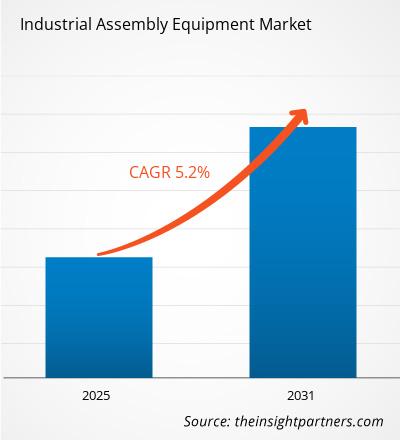
The Industrial Assembly Equipment Market size is expected to reach US$ 89.31 Billion by 2034 from US$ 51.36 Billion in 2025. The market is estimated to record a CAGR of 6.34% from 2026 to 2034. This steady upward trajectory highlights a growing global reliance on advanced systems that can streamline production lines, reduce human error, and handle increasingly complex manufacturing tasks.
Market Dynamics and Technological Catalysts
Industrial assembly equipment encompasses a broad spectrum of tools and machinery, including automated fastening systems, robotic welding cells, pick-and-place machines, torque tools, and indexing tables. The primary catalyst pushing the adoption of this equipment is the rise of Industry 4.0. Modern manufacturers are no longer just looking for mechanical speed; they demand interconnected systems that offer real-time data logging, predictive maintenance capabilities, and seamless integration with Manufacturing Execution Systems (MES).
Furthermore, strict regulatory standards regarding worker safety and product quality are compelling companies to move away from purely manual assembly processes. Automated and semi-automated assembly systems ensure high precision and consistency, minimizing material waste and dramatically lowering the risk of costly product recalls. This is particularly crucial in high-stakes sectors like aerospace, medical devices, and automotive manufacturing.
Sectoral Demand: Automotive and Electronics Leading the Charge
Historically, the automotive industry has been the largest consumer of heavy-duty assembly lines. The ongoing transition toward Electric Vehicles (EVs) has injected fresh momentum into the market. EV manufacturing requires specialized assembly configurations, particularly for battery packs, electric motors, and sophisticated electronic control units. This has forced automotive OEMs (Original Equipment Manufacturers) to retool their existing factories and invest heavily in flexible assembly equipment.
Simultaneously, the consumer electronics and semiconductor sectors are demanding hyper-precise, high-speed micro-assembly equipment. As consumer gadgets become smaller and more complex, human hands can no longer reliably place components. Fastening, gluing, and soldering micro-components require highly specialized automated solutions, ensuring a continuous stream of demand for industrial assembly innovations.
Get a PDF Sample– https://www.theinsightpartners.com/sample/TIPRE00010140
Competitive Landscape and Key Players
The global industrial assembly equipment market is characterized by a mix of established multinational engineering firms and specialized technology providers. These organizations are focused on continuous R&D, product launches, and strategic collaborations to expand their market footprint.
Key players profiled in the market study include:
AeroGo Inc.
ARaymond
Atlas Copco
Brüel and Kjær Vibro GmbH
Coetz Technologies
Flexicon Corporation
Hitachi High-Tech Corporation
ICM
Indufitmachine
Keller Technology Corp.
These industry participants are heavily investing in ergonomics, smart connected tools, and collaborative robots (cobots). Cobots, in particular, have become a major point of interest as they allow human workers and automated tools to share workspaces safely, blending human problem-solving skills with machine precision.
Get Full Copy of This Report- https://www.theinsightpartners.com/buy/TIPRE00010140
Future Outlook
The future of the industrial assembly equipment market points toward total flexibility and software-driven intelligence. Fixed, single-purpose assembly lines are rapidly being replaced by modular configurations that can be reprogrammed or rearranged within hours to handle entirely different product variations. Artificial Intelligence (AI) and machine vision will play an increasingly dominant role, allowing assembly machines to detect defects in real-time and self-adjust their parameters—such as tightening torque or adhesive dispensing amounts—without halting production. As emerging economies across the Asia-Pacific region and Latin America continue to industrialize, and as Western nations look to “reshore” manufacturing using highly automated hubs, the demand for cutting-edge industrial assembly equipment will remain robust well into 2034 and beyond.
Related Reports-
About Us
The Insight Partners is a one-stop industry research provider of actionable intelligence. We help our clients in getting solutions to their research requirements through our syndicated and consulting research services. We specialize in industries such as Semiconductor and Electronics, Aerospace and Defense, Automotive and Transportation, Biotechnology, Healthcare IT, Manufacturing and Construction, Medical Devices, Technology, Media, and Telecommunications, as well as chemicals and Materials.
Contact Us
If you have any queries about this report or if you would like further information, don’t hesitate to get in touch with us:
Contact Person: Ankit Mathur
E-mail: ankit.mathur@theinsightpartners.com
