MEA External Blinds Market: Rising Construction Activities Fuel Demand for Smart Sun Protection Solutions
The Middle East and Africa (MEA) External Blinds Market is experiencing steady growth as residential and commercial construction projects continue to expand across the region. With rising temperatures, increasing urbanization, and greater emphasis on energy-efficient buildings, external blinds have become an essential solution for improving indoor comfort while reducing energy consumption.
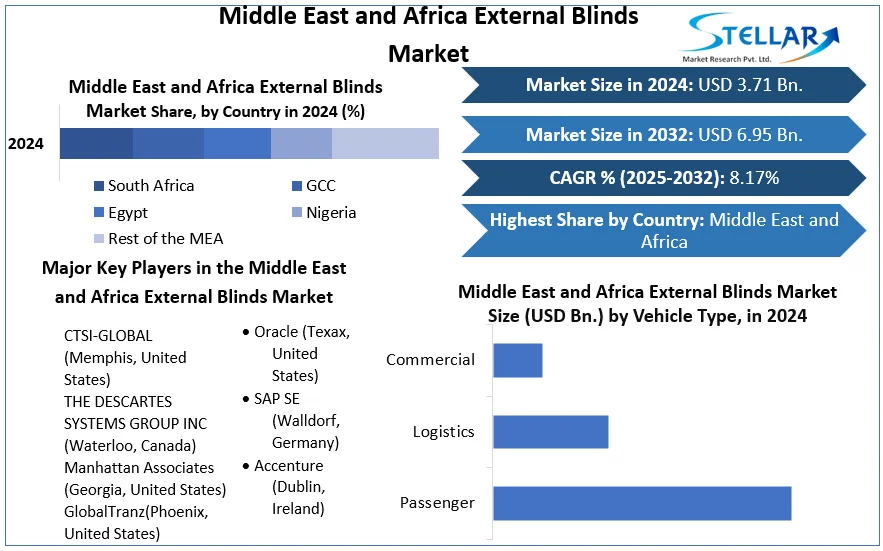
According to the latest industry analysis, the MEA External Blinds Market was valued at USD 0.38 billion in 2024 and is projected to reach USD 0.49 billion by 2032, growing at a CAGR of 3.8% during the forecast period. The market is benefiting from growing investments in modern infrastructure, smart buildings, and sustainable construction practices.
Understanding External Blinds
External blinds are window-covering systems installed outside buildings to regulate sunlight, improve privacy, and enhance energy efficiency. They reduce heat gain, minimize glare, and protect interiors from harsh weather conditions while adding aesthetic value to residential and commercial properties.
Popular types of external blinds include:
Roller blinds
Vertical blinds
Venetian blinds
Roman blinds
Panel blinds
Honeycomb blinds
Pleated shades
Zip screen blinds
Roller shutters
These products are available in both manual and automated versions and are manufactured using natural and synthetic materials to suit different building requirements.
𝐃𝐨𝐰𝐧𝐥𝐨𝐚𝐝 𝐅𝐫𝐞𝐞 𝐏𝐃𝐅 𝐁𝐫𝐨𝐜𝐡𝐮𝐫𝐞: https://www.stellarmr.com/report/req_sample/MEA-External-Blinds-Market/832
Key Factors Driving Market Growth
Rising Construction and Infrastructure Development
The Middle East and Africa continue to witness significant investments in residential housing, commercial complexes, hospitality projects, and mixed-use developments. As new buildings increasingly prioritize energy efficiency and occupant comfort, external blinds are becoming a preferred architectural feature.
Countries across the Gulf Cooperation Council (GCC), South Africa, and other emerging economies are investing heavily in smart cities and modern infrastructure, creating sustained demand for advanced window shading systems.
Growing Focus on Energy Efficiency
The region’s hot climate makes cooling costs a major concern for property owners. External blinds help reduce solar heat gain before it enters buildings, lowering indoor temperatures and decreasing reliance on air conditioning systems.
As governments promote sustainable construction and green building standards, demand for energy-saving shading solutions continues to grow.
Increasing Adoption of Smart Home Technologies
Automation is becoming a major trend in the window coverings industry. Motorized external blinds integrated with smart home systems allow users to control shading through smartphones, remote controls, or voice assistants.
Automatic blinds improve convenience while optimizing natural lighting and indoor temperature management, making them increasingly popular in premium residential and commercial buildings.
Residential and Commercial Applications
The residential segment accounts for a substantial share of the market as homeowners seek improved privacy, weather protection, and energy savings.
Commercial buildings such as offices, hotels, hospitals, educational institutions, and retail centers are also driving demand. Businesses increasingly install external blinds to enhance occupant comfort, reduce energy costs, and improve building aesthetics.
The hospitality sector, particularly in tourism-focused countries across the Middle East, represents another important growth opportunity.
Material Innovations Supporting Market Expansion
Manufacturers continue introducing advanced materials that offer greater durability, UV resistance, and weather protection.
Popular material categories include:
High-performance synthetic fabrics
Aluminum components
Weather-resistant polymers
Sustainable natural materials
These innovations improve product lifespan while reducing maintenance requirements in challenging climatic conditions.
Market Challenges
Despite positive growth prospects, several challenges remain.
Initial installation costs for automated external blinds can be relatively high, limiting adoption among price-sensitive consumers. In addition, fluctuating raw material prices and supply chain disruptions may impact manufacturing costs and product availability.
The market also faces increasing competition from alternative window treatment solutions, requiring manufacturers to focus on innovation, product quality, and smart features.
Emerging Opportunities
Several trends are expected to create new opportunities throughout the forecast period:
Expansion of smart city projects
Growth in green building certifications
Rising investments in luxury residential developments
Increasing adoption of home automation systems
Greater demand for sustainable construction materials
Technological advancements in motorized shading systems
These developments are encouraging manufacturers to launch innovative products that combine aesthetics, automation, and energy efficiency.
Competitive Landscape
The MEA External Blinds Market remains competitive, with both international and regional manufacturers expanding their product portfolios. Companies are investing in automated solutions, durable materials, and customized designs to address evolving customer preferences.
Strategic partnerships with architects, construction companies, and distributors are also helping market participants strengthen their regional presence.
𝐃𝐨𝐰𝐧𝐥𝐨𝐚𝐝 𝐅𝐫𝐞𝐞 𝐏𝐃𝐅 𝐁𝐫𝐨𝐜𝐡𝐮𝐫𝐞: https://www.stellarmr.com/report/req_sample/MEA-External-Blinds-Market/832
Future Outlook
The future of the MEA External Blinds Market looks promising as governments continue investing in infrastructure modernization and sustainable urban development. Rising awareness of energy-efficient building solutions, combined with the growing adoption of smart home technologies, is expected to support long-term market growth.
As residential and commercial developers increasingly prioritize thermal comfort, aesthetics, and environmental sustainability, external blinds will remain an important component of modern building design across the Middle East and Africa through 2032.
