Key Highlights:
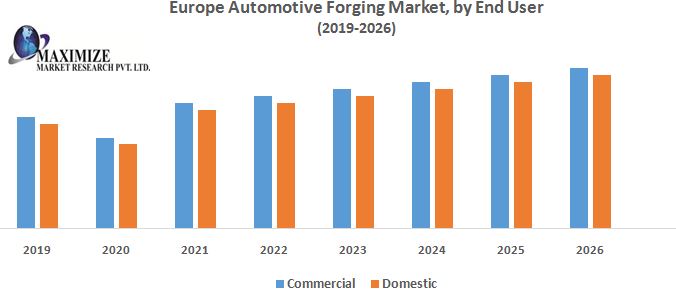
Market Scale: The Europe Automotive Forging Market is on track to reach US$ 19.09 billion by 2026, sustained by a steady compounded annual growth rate (CAGR) of 3.2% over the forecast cycle.
Powertrain Disruption: Rapid adoption of battery electric vehicles (BEVs) shifts demand away from traditional internal combustion engine (ICE) crankshafts and connecting rods toward high-stress structural EV chassis and drivetrain components.
Lightweighting Mandate: Stringent Euro emission standards force European original equipment manufacturers (OEMs) to demand advanced forged aluminum and micro-alloyed steel components to maximize EV battery range and lower vehicle weight.
Geographic Consolidation: Germany remains the dominant automotive manufacturing powerhouse in Europe, leveraging its dense ecosystem of Tier-1 suppliers, engineering infrastructure, and domestic OEM capacity additions.
Capital Realignment: Forging companies are actively reallocating capital expenditures away from legacy combustion lines to build automated, high-precision press lines tailored for complex electric architecture.
Why This Matters Now
The European automotive manufacturing architecture is fracturing under the dual pressures of mandatory fleet electrification timelines and aggressive zero-emission regulatory targets. Forging operations, long anchored by the predictable, high-volume manufacturing of internal combustion engine components, face immediate operational obsolescence unless they radically adjust their technological focus. The transition from internal combustion engine (ICE) platforms to software-defined electric vehicles (EVs) removes dozens of core moving parts, forcing suppliers to pivot production toward complex structural assemblies, battery enclosures, and high-performance suspension systems.
What changed is the fundamental anatomy of the vehicle powertrain, removing traditional high-volume forged components like connecting rods, pistons, and multi-speed transmission gears. Why now is driven by the rapid approaching enforcement dates of European decarbonization laws, which penalize OEMs failing to meet strict fleet-wide emission limits, accelerating factory retooling cycles across the continent. Tier-1 suppliers who move quickly to secure multi-year supplier contracts for complex EV platforms stand to lock in long-term revenue streams, while legacy component manufacturers sticking exclusively to combustion systems face rapidly shrinking volume allocations. What happens next is a clear divergence in supplier capitalization: advanced forging firms are spending heavily on multi-axis automated press systems optimized for aluminum alloys, while commodity steel forging shops face swift consolidation or production run-downs.
Market Overview
The Europe Automotive Forging Market is moving along a steady structural growth curve, projected to reach US$ 19.09 billion by 2026 while sustaining a CAGR of 3.2% throughout the forecast horizon. This steady revenue progression masks a massive internal redirection of capital, technology, and materials across the supply chain. Rather than relying on volume expansion from new vehicle sales, market growth is generated by the rising cost and engineering complexity of high-performance components designed to handle the heavy battery weights and instant torque delivery of electric platforms.
This financial trajectory indicates that European automotive suppliers are capturing higher per-part margins on complex components even as absolute unit volumes for conventional ICE components contract. Fleet operators and mobility platforms are prioritizing vehicles built on lightweight, highly durable architectures to minimize maintenance downtime and lower per-kilometer operating costs. Consequently, investors are focusing funding toward forging companies equipped with advanced metallurgical testing facilities and specialized thermal treatment lines, recognizing them as essential partners for next-generation vehicle architectures.
Key Trends Driving Growth
The primary catalyst transforming the European forging sector is the rapid shift from internal combustion engines to battery electric and hydrogen fuel cell powertrains. The removal of traditional combustion components eliminates the need for classic forged engine internals, forcing suppliers to urgently redesign their product catalogs. To offset these losses, manufacturers are capturing new business by producing high-stress drivetrain parts required for electric drive units, including rotor shafts, high-torque differentials, and heavy-duty constant velocity joints.
Simultaneously, the industrial push for vehicle lightweighting has triggered an engineering shift toward advanced aluminum forgings and high-strength micro-alloyed steel. EV battery packs add significant curb weight, creating a critical engineering challenge to maintain vehicle range, safety, and driving dynamics without inflating manufacturing costs. Forging companies are answering this challenge by offering ultra-lightweight forged aluminum control arms, steering knuckles, and suspension links that deliver superior structural strength compared to traditional cast alternatives. Furthermore, the integration of advanced driver-assistance systems (ADAS) and autonomous driving hardware requires highly precise, defect-free steering and chassis components to ensure absolute system reliability under computerized control.
Segment Insights
Dominant Segment: The Chassis and Suspension Components segment maintains the largest market share, driven by the critical need for structural durability, crashworthiness, and weight reduction across all passenger and commercial vehicle classes.
Fastest-Growing Segment: The EV Powertrain and Structural E-Drive segment is expanding at the highest growth rate, fueled by the accelerating production volume of battery electric vehicles and the localized assembly of electric drive modules across Western Europe.
Regional Growth Story
Germany continues to anchors the European automotive forging industry, operating as the central manufacturing and technology development hub for the broader continent. The country’s market dominance is sustained by its concentrated network of premium OEMs, highly integrated Tier-1 suppliers, and advanced engineering universities. German automakers are investing heavily in domestic factory transformations, converting historic combustion plants into dedicated electric vehicle production hubs. This massive industrial pivot forces regional forging operations to locate production facilities nearby, reducing logistics risks and ensuring tight, just-in-time integration with vehicle assembly lines.
Beyond Germany, countries like France, Italy, and Spain are adjusting their regional industrial bases to remain competitive within the shifting European landscape. These manufacturing zones are building out localized EV battery assembly hubs and updating regional supply networks to support electrified commercial transport and shared mobility fleets. Additionally, Central and Eastern European production centers are upgrading their machining capabilities, moving from low-cost component stamping to high-precision forging work to capture overflow demand from major Western European automakers.
Competitive Landscape
The competitive dynamics within Europe’s automotive forging landscape are shifting from simple price competition toward advanced technological capability and material flexibility. Forging suppliers are no longer judged solely on raw volume output; instead, their market value is tied to their ability to co-develop custom components with OEMs during early-stage platform engineering. This dynamic gives a strong competitive advantage to companies possessing advanced digital simulation tools, automated thermal management setups, and proprietary aluminum alloy recipes.
This technological shift is forcing mid-sized and single-product legacy forge operators into a difficult position, as they lack the deep capital reserves needed to buy massive, multi-million dollar automated press lines. Tier-1 suppliers are consolidating their supply chains, favoring larger, financially stable forging groups capable of delivering complete, ready-to-assemble sub-assemblies rather than raw, unmachined components. This market consolidation allows top-tier forging operations to secure stronger pricing power and sign multi-year agreements, leaving smaller shops vulnerable to falling volumes as ICE production runs down.
Recent Developments
High-Precision Retooling: Major European forging manufacturers have completed capital upgrades to install automated, high-speed multi-station forging lines specifically engineered for complex EV rotor shafts and integrated e-axle components.
Sustainable Aluminum Partnerships: Forging operations have entered closed-loop recycling agreements with aluminum producers to source low-carbon, secondary aluminum alloys, aligning directly with OEM demands for sustainable supply chains.
Digital Twin Implementation: Top-tier component suppliers have deployed advanced digital twin simulation software across their hot and cold forging lines to reduce material scrap, optimize energy use, and cut down product validation cycles for new vehicle platforms.
Strategic Implications
For corporate executives and industry investors, the development path of the European forging market highlights the need to aggressively diversify away from legacy combustion engine components. Companies that delay shifting their production mix toward electric vehicle platforms run the risk of holding stranded manufacturing assets as OEMs rapidly cut down their traditional engine programs. Capital allocation strategies must prioritize investments in advanced tooling, cold-forging automation, and multi-material joining technologies that cater directly to the design demands of software-defined electric vehicles.
Furthermore, managing supply chain carbon footprints is becoming an essential commercial requirement to win new vehicle platform contracts. European automakers are actively tracking the embedded emissions of their entire supply chain, making energy-efficient forging processes and green material sourcing critical competitive differentiators. Forging companies that implement energy recovery setups, integrate renewable power into their plants, and offer certified low-carbon components will lock in preferred-supplier status, while slow-moving operations face exclusion from next-generation vehicle programs.
Future Outlook
Over the coming decade, the European automotive forging market will separate into two distinct groups, driven by the varying speeds of corporate adaptation to the electric vehicle transition. Forward-looking forging enterprises will successfully transition into high-margin providers of advanced, lightweight structural parts and specialized e-drive components, fully integrated into the regional EV supply chain. Conversely, component suppliers that stick rigidly to legacy combustion portfolios will find themselves competing for shrinking volumes in a hyper-competitive aftermarket, leading to reduced margins and eventual market exit. Ultimately, future market leadership belongs to agile forging enterprises that master precision aluminum forming and secure deep engineering positions within OEM electric platforms, while slow-moving legacy manufacturers will face steady decline as the combustion ecosystem winds down.
Analyst Perspective
“The European automotive forging market is undergoing a profound structural re-alignment as the industry moves decisively toward an electrified future. To protect margins and maintain long-term relevance, forging operations must rapidly transition their production mixes away from legacy internal combustion components and aggressively invest in the high-precision, lightweight aluminum and structural steel technologies demanded by next-generation electric vehicle platforms.” — Tejaswini Kakade, Research Analyst, Maximize Market Research
About Maximize Market Research
Maximize Market Research Pvt. Ltd. (MMR) is a global market research and consulting company that provides reliable, data-focused, and practical business insights. The firm serves a wide range of industries, including healthcare, pharmaceuticals, technology, automotive, electronics, chemicals, personal care, and consumer goods. Through market forecasts, competitive analysis, strategic consulting, and industry impact assessments, MMR helps organizations understand changing market conditions, identify growth opportunities, and make informed business decisions for long-term success.
2nd Floor, Navale IT Park Phase 3
Pune Banglore Highway, Narhe
Pune, Maharashtra 411041, India
+91 9607365656
sales@maximizemarketresearch.com
