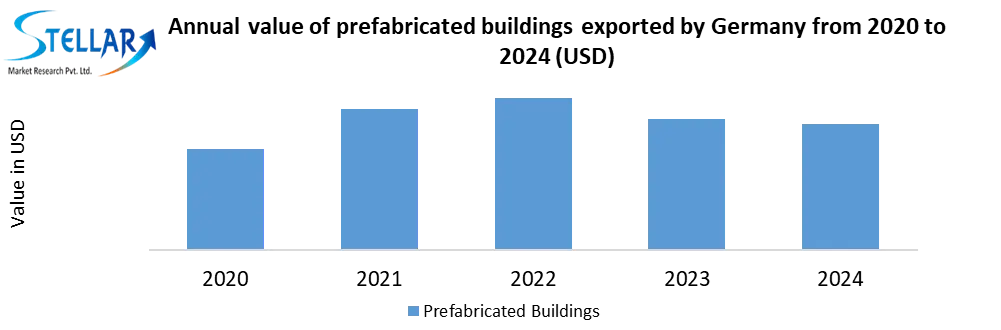
The Prefabricated Homes Market is experiencing significant transformation as the global construction industry shifts toward faster, more sustainable, and technology-driven building solutions. Prefabricated homes, manufactured partially or completely in controlled factory environments and assembled at construction sites, are becoming an increasingly attractive alternative to traditional construction methods due to reduced project timelines, lower material waste, and improved quality control.
According to Stellar Market Research, the Prefabricated Homes Market was valued at USD 39.2 billion in 2025 and is expected to reach USD 63.36 billion by 2032, expanding at a CAGR of 7.1% during 2026–2032. Rising housing shortages, urbanization, labor constraints, sustainability requirements, and growing adoption of industrialized construction methods are accelerating market growth.
𝐃𝐨𝐰𝐧𝐥𝐨𝐚𝐝 𝐅𝐫𝐞𝐞 𝐏𝐃𝐅 𝐁𝐫𝐨𝐜𝐡𝐮𝐫𝐞: https://www.stellarmr.com/report/req_sample/Prefabricated-Homes-Market/2781
Industrialized Construction Drives the Evolution of Housing
The global housing sector is undergoing a major shift from traditional project-based construction toward industrialized and product-oriented building models. Prefabricated homes are moving beyond their earlier perception as temporary housing solutions and are emerging as scalable, high-quality residential alternatives.
The increasing gap between housing demand and supply, especially in rapidly urbanizing regions, is encouraging governments, developers, and investors to explore modular and factory-built housing solutions. Prefabrication enables faster construction cycles, predictable costs, and improved resource management compared with conventional building techniques.
Factory-controlled production environments allow manufacturers to maintain consistent quality standards while reducing construction delays caused by weather conditions, labor shortages, and material inefficiencies.
Modular Homes Dominate Market Adoption
Based on home type, the modular homes segment dominates the Prefabricated Homes Market, accounting for a significant revenue share in 2025. Modular homes are increasingly preferred due to their high degree of factory completion, faster installation, design flexibility, and ability to meet modern building standards.
Modular construction allows large sections of homes to be manufactured off-site and transported for final assembly. This approach significantly reduces on-site labor requirements and shortens project completion timelines.
Other important segments include:
Panelized homes
Pre-cut homes
Hybrid prefabricated structures
Panelized homes are gaining popularity in urban construction projects due to their flexibility, transportation efficiency, and suitability for multi-story developments.
Faster Construction and Labor Shortages Support Market Growth
One of the strongest drivers of the Prefabricated Homes Market is the increasing need for faster housing development. Traditional construction projects often face delays due to labor shortages, material availability issues, and complex site conditions.
Prefabricated construction addresses these challenges by shifting a large portion of the building process into controlled manufacturing facilities. This allows multiple activities to occur simultaneously, reducing overall construction timelines.
The construction industry is also facing a shortage of skilled labor across many regions. Prefabricated housing reduces dependency on manual labor by utilizing automated manufacturing processes and standardized production systems.
Developers are increasingly adopting prefabricated solutions to improve project efficiency, reduce costs, and deliver housing projects at a faster pace.
Sustainability Becomes a Key Market Opportunity
Sustainability is becoming a major factor influencing the growth of prefabricated homes. Governments, developers, and consumers are increasingly focused on reducing carbon emissions, minimizing construction waste, and improving energy efficiency.
Factory-based construction offers several environmental advantages, including:
Reduced material waste
Efficient resource utilization
Lower transportation requirements
Better energy performance
Improved recycling potential
Manufacturers are increasingly integrating sustainable technologies such as solar energy systems, energy-efficient insulation, smart home technologies, and environmentally friendly materials into prefabricated housing designs.
The development of net-zero and energy-efficient prefabricated homes is expected to create new opportunities as green building regulations become stricter worldwide.
Technology Integration Transforms Prefabricated Housing
Advanced technologies are reshaping the prefabricated housing industry by improving design accuracy, manufacturing efficiency, and customer customization.
Key technology trends include:
Building Information Modeling (BIM)
Automated manufacturing systems
Artificial intelligence-based design optimization
Digital twins
Smart home integration
BIM technology enables architects and manufacturers to create accurate digital models before production begins, reducing errors and improving collaboration between stakeholders.
Artificial intelligence is also helping companies optimize designs, predict material requirements, and improve production efficiency.
The integration of smart home features such as automated lighting, energy monitoring, security systems, and connected appliances is further increasing consumer interest in modern prefabricated homes.
Residential Sector Leads Application Demand
Among applications, the residential segment represents the primary growth area due to increasing demand for affordable and efficient housing solutions.
Rapid population growth, urban expansion, and increasing housing affordability challenges are encouraging governments and private developers to invest in prefabricated residential projects.
Prefabricated homes are also gaining popularity among consumers seeking customized housing options with shorter delivery timelines.
Commercial and industrial applications are expanding as businesses adopt modular structures for offices, worker accommodations, educational facilities, and temporary infrastructure projects.
Asia-Pacific Leads Global Market Expansion
Asia-Pacific dominated the Prefabricated Homes Market in 2025, supported by rapid urbanization, large-scale infrastructure investments, government housing initiatives, and strong manufacturing capabilities.
China and India are major contributors to regional growth due to rising housing demand, population expansion, and increasing adoption of modern construction techniques.
Japan remains a leader in advanced modular housing technologies due to its focus on earthquake-resistant structures, precision manufacturing, and high-quality residential solutions.
North America is also witnessing strong growth due to housing shortages, skilled labor challenges, and increasing adoption of automated construction methods. The United States is investing in modular housing solutions to address affordable housing requirements and improve construction efficiency.
Europe is focusing on sustainable prefabricated housing due to strict energy efficiency regulations and growing demand for low-carbon buildings.
Regulatory Support Encourages Modular Construction Adoption
Government policies and building regulations are playing an important role in accelerating prefabricated housing adoption.
Several countries are introducing initiatives supporting:
Affordable housing development
Green building standards
Energy-efficient construction
Sustainable materials
Faster project approvals
However, differences in building codes across regions remain a challenge for manufacturers operating internationally.
Standardization of regulations and increased acceptance of modular construction methods are expected to improve market accessibility in the coming years.
Competitive Landscape
The Prefabricated Homes Market is highly fragmented, with companies competing through manufacturing expansion, technological innovation, sustainable designs, and regional market development.
Major players operating in the market include:
Clayton Homes
Champion Home Builders
Cavco Industries
Sekisui House
Daiwa House Industry
Lindal Cedar Homes
Skanska
Laing O’Rourke
Red Sea Housing Services
Companies are increasingly focusing on vertical integration, automated factories, customized housing solutions, and partnerships with developers to strengthen their market position.
𝐃𝐨𝐰𝐧𝐥𝐨𝐚𝐝 𝐅𝐫𝐞𝐞 𝐏𝐃𝐅 𝐁𝐫𝐨𝐜𝐡𝐮𝐫𝐞: https://www.stellarmr.com/report/req_sample/Prefabricated-Homes-Market/2781
Recent Industry Developments
Sekisui House (2025): Continued expansion of advanced prefabricated housing solutions incorporating energy-efficient designs and smart home technologies to strengthen sustainable residential offerings.
Daiwa House Industry (2025): Increased investment in modular construction technologies and factory-based housing production to improve delivery efficiency.
Clayton Homes (2024): Expanded manufactured housing capabilities in North America, supporting affordable housing demand through scalable production.
Skanska (2024): Strengthened focus on sustainable construction practices and modular building approaches to improve project efficiency.
European Modular Housing Companies (2024): Increased adoption of timber-based and energy-efficient prefabricated solutions driven by green building regulations.
Market Challenges
Despite strong growth potential, the Prefabricated Homes Market faces several challenges.
High initial investment requirements for manufacturing facilities, transportation limitations, fragmented building regulations, and consumer concerns regarding quality perception can restrict adoption.
Establishing large-scale production facilities requires significant capital investment, while transporting large modules can create logistical complexities.
Additionally, some consumers continue to associate prefabricated homes with lower quality, creating a need for greater awareness about modern modular construction benefits.
Future Outlook
The Prefabricated Homes Market is expected to witness sustained growth through 2032 as construction industries worldwide embrace faster, smarter, and more sustainable building methods.
Future market expansion will be driven by housing shortages, digital construction technologies, sustainability initiatives, and increasing investment in industrialized construction.
Manufacturers that focus on automation, energy-efficient designs, customization capabilities, and regional production networks are expected to gain competitive advantages.
As governments and developers search for efficient solutions to address global housing challenges, prefabricated homes are expected to become a critical component of the future residential construction ecosystem.
Media Contact
Stellar Market Research
Website: Stellar Market Research – Global Research Reports & Consulting
Email: sales@stellarmr.com
