Transgenic Seeds Market: Advancing Agricultural Productivity Through Biotechnology and Crop Innovation (2025–2032)
The Transgenic Seeds Market is witnessing significant growth as agricultural industries worldwide adopt biotechnology solutions to improve crop productivity, enhance resistance against pests and diseases, and address increasing global food demand. Transgenic seeds, also known as genetically modified (GM) seeds, are developed by introducing specific genes into plants to provide beneficial traits such as insect resistance, herbicide tolerance, improved nutritional value, and better environmental adaptability.
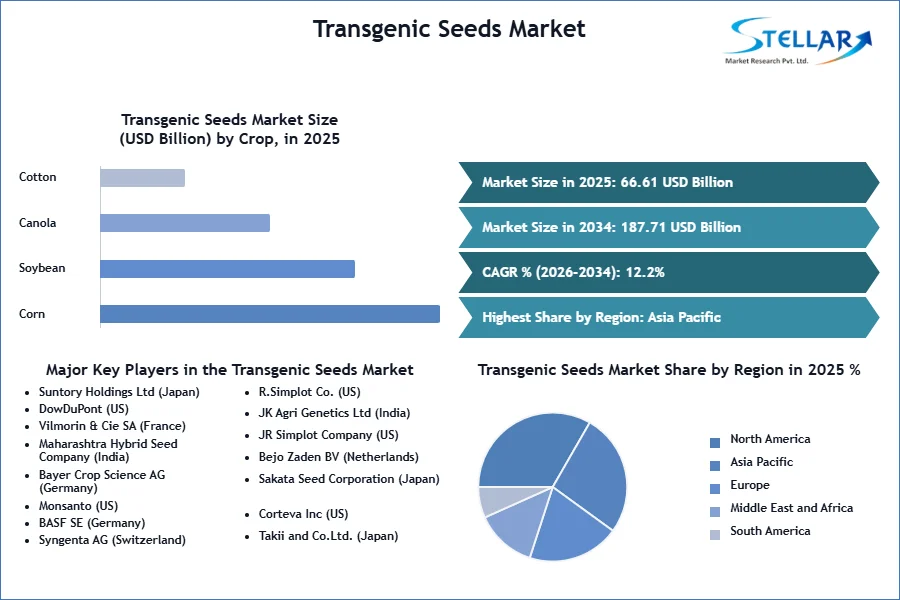
According to Stellar Market Research, the Global Transgenic Seeds Market was valued at USD 59.37 billion in 2024 and is projected to reach USD 149.12 billion by 2032, growing at a CAGR of 12.2% during 2025–2032. The report analyzes market dynamics, crop types, traits, regional trends, and competitive developments shaping the future of genetically modified agriculture.
Growing Need for Higher Agricultural Productivity
The increasing global population and rising food consumption are creating pressure on the agricultural sector to improve crop yields while using limited resources efficiently. Traditional farming methods face challenges such as climate change, declining arable land, pest outbreaks, and increasing input costs.
Transgenic seeds provide farmers with advanced crop solutions that can:
- Increase crop productivity
- Improve resistance to insects and diseases
- Reduce crop losses
- Enhance tolerance to environmental stress
- Improve farming efficiency
The growing need for sustainable agricultural practices is expected to accelerate adoption of genetically modified seeds worldwide.
𝐃𝐨𝐰𝐧𝐥𝐨𝐚𝐝 𝐅𝐫𝐞𝐞 𝐏𝐃𝐅 𝐁𝐫𝐨𝐜𝐡𝐮𝐫𝐞: https://www.stellarmr.com/report/req_sample/Transgenic-Seeds-Market/985
Understanding Transgenic Seeds
Transgenic seeds are created using genetic engineering techniques that introduce specific genes into plant DNA. These modifications allow crops to develop characteristics that may not naturally occur within the plant species.
Common traits developed through transgenic technology include:
- Insect resistance
- Herbicide tolerance
- Improved nutritional characteristics
- Disease resistance
- Better crop durability
These technologies help farmers achieve higher productivity while reducing dependence on chemical inputs.
Key Factors Driving the Transgenic Seeds Market
1. Rising Global Food Demand
Population growth, urbanization, and changing dietary patterns are increasing demand for agricultural products. Farmers are adopting advanced seed technologies to increase production efficiency and meet growing food requirements.
Transgenic crops help maximize yield potential without requiring significant expansion of agricultural land.
2. Increasing Pest and Disease Resistance Requirements
Crop losses caused by pests and diseases remain a major challenge for farmers. Transgenic seeds with insect-resistant traits help protect crops and reduce damage.
These technologies can contribute to:
- Reduced pesticide usage
- Lower production costs
- Improved crop quality
- Enhanced farm profitability
3. Rising Cost of Agricultural Inputs
Increasing fertilizer and pesticide costs are encouraging farmers to explore alternative agricultural technologies. Transgenic seeds with improved resistance traits can help optimize input usage and improve economic efficiency.
4. Advancements in Agricultural Biotechnology
Continuous developments in biotechnology, genetic engineering, and crop science are supporting innovation in seed technology.
Companies are focusing on developing crops with:
- Higher nutritional value
- Climate resilience
- Improved yield performance
- Enhanced quality characteristics
Transgenic Seeds Market Segmentation
By Crop Type
The market is segmented into:
Corn
Corn is one of the most widely adopted genetically modified crops globally. Transgenic corn varieties are developed for insect resistance and herbicide tolerance, improving productivity and reducing crop losses.
Soybean
Soybean represents a major segment due to extensive adoption of herbicide-tolerant varieties. GM soybeans are widely used for food, animal feed, and industrial applications.
Canola
Transgenic canola varieties provide improved weed management and resistance characteristics, supporting efficient cultivation.
Cotton
GM cotton has gained adoption due to insect-resistant traits that help farmers reduce pest-related losses.
𝐃𝐨𝐰𝐧𝐥𝐨𝐚𝐝 𝐅𝐫𝐞𝐞 𝐏𝐃𝐅 𝐁𝐫𝐨𝐜𝐡𝐮𝐫𝐞: https://www.stellarmr.com/report/req_sample/Transgenic-Seeds-Market/985
By Trait
Insect Resistance
Insect-resistant seeds are developed to protect crops from harmful insects and reduce pesticide application.
Benefits include:
- Improved crop protection
- Higher yields
- Reduced chemical usage
Herbicide Tolerance
Herbicide-tolerant crops allow farmers to manage weeds more efficiently while supporting large-scale agricultural operations.
Other Traits
Other genetic traits include:
- Improved nutritional quality
- Disease resistance
- Environmental stress tolerance
Regional Market Insights
South America
South America is expected to become a major growth region for the transgenic seeds market due to extensive agricultural activities and strong adoption of genetically modified crops.
Countries such as Brazil and Argentina are major producers of soybean, corn, and other crops using advanced seed technologies.
North America
North America remains a significant market due to advanced agricultural infrastructure, biotechnology research, and widespread adoption of GM crops.
Asia-Pacific
Increasing food demand, agricultural modernization, and government initiatives supporting biotechnology are creating growth opportunities in countries across Asia-Pacific.
Europe and Middle East & Africa
Regulatory frameworks and consumer preferences influence adoption rates, but advancements in agricultural technology continue creating opportunities.
Challenges Affecting Market Growth
Regulatory Restrictions
Government regulations and approval processes for genetically modified crops can influence market expansion.
Different countries have varying policies regarding cultivation, import, and commercialization of GM crops.
Consumer Concerns
Some consumers have concerns regarding genetically modified foods, sustainability, and long-term environmental impacts.
Limited Crop Diversification
The market currently relies heavily on major crops such as soybean, corn, cotton, and canola, creating dependency on specific crop categories.
Competitive Landscape
The Transgenic Seeds Market includes major biotechnology and agricultural companies focusing on research, product development, and advanced seed solutions.
Key players analyzed in the Stellar Market Research report include:
- Bayer Crop Science AG
- BASF SE
- Corteva Inc.
- Syngenta AG
- Sakata Seed Corporation
Companies are focusing on:
- Biotechnology research
- New trait development
- Strategic partnerships
- Sustainable agriculture solutions
- Advanced crop protection technologies
Future Opportunities in the Transgenic Seeds Market
The market is expected to benefit from emerging opportunities such as:
- Development of climate-resistant crops
- Increasing demand for sustainable farming
- Expansion of precision agriculture
- Growth of biotechnology research
- Improved nutritional crop varieties
- Adoption in emerging agricultural markets
The combination of biotechnology innovation and rising food demand will continue creating new opportunities for transgenic seed manufacturers.
Conclusion
The Transgenic Seeds Market is becoming a crucial part of modern agriculture as farmers and agricultural organizations seek efficient solutions to improve productivity and overcome challenges such as climate change, pests, and increasing food demand.
With advancements in genetic engineering, rising agricultural investments, and growing adoption of high-performance crops, the market is expected to experience strong expansion through 2032. Transgenic seeds will continue supporting the development of more productive, resilient, and sustainable agricultural systems worldwide.
