Asia Pacific Eco Fiber Market: Sustainable Materials, Green Manufacturing, and Textile Innovation Driving Market Growth
The Asia Pacific Eco Fiber Market is witnessing significant growth as industries and consumers increasingly shift toward sustainable, environmentally friendly, and low-impact materials. Eco fibers are produced from natural, recycled, organic, or regenerated sources and are gaining popularity due to their reduced environmental impact compared with conventional synthetic fibers. These fibers are widely used in textiles, apparel, industrial applications, medical products, and household furnishings.
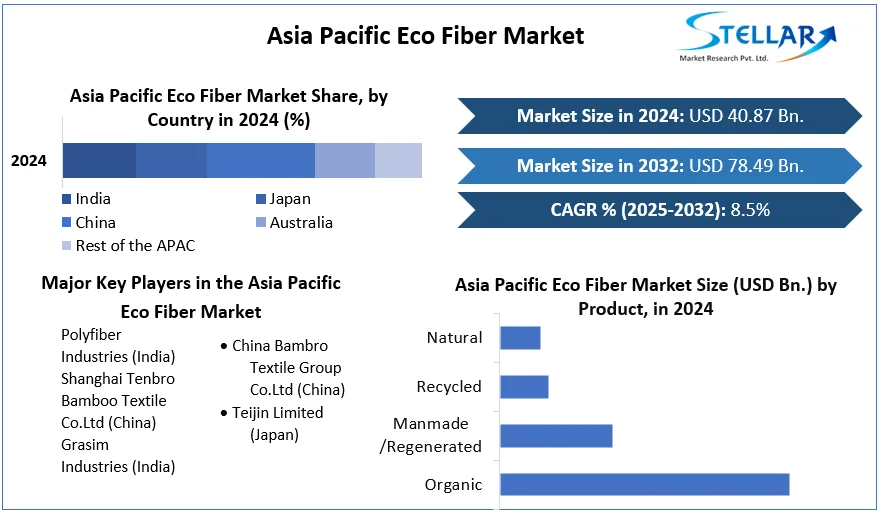
According to Stellar Market Research, the Asia Pacific Eco Fiber Market was valued at USD 40.87 billion in 2024 and is projected to reach USD 78.49 billion by 2032, growing at a CAGR of 8.5% during 2025–2032. Growing sustainability awareness, increasing demand for eco-friendly textiles, and government initiatives supporting green production are driving market expansion across the region.
Rising Demand for Sustainable Textiles
The textile industry is one of the largest contributors to eco fiber demand in Asia Pacific. Increasing concerns regarding pollution, chemical usage, and textile waste are encouraging manufacturers to adopt sustainable alternatives such as organic cotton, recycled fibers, bamboo fibers, and regenerated fibers.
Fashion brands and textile producers are increasingly focusing on sustainable supply chains by replacing traditional synthetic materials with environmentally responsible alternatives. The growing popularity of sustainable fashion among consumers is creating new opportunities for eco fiber manufacturers.
Textile and Apparel Industry Driving Market Growth
The textile and apparel sector represents a major application area for eco fibers. Rising demand for comfortable, chemical-free, and environmentally friendly clothing is supporting the adoption of sustainable fibers in casual wear, sportswear, luxury fashion, and everyday garments.
Asia Pacific countries, including China, India, Bangladesh, and Vietnam, have strong textile manufacturing capabilities, making the region a key hub for eco fiber production and consumption. The expansion of sustainable apparel manufacturing is expected to continue supporting market growth.
𝐃𝐨𝐰𝐧𝐥𝐨𝐚𝐝 𝐅𝐫𝐞𝐞 𝐏𝐃𝐅 𝐁𝐫𝐨𝐜𝐡𝐮𝐫𝐞: https://www.stellarmr.com/report/req_sample/Asia-Pacific-Eco-Fiber-Market/995
Growing Adoption of Recycled and Regenerated Fibers
Recycled and regenerated fibers are gaining importance as industries focus on reducing waste and improving resource efficiency. These fibers help minimize dependence on raw materials and support circular economy initiatives.
Regenerated fibers made from natural sources such as cellulose are increasingly used in textiles and medical applications due to their softness, durability, and sustainable characteristics. Manufacturers are investing in advanced fiber technologies to improve performance and expand application areas.
Sustainability Initiatives Creating New Opportunities
Environmental regulations and corporate sustainability goals are accelerating demand for eco fibers across Asia Pacific. Companies are adopting greener production methods to reduce carbon emissions, water consumption, and chemical waste.
The shift toward sustainable packaging, biodegradable materials, and environmentally friendly consumer products is also creating additional opportunities for eco fiber applications beyond traditional textiles.
Market Segmentation Overview
The Asia Pacific Eco Fiber Market is segmented based on product type, application, and geography.
By Product Type
Organic Eco Fibers
Organic fibers are produced without harmful chemicals, pesticides, or synthetic additives. Organic cotton is among the most widely used sustainable fibers due to its comfort, durability, and environmentally friendly production process.
Manmade / Regenerated Fibers
Regenerated fibers are produced using natural raw materials that are processed into new fiber structures. These fibers are widely used due to their versatility and increasing demand from textile and medical industries.
Recycled Fibers
Recycled fibers are manufactured from waste materials such as discarded textiles and plastic-based materials. They support waste reduction and circular economy practices.
Natural Fibers
Natural eco fibers derived from plants and other biological sources are gaining popularity due to their biodegradability and renewable characteristics.
By Application
Textile and Apparel
The textile and apparel segment dominates the eco fiber market due to rising demand for sustainable clothing, fashion products, and accessories.
Industrial
Eco fibers are used in industrial applications such as automotive components, construction materials, geotextiles, and insulation products.
Medical
Increasing demand for sustainable medical textiles, hygiene products, and healthcare materials is creating growth opportunities for eco fibers.
Household and Furnishing
Eco fibers are increasingly used in carpets, curtains, furniture fabrics, bedding materials, and home décor products.
Regional Market Outlook
China
China remains a major contributor to the Asia Pacific eco fiber market due to its large textile manufacturing base, advanced production capabilities, and growing focus on sustainable manufacturing.
India
India is emerging as a significant market due to strong cotton production, expanding textile industries, and increasing adoption of sustainable materials. Government initiatives promoting environmentally friendly manufacturing are supporting market development.
Japan and South Korea
Japan and South Korea are focusing on advanced fiber technologies, recycled materials, and sustainable product innovation to meet growing environmental requirements.
Southeast Asia
Countries such as Vietnam, Indonesia, and Thailand are experiencing increasing demand due to expanding textile production and rising international demand for sustainable products.
Key Market Growth Drivers
Increasing Environmental Awareness
Growing awareness about climate change, pollution, and sustainable consumption is encouraging industries and consumers to choose eco-friendly materials.
Expansion of Sustainable Fashion
The rise of ethical and sustainable fashion trends is increasing demand for eco fibers in clothing and apparel manufacturing.
Government Sustainability Regulations
Environmental policies and regulations supporting green manufacturing are encouraging companies to invest in sustainable fiber solutions.
Growth of Textile Manufacturing
Asia Pacific’s strong textile production ecosystem continues to create opportunities for eco fiber suppliers and manufacturers.
Challenges Affecting Market Growth
Despite strong growth potential, the Asia Pacific Eco Fiber Market faces challenges such as higher production costs, limited availability of raw materials, and competition from conventional synthetic fibers.
Manufacturers are addressing these challenges through technological advancements, improved recycling processes, and increased production capacity.
Competitive Landscape
The Asia Pacific Eco Fiber Market includes several established and emerging companies focusing on sustainable fiber production, product innovation, and strategic partnerships.
Key players include:
- Polyfiber Industries (India)
- Shanghai Tenbro Bamboo Textile Co. Ltd. (China)
- Grasim Industries (India)
- China Bambro Textile Group Co. Ltd. (China)
- Teijin Limited (Japan)
𝐃𝐨𝐰𝐧𝐥𝐨𝐚𝐝 𝐅𝐫𝐞𝐞 𝐏𝐃𝐅 𝐁𝐫𝐨𝐜𝐡𝐮𝐫𝐞: https://www.stellarmr.com/report/req_sample/Asia-Pacific-Eco-Fiber-Market/995
Future Outlook of Asia Pacific Eco Fiber Market
The future of the Asia Pacific Eco Fiber Market will be shaped by sustainable manufacturing practices, circular economy initiatives, and increasing demand for environmentally responsible products.
As textile manufacturers, fashion brands, and industrial companies continue adopting greener materials, eco fibers are expected to become an essential part of sustainable production systems. The combination of technological innovation, environmental awareness, and regulatory support will create significant growth opportunities for the market during the forecast period of 2025–2032.
