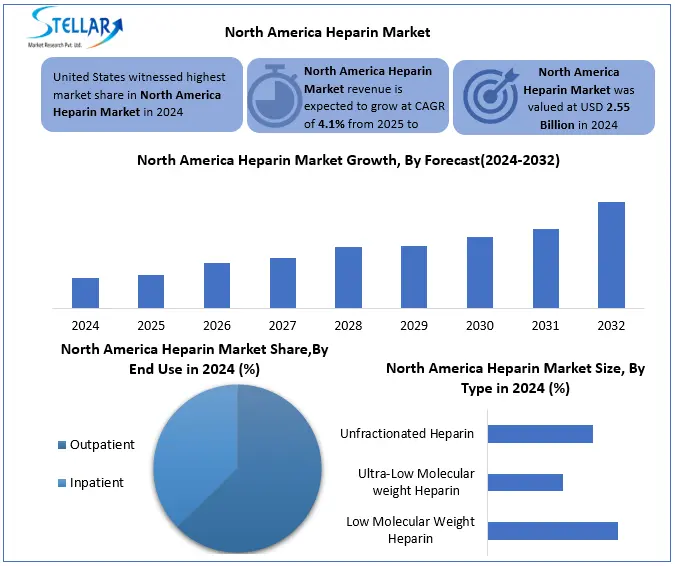
The North America Heparin Market is witnessing steady expansion as healthcare systems across the region increase the use of anticoagulant therapies for cardiovascular disorders, surgical procedures, dialysis, and thromboembolic disease management. Growing demand for advanced healthcare solutions, rising prevalence of chronic diseases, and improvements in outpatient anticoagulation care are strengthening market opportunities. According to Stellar Market Research, the North America Heparin Market was valued at USD 2.55 billion in 2024 and is projected to reach USD 3.52 billion by 2032, growing at a CAGR of 4.1% during 2025–2032. The market is evolving through low molecular weight heparin adoption, prefilled injection innovations, biosynthetic alternatives, and efforts to improve regional supply chain resilience.
Understanding the North America Heparin Market
Heparin is an anticoagulant medication widely used to prevent and treat blood clot formation. It works by enhancing antithrombin activity, which helps inhibit key clotting factors and reduces the risk of dangerous blood clots. Heparin plays an essential role in managing conditions such as deep vein thrombosis (DVT), pulmonary embolism (PE), cardiovascular complications, surgical procedures, and dialysis treatments.
The North American healthcare ecosystem represents one of the most advanced markets for anticoagulant therapies due to developed hospital infrastructure, high healthcare expenditure, extensive surgical activity, and strong pharmaceutical innovation. The United States remains the dominant contributor within the region due to its large patient population, advanced medical facilities, and widespread adoption of anticoagulant therapies.
The market includes different formulations such as low molecular weight heparin (LMWH), unfractionated heparin (UFH), and ultra-low molecular weight heparin products, serving both inpatient and outpatient healthcare needs.
𝐃𝐨𝐰𝐧𝐥𝐨𝐚𝐝 𝐅𝐫𝐞𝐞 𝐏𝐃𝐅 𝐁𝐫𝐨𝐜𝐡𝐮𝐫𝐞: https://www.stellarmr.com/report/req_sample/north-america-heparin-market/2860
Key Factors Driving Market Growth
Increasing Prevalence of Cardiovascular and Thromboembolic Disorders
The rising burden of cardiovascular diseases is one of the primary factors supporting the growth of the North America Heparin Market. Conditions such as atrial fibrillation, coronary artery disease, stroke, and venous thromboembolism require effective anticoagulation therapies to reduce the risk of complications.
An aging population, sedentary lifestyles, and increasing prevalence of chronic health conditions are contributing to higher demand for anticoagulant medications. Hospitals frequently rely on heparin during emergency care, surgical interventions, and intensive care treatments due to its rapid action and clinical effectiveness.
Growing Number of Surgical Procedures and Dialysis Treatments
The increasing volume of surgical procedures across North America is creating sustained demand for heparin-based therapies. Cardiovascular surgeries, orthopedic procedures, and other major operations often require anticoagulation management to prevent clot formation.
Dialysis centers also represent an important application area for heparin because anticoagulants are necessary to prevent blood clotting within dialysis equipment. The expansion of kidney care services and increasing prevalence of renal disorders are supporting continued adoption.
Rising Adoption of Low Molecular Weight Heparin
Low molecular weight heparin (LMWH) is emerging as a leading segment due to its predictable anticoagulant response, improved patient convenience, and reduced monitoring requirements compared with unfractionated heparin.
LMWH products are increasingly preferred for conditions such as venous thromboembolism because they offer longer-lasting effects and easier administration through subcutaneous injections. These advantages are supporting wider adoption in hospitals and outpatient healthcare settings.
Market Segmentation
The North America Heparin Market is segmented based on type, application, end user, and country.
By Type
The market includes:
Low Molecular Weight Heparin (LMWH)
Ultra-Low Molecular Weight Heparin (ULMWH)
Unfractionated Heparin (UFH)
Low Molecular Weight Heparin Dominates the Market
The LMWH segment accounted for the leading market position due to its clinical advantages and increasing adoption in thrombosis prevention and treatment.
Compared with traditional unfractionated heparin, LMWH provides more consistent anticoagulant effects, fewer complications, and improved patient convenience. These benefits make it widely used in both hospital and outpatient environments.
Unfractionated heparin continues to maintain importance, particularly in emergency situations, intensive care units, cardiac procedures, and cases requiring rapid dose adjustments.
By Application
Major applications include:
Venous Thromboembolism
Atrial Fibrillation
Renal Impairment
Coronary Artery Disease
Others
Venous Thromboembolism Segment Leads Growth
Venous thromboembolism remains a major application area because of the widespread use of heparin in preventing and treating deep vein thrombosis and pulmonary embolism.
Hospitalized patients, individuals undergoing surgery, cancer patients, and those with limited mobility often require anticoagulation therapy to minimize clot-related risks.
The effectiveness, affordability, and established clinical use of heparin continue to support its adoption in VTE management.
By End User
The market is divided into:
Inpatient
Outpatient
Inpatient Segment Holds Major Market Share
Hospitals and inpatient facilities represent the dominant end-user segment due to extensive use of heparin during surgeries, emergency treatments, intensive care, and dialysis procedures.
However, outpatient adoption is increasing as healthcare systems shift toward home-based care and self-administration models. Prefilled syringes and simplified dosing solutions are improving convenience for patients managing long-term anticoagulation needs.
Technology and Product Innovation Trends
Innovation within the heparin industry is focused on improving safety, accessibility, and patient convenience.
Prefilled Injection Systems
Pharmaceutical companies are increasingly developing prefilled heparin syringes that simplify administration, reduce medication errors, and improve patient compliance. These products support the growing transition toward outpatient and home-based care models.
Biosynthetic and Alternative Heparin Development
Concerns regarding dependence on animal-derived raw materials are encouraging research into synthetic and biosynthetic heparin alternatives. These technologies aim to improve supply security, reduce contamination risks, and create more consistent production processes.
Digital Healthcare Integration
Digital healthcare technologies are supporting anticoagulation monitoring and patient management. Telehealth platforms, electronic medical records, and remote monitoring systems are improving treatment coordination and medication adherence.
Supply Chain and Regulatory Impact
The North America Heparin Market faces increasing attention regarding supply chain security. Heparin production relies heavily on crude heparin raw materials sourced internationally, creating vulnerabilities related to trade restrictions, pricing fluctuations, and supply disruptions.
Regulatory agencies continue to emphasize quality control, manufacturing transparency, and safety standards. Strict compliance requirements influence production costs but help maintain product reliability and patient safety.
Companies are exploring regional manufacturing investments, diversified sourcing strategies, and advanced quality monitoring systems to strengthen supply resilience.
Regional Market Outlook
United States
The United States dominates the North America Heparin Market, accounting for the largest share due to advanced healthcare infrastructure, high healthcare spending, and widespread use of anticoagulant therapies.
The country’s strong pharmaceutical ecosystem, extensive hospital network, and growing burden of cardiovascular diseases continue to support market expansion.
Canada
Canada represents a growing market supported by increasing healthcare investment, rising awareness of cardiovascular disease management, and expanding access to advanced medical treatments.
Government-supported healthcare programs and improvements in hospital infrastructure are contributing to increased adoption of anticoagulant therapies.
Mexico
Mexico is expected to witness gradual growth due to improving healthcare facilities, increasing medical access, and rising demand for cardiovascular disease treatments.
Expanding healthcare infrastructure and pharmaceutical investments are creating new opportunities for market participants.
Challenges Facing the Market
Despite positive growth prospects, the North America Heparin Market faces several challenges.
High regulatory requirements and manufacturing complexity increase production costs. Establishing domestic heparin manufacturing capabilities requires significant investment in specialized facilities, quality control systems, and compliance infrastructure.
Supply chain dependence on imported raw materials remains another challenge. Disruptions caused by geopolitical factors, trade restrictions, or raw material shortages can affect availability and pricing.
Additionally, alternative anticoagulant therapies may create competitive pressure in specific treatment areas.
Competitive Landscape
The North America Heparin Market is competitive, with pharmaceutical companies focusing on product development, supply chain strengthening, regulatory approvals, and strategic partnerships.
Key players operating in the market include:
Pfizer Inc.
Amphastar Pharmaceuticals, Inc.
Baxter International Inc.
Fresenius Kabi USA
Sanofi S.A.
Bio-Rad Laboratories, Inc.
Johnson & Johnson (Janssen Pharmaceuticals)
LFB Group
Viatris Inc.
Haemtech, Inc.
Companies are investing in manufacturing capabilities, injectable drug technologies, and supply chain optimization to strengthen their market presence.
𝐃𝐨𝐰𝐧𝐥𝐨𝐚𝐝 𝐅𝐫𝐞𝐞 𝐏𝐃𝐅 𝐁𝐫𝐨𝐜𝐡𝐮𝐫𝐞: https://www.stellarmr.com/report/req_sample/north-america-heparin-market/2860
Future Outlook
The future of the North America Heparin Market will be influenced by rising cardiovascular disease prevalence, expanding surgical procedures, healthcare modernization, and pharmaceutical innovation.
The continued adoption of low molecular weight heparin, development of advanced injection formats, and investments in alternative production technologies will create new growth opportunities.
As healthcare systems focus on improving patient outcomes, reducing hospital stays, and expanding home-based care, demand for convenient and effective anticoagulant therapies is expected to increase.
With strong medical infrastructure, continuous innovation, and growing demand for thrombosis management solutions, the North America Heparin Market is positioned for steady growth through 2032.
Media Contact
Stellar Market Research
Website: Stellar Market Research – Global Research Reports & Consulting
Email: sales@stellarmr.com
