The Germany Pea Protein Market is witnessing strong expansion as consumers increasingly adopt plant-based diets and seek sustainable, high-quality protein alternatives. Pea protein, extracted from yellow split peas, has gained popularity due to its nutritional profile, allergen-free nature, and versatility across food, beverage, and nutraceutical applications.
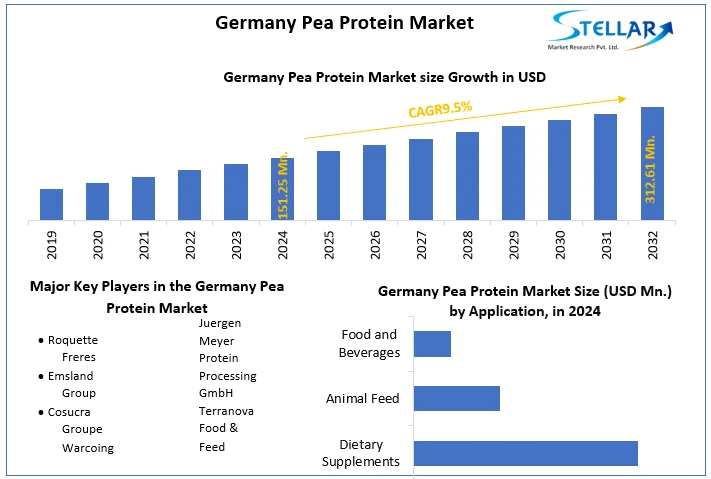
German Pea Protein Market size was valued at USD 151.25 Million in 2024. The total German Pea Protein Market revenue is expected to grow at a CAGR of 9.5 % from 2025 to 2032, reaching nearly USD 312.61 Million in 2032.
Germany, being one of Europe’s largest food and beverage markets, is at the forefront of plant-based innovation, making pea protein a key growth segment.
A Market Driven by Vegan Trends and Clean Label Demand
A defining trend in the Germany pea protein market is the rapid shift toward vegan, vegetarian, and flexitarian diets. Consumers are actively choosing plant-based protein sources that align with health, ethical, and environmental considerations.
Pea protein is especially attractive due to its non-GMO, gluten-free, and dairy-free properties, making it suitable for a wide range of consumers.
Key Market Insights
- Pea protein is a leading plant-based protein alternative in Germany.
- High demand in food, beverages, sports nutrition, and supplements.
- Strong growth in meat alternatives and dairy-free products.
- Increasing preference for organic and clean-label ingredients.
- Widely used in protein powders, snacks, and ready-to-drink beverages.
- Rising investments in plant-based food innovation.
- Sustainability is a major purchasing factor among consumers.
Market Drivers Accelerating Growth
1. Growing Plant-Based Consumer Base
Germany has one of the largest vegan populations in Europe.
2. Rising Health and Fitness Awareness
Consumers are seeking high-protein diets for wellness and performance.
3. Sustainability and Environmental Concerns
Pea protein production has a lower carbon footprint compared to animal protein.
Market Challenges and Restraints
1. Taste and Texture Limitations
Improving sensory attributes remains a key focus for manufacturers.
2. Competition from Other Plant Proteins
Soy, wheat, and rice proteins continue to compete in the market.
Technology and Innovation Trends
Technology is playing a crucial role in advancing the Germany pea protein market through innovations in extraction, processing, and formulation techniques.
Advanced extraction methods are improving protein purity and functionality, while new texturization technologies are enabling the development of plant-based meat alternatives with enhanced taste and texture.
In beverages, improvements in solubility and stability are making pea protein more suitable for ready-to-drink products. Food manufacturers are also combining pea protein with other plant proteins to create balanced amino acid profiles.
Sustainability remains central, with companies focusing on eco-friendly sourcing, traceability, and reduced environmental impact across the supply chain.
Visual Snapshot: Pea Protein Applications in Germany
Regional Insights: Germany Leads European Plant-Based Innovation
Germany is a key contributor to the European pea protein market:
- Strong demand for plant-based foods and beverages.
- Leading innovation in vegan and alternative protein products.
- High consumer awareness regarding sustainability and health.
Cities like Berlin, Hamburg, and Munich are major hubs for plant-based food innovation and startups.
Recent Industry Developments
- Roquette (2025): Expanded pea protein production capacity in Europe.
- Cargill (2024): Strengthened plant protein portfolio.
- Ingredion (2025): Developed new plant-based formulations.
- Burcon NutraScience (2024): Advanced extraction technologies.
- European Food Safety Authority (2025): Continued regulatory oversight on food ingredients.
Competitive Landscape
The Germany pea protein market is competitive, with global ingredient manufacturers and regional producers driving growth.
Companies are focusing on product innovation, sustainability, functionality, and application diversity to strengthen their market position.
Analyst Perspective
A senior market analyst notes:
“Germany’s pea protein market is expanding rapidly due to strong plant-based adoption and sustainability trends. Innovation will be key to long-term growth.”
Future Outlook
The Germany Pea Protein Market is expected to witness strong growth in the coming years, driven by increasing demand for plant-based nutrition, advancements in food technology, and sustainability initiatives.
The expansion of vegan products, improved formulations, and rising consumer awareness will further enhance market potential. As Germany continues to lead in plant-based innovation, pea protein will remain a critical ingredient in shaping the future of the food industry.
Overall, the market presents significant opportunities for food manufacturers, ingredient suppliers, and investors aiming to capitalize on the plant-based protein revolution.
