The US Pea Protein Market is experiencing rapid expansion as consumers shift toward plant-based diets, sustainable food choices, and functional nutrition. Pea protein—derived primarily from yellow split peas—has emerged as a leading alternative to animal-based and soy proteins due to its high nutritional value, allergen-free nature, and versatility.
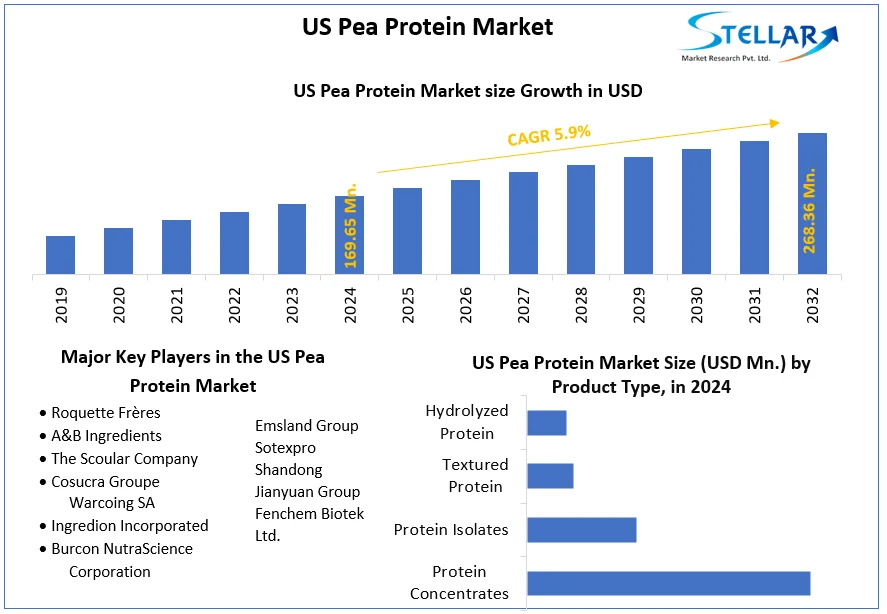
US Pea Protein Market size was valued at USD 169.65 Mn. in 2024 and the total US Pea Protein revenue is expected to grow at a CAGR of 5.9% from 2025 to 2032, reaching nearly USD 268.36 Mn.
With growing demand across food, beverage, nutraceutical, and sports nutrition sectors, the United States is one of the largest and most influential markets for pea protein globally.
A Market Driven by Health, Sustainability, and Lifestyle Shifts
A defining trend in the US pea protein market is the increasing adoption of plant-based and flexitarian diets. Consumers are seeking protein sources that are not only healthy but also environmentally sustainable.
Pea protein aligns with these preferences, offering a clean-label, non-GMO, and easily digestible protein solution.
Key Market Insights
- Pea protein is widely used in food, beverages, and dietary supplements.
- Strong demand in plant-based meat and dairy alternatives.
- High adoption among fitness and health-conscious consumers.
- Free from common allergens like lactose and gluten.
- Increasing preference for organic and clean-label products.
- Growth of vegan and vegetarian product lines.
- Expanding use in functional and fortified foods.
Market Drivers Accelerating Growth
1. Rising Popularity of Plant-Based Diets
Consumers are actively reducing meat consumption and seeking alternatives.
2. Increasing Health and Fitness Awareness
Pea protein is widely used in protein powders and sports nutrition.
3. Sustainability and Environmental Benefits
Plant proteins have a lower environmental impact compared to animal proteins.
Market Challenges and Restraints
1. Taste and Texture Limitations
Improving flavor and mouthfeel remains a key challenge.
2. Competition from Other Protein Sources
Soy, whey, and other plant proteins continue to compete in the market.
Technology and Innovation Trends
Technology is playing a crucial role in advancing the US pea protein market through innovations in protein extraction, formulation, and product development.
Advanced extraction techniques are improving protein purity and functionality. Texturization technologies are enabling the creation of plant-based meat alternatives with improved taste and texture.
In beverages, enhancements in solubility and stability are making pea protein more suitable for ready-to-drink applications. Companies are also blending pea protein with other plant proteins to achieve balanced amino acid profiles.
Sustainability remains a core focus, with manufacturers investing in eco-friendly sourcing, transparent supply chains, and reduced environmental impact.
Visual Snapshot: Pea Protein Applications in the US
Regional Insights: US Leads Plant-Based Innovation
The United States is a global leader in plant-based protein innovation:
- Strong presence of plant-based food companies and startups.
- High consumer awareness of health and sustainability.
- Rapid growth of vegan and flexitarian lifestyles.
Major urban markets such as California, New York, and Texas are key drivers of demand.
Recent Industry Developments
- Cargill (2025): Expanded plant-based protein portfolio.
- Ingredion (2024): Developed new pea protein formulations.
- Roquette (2025): Increased production capacity in North America.
- Burcon NutraScience (2024): Advanced protein extraction technologies.
- US Food and Drug Administration (2025): Continued regulatory oversight of food ingredients.
Competitive Landscape
The US pea protein market is highly competitive, with global ingredient manufacturers, food companies, and emerging startups driving innovation.
Companies are focusing on product quality, functionality, sustainability, and application diversity to gain a competitive edge.
Analyst Perspective
A senior market analyst notes:
“The US pea protein market is growing rapidly due to strong plant-based demand and innovation. Sustainability and product development will be key growth factors.”
Future Outlook
The US Pea Protein Market is expected to witness strong growth in the coming years, driven by increasing consumer demand for plant-based nutrition, advancements in food technology, and sustainability initiatives.
The expansion of vegan products, improved formulations, and rising awareness will further enhance market potential. As plant-based diets become mainstream, pea protein will play a central role in shaping the future of the food industry.
Overall, the market presents significant opportunities for manufacturers, ingredient suppliers, and investors aiming to capitalize on the plant-based protein revolution.
