The neurophotonics industry is witnessing remarkable progress as optical technologies reshape the understanding of brain function and neurological disorders. Continuous innovation in imaging systems and neuroscience research is creating new opportunities for healthcare providers and research institutions. Growing investments in advanced diagnostic technologies, combined with increasing neurological disease prevalence, are accelerating product development and commercialization.
Global Neurophotonics Market Size Driven by Expanding Neuroscience Research
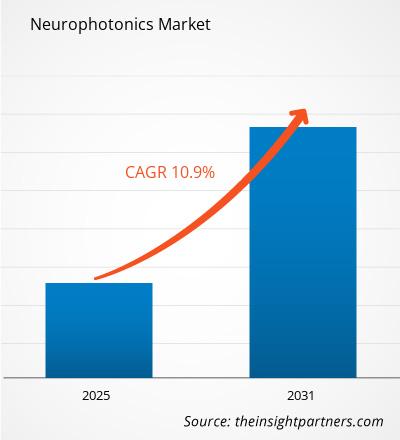
The Global Neurophotonics Market Size was valued at US$ 1.47 billion in 2025 and is projected to reach US$ 6.33 billion by 2034, registering a CAGR of 20.02% during the forecast period from 2026 to 2034. According to industry analysis, the total addressable opportunity is expected to reach approximately US$ 36.73 billion during the forecast period. Increasing adoption of advanced optical imaging technologies, rising demand for precise neurological diagnostics, and expanding neuroscience research initiatives are supporting sustained business growth across developed and emerging economies.
Get Sample PDF @ https://www.theinsightpartners.com/sample/TIPRE00040006
The field combines photonics and neuroscience to enable noninvasive visualization, monitoring, and analysis of brain activity. Technologies such as functional near infrared spectroscopy, fluorescence imaging, multiphoton microscopy, and optical coherence tomography continue to improve diagnostic accuracy while reducing procedural complexity. These innovations are creating valuable opportunities for hospitals, research laboratories, and pharmaceutical companies engaged in neurological disease studies.
Rising Neurological Disorders and Technology Innovation Fuel Growth
The increasing global burden of neurological disorders remains one of the strongest growth drivers. Conditions including Alzheimer’s disease, Parkinson’s disease, epilepsy, multiple sclerosis, and traumatic brain injuries require advanced diagnostic tools capable of identifying disease progression at earlier stages. Neurophotonics technologies offer real time visualization of neural activity with improved precision, supporting clinicians in making informed treatment decisions.
Technological advancements further strengthen industry expansion. Improvements in microscopy, spectroscopy, multimodal imaging systems, and functional near infrared spectroscopy have enhanced imaging quality, portability, and operational efficiency. Integration of artificial intelligence into neuroimaging platforms is also enabling automated data interpretation, reducing diagnostic time while improving clinical accuracy.
Government funding, university collaborations, and private investments in neuroscience research continue to stimulate product innovation. Research organizations are increasingly adopting advanced neurophotonics platforms to investigate brain function, cognitive disorders, and neurodegenerative diseases.
Market Segmentation Highlights
Based on system type, the industry is segmented into:
- Microscopy
- Spectroscopy
- Multimodal Systems
Among these, microscopy continues to hold a significant position due to its widespread use in neuroscience laboratories for cellular imaging and brain tissue analysis. Meanwhile, multimodal systems are gaining popularity because they combine multiple imaging techniques into a single platform, providing comprehensive neurological assessments.
By application, the sector includes:
- Research
- Diagnostics
- Therapeutics
Research remains the largest application segment as universities, biotechnology companies, and pharmaceutical organizations increasingly invest in neuroscience innovation. Diagnostic applications are also expanding steadily with growing demand for early detection of neurological diseases.
Regional Analysis Reveals Strong Global Opportunities
North America continues to dominate the global landscape due to advanced healthcare infrastructure, extensive neuroscience research programs, favorable funding initiatives, and the presence of major technology developers. The United States represents a major contributor with increasing investments in brain research and medical imaging technologies.
Europe maintains a strong position through collaborative research initiatives and supportive healthcare policies. Countries including Germany, the United Kingdom, and France continue to invest in innovative neurodiagnostic solutions.
Asia Pacific is expected to record the fastest growth throughout the forecast period. Rising healthcare expenditure, expanding medical research capabilities, increasing awareness of neurological disorders, and improving healthcare infrastructure across China, India, Japan, and Australia are creating favorable conditions for industry expansion.
South and Central America, along with the Middle East and Africa, are also gradually increasing adoption as healthcare modernization initiatives improve access to advanced diagnostic technologies.
Competitive Landscape
Leading companies continue to invest in product innovation, strategic partnerships, research collaborations, and geographic expansion to strengthen their competitive positions.
Key players include:
- NIRx Medical Technologies
- Neuroptics
- Hamamatsu Photonics
- Carl Zeiss AG
- Brain Vision LLC
- PhotonStar LED Ltd.
- Hitachi High-Tech Corporation
- AETOS Technologies
- F.NIR Systems
- Bioptigen, Inc.
These organizations are actively developing next generation imaging platforms, wearable brain monitoring devices, and AI enabled neuroimaging solutions to address evolving customer requirements.
Emerging Trends Shaping Industry Development
Several emerging trends are expected to influence future growth. The increasing demand for minimally invasive brain monitoring technologies is encouraging manufacturers to develop portable and wearable neurophotonics devices suitable for continuous monitoring beyond hospital environments.
Artificial intelligence integration is transforming clinical workflows by enabling automated image analysis, disease prediction, and enhanced diagnostic precision. Personalized medicine initiatives are also expanding the application of neurophotonics by supporting individualized treatment planning based on patient specific neurological data.
Interested in Purchasing this Report? Click here @ https://www.theinsightpartners.com/buy/TIPRE00040006
Future Outlook
The global neurophotonics industry is positioned for substantial expansion through 2034, supported by rising neurological disease prevalence, continuous technological innovation, increasing research investments, and expanding clinical applications. Advances in optical imaging, artificial intelligence integration, wearable monitoring systems, and personalized neurological care are expected to strengthen adoption across research and healthcare settings.
Related Report:
1) Colorectal Cancer Diagnostics Market Key Players and Opportunities by 2028
2) C-Reactive Protein Rapid Test Market Growth, Demand & Size by 2034
3) Mesotherapy Market Size and Growth 2031
About Us –
The Insight Partners provides comprehensive syndicated and tailored market research services in the healthcare, technology, and industrial domains. Renowned for delivering strategic intelligence and practical insights, the firm empowers businesses to remain competitive in ever-evolving global markets.
Contact Us:
Ankit Mathur | The Insight Partners
E-mail: ankit.mathur@theinsightpartners.com
Phone: +1-646-491-9876
