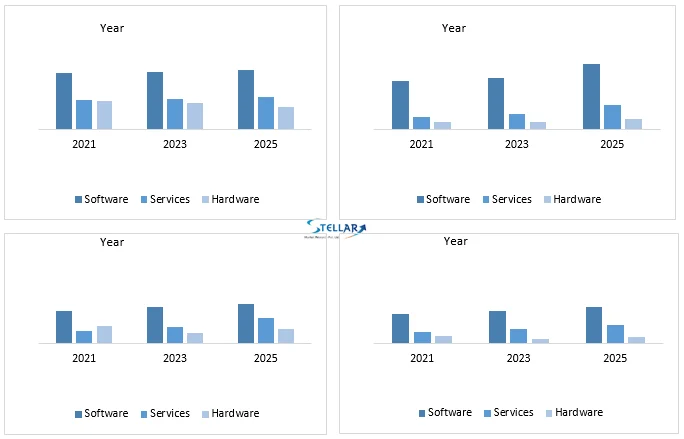
The Genomic Data Analysis Market is experiencing rapid growth as healthcare providers, pharmaceutical companies, biotechnology firms, and research organizations increasingly rely on genomic insights to improve disease diagnosis, drug discovery, and personalized treatment strategies. The integration of artificial intelligence (AI), next-generation sequencing (NGS), cloud computing, and advanced bioinformatics platforms is transforming the way genomic information is processed and interpreted. According to Stellar Market Research, the Genomic Data Analysis Market was valued at USD 6.12 billion in 2025 and is projected to reach USD 15.05 billion by 2032, growing at a CAGR of 13.72% during 2026–2032.
The increasing adoption of precision medicine, growing genomic research initiatives, declining sequencing costs, and rising demand for advanced analytical solutions are creating significant opportunities for market participants. Genomic data analysis is becoming a critical technology for understanding genetic variations, identifying disease risks, and developing targeted therapies.
𝐃𝐨𝐰𝐧𝐥𝐨𝐚𝐝 𝐅𝐫𝐞𝐞 𝐏𝐃𝐅 𝐁𝐫𝐨𝐜𝐡𝐮𝐫𝐞: https://www.stellarmr.com/report/req_sample/genomic-data-analysis-market/2908
Understanding the Genomic Data Analysis Market
Genomic data analysis refers to the use of computational tools, bioinformatics software, and analytical platforms to process and interpret large volumes of genomic information generated through sequencing technologies. These solutions help researchers and healthcare professionals analyze DNA sequences, identify genetic variations, study gene expression patterns, and generate meaningful biological insights.
The market includes various analytical services and technologies such as data preprocessing, quality control, variant calling, annotation, gene expression analysis, interpretation, reporting, and genomic visualization. These capabilities support applications across clinical diagnostics, pharmaceutical research, population genomics, oncology, rare disease identification, and agricultural biotechnology.
The rapid growth of genomic datasets has increased the need for scalable computing infrastructure and advanced analytical platforms. Modern sequencing technologies generate massive volumes of biological data, requiring sophisticated algorithms and artificial intelligence tools for accurate interpretation.
Key Factors Driving Genomic Data Analysis Market Growth
Increasing Adoption of Next-Generation Sequencing Technologies
The expansion of next-generation sequencing (NGS) is one of the primary drivers of the Genomic Data Analysis Market.
NGS technologies enable rapid and cost-effective sequencing of complete genomes, exomes, and transcriptomes. The continuous reduction in sequencing costs has made genomic analysis more accessible for research institutions, diagnostic laboratories, and healthcare providers.
NGS-generated datasets require advanced analytical platforms to identify mutations, understand genetic patterns, and support clinical decision-making. As sequencing applications expand in precision medicine and molecular diagnostics, demand for genomic data analysis solutions continues to increase.
Growth of Precision Medicine and Personalized Healthcare
Precision medicine is transforming healthcare by using genomic information to develop individualized treatment strategies.
Genomic data analysis helps physicians understand patient-specific genetic profiles and select targeted therapies based on molecular characteristics. This approach is particularly important in oncology, where genomic testing enables identification of cancer mutations and supports personalized treatment selection.
The increasing use of genomic information in disease prevention, diagnostics, and therapy development is strengthening demand for advanced analytical tools. Precision medicine initiatives worldwide are also encouraging large-scale genomic research programs.
Rising Use of Artificial Intelligence in Genomic Analysis
Artificial intelligence and machine learning technologies are becoming essential components of genomic data interpretation.
AI-powered platforms can analyze complex genomic datasets faster and identify patterns that may be difficult to detect through traditional methods. These technologies support variant interpretation, disease prediction, biomarker discovery, and drug development.
The combination of AI and genomics is improving analytical accuracy while reducing the time required for genomic research and clinical applications.
Genomic Data Analysis Market Segmentation
The Genomic Data Analysis Market is segmented based on service type, technology, application, end user, and region.
By Technology
Major technology segments include:
Next-Generation Sequencing (NGS)
Microarray Analysis
Polymerase Chain Reaction (PCR)
CRISPR-Based Analysis
Other Genomic Technologies
Next-Generation Sequencing Segment Leads Market Growth
The NGS segment dominated the Genomic Data Analysis Market, accounting for approximately 47.56% market share in 2025. The segment’s growth is supported by high-throughput sequencing capabilities, improved accuracy, declining costs, and widespread adoption in clinical and research applications.
NGS technologies are widely used for whole-genome sequencing, whole-exome sequencing, transcriptomics, and molecular diagnostics, creating strong demand for advanced genomic interpretation platforms.
By Service Type
The market includes:
Data Preprocessing and Quality Control
Variant Calling and Annotation
Gene Expression Analysis
Data Interpretation and Reporting
Other Analytical Services
Variant Calling and Annotation Gains Importance
Variant calling and annotation services play a crucial role in identifying genetic changes associated with diseases.
These solutions help researchers classify genetic variants, evaluate their clinical significance, and support personalized treatment decisions. Growing demand for genomic diagnostics is increasing the adoption of advanced annotation platforms.
By End User
Major end users include:
Pharmaceutical and Biotechnology Companies
Academic and Research Institutes
Hospitals and Clinical Laboratories
Government Research Organizations
Pharmaceutical and Biotechnology Companies Drive Adoption
Pharmaceutical and biotechnology companies represent a significant market segment due to increasing use of genomics in drug discovery, biomarker identification, and therapeutic development.
Genomic analysis enables companies to identify new drug targets, improve clinical trial efficiency, and develop precision therapies.
Technology Trends Transforming the Industry
Cloud-Based Genomic Analysis Platforms
Cloud computing is improving accessibility and scalability in genomic data analysis.
Cloud-based platforms allow researchers and healthcare organizations to process large genomic datasets without investing heavily in physical computing infrastructure. These solutions support collaboration, data sharing, and faster research workflows.
AI-Powered Genomic Interpretation
AI-based genomic interpretation tools are becoming increasingly important for clinical applications.
Machine learning algorithms can analyze genetic information alongside clinical data to improve diagnosis accuracy and identify potential treatment pathways.
Single-Cell Genomics and Spatial Analysis
Emerging technologies such as single-cell sequencing and spatial genomics are creating new opportunities for genomic analysis.
These approaches provide detailed insights into cellular-level genetic activity and are increasingly used in cancer research, immunology, and developmental biology.
Data Security and Privacy Solutions
As genomic information is highly sensitive, cybersecurity and privacy protection are becoming major priorities.
Companies are developing secure data storage, encryption technologies, and controlled-access systems to protect genomic information while enabling research collaboration.
Sustainability and Regulatory Landscape
The Genomic Data Analysis Market is influenced by evolving regulations related to genetic data privacy, healthcare compliance, and ethical genomic research.
Regulatory authorities are focusing on ensuring responsible use of genomic information, protecting patient privacy, and maintaining accuracy in clinical genomic applications.
Data governance frameworks and ethical guidelines are becoming increasingly important as genomic databases continue expanding globally.
Regional Market Outlook
North America
North America dominates the Genomic Data Analysis Market due to strong biotechnology infrastructure, advanced healthcare systems, government research funding, and high adoption of precision medicine technologies.
The region accounted for approximately 42.51% of the global market share in 2025. Strong investments in genomics research, clinical diagnostics, and biotechnology innovation continue supporting regional growth.
The United States remains a major contributor due to extensive genomic research programs and strong pharmaceutical industry participation.
Asia Pacific
Asia Pacific is expected to be the fastest-growing region during the forecast period.
The regional market is projected to grow at a CAGR of 14.67% from 2026 to 2032, supported by expanding sequencing infrastructure, increasing biotechnology investments, and government-led genomic initiatives in countries such as China, India, Japan, and South Korea.
Europe
Europe represents a significant market due to established research institutions, biotechnology innovation, and government-supported genomic programs.
Population genomics projects and increasing adoption of molecular diagnostics are strengthening demand for genomic analysis solutions across the region.
Market Challenges
Despite strong growth potential, the Genomic Data Analysis Market faces several challenges:
High infrastructure and implementation costs
Shortage of skilled bioinformatics professionals
Data privacy concerns
Complex genomic data interpretation
Regulatory challenges
The shortage of trained computational biologists and bioinformatics specialists remains a key limitation as genomic datasets continue expanding rapidly.
Competitive Landscape
The Genomic Data Analysis Market is highly competitive, with companies focusing on technological innovation, strategic partnerships, and advanced bioinformatics solutions.
Key players include:
Illumina Inc.
Thermo Fisher Scientific
QIAGEN
BGI Genomics
Agilent Technologies
PerkinElmer
Bio-Rad Laboratories
F. Hoffmann-La Roche
DNAnexus
Fabric Genomics
Companies are investing in AI-powered analytics, cloud platforms, sequencing solutions, and integrated genomic workflows to strengthen their market position.
Recent developments include advancements in sequencing technologies and acquisitions focused on improving clinical genomics interpretation capabilities.
𝐃𝐨𝐰𝐧𝐥𝐨𝐚𝐝 𝐅𝐫𝐞𝐞 𝐏𝐃𝐅 𝐁𝐫𝐨𝐜𝐡𝐮𝐫𝐞: https://www.stellarmr.com/report/req_sample/genomic-data-analysis-market/2908
Future Outlook
The Genomic Data Analysis Market is expected to witness strong growth as genomics becomes increasingly integrated into healthcare, research, and pharmaceutical development.
Future expansion will be driven by precision medicine adoption, AI-based genomic interpretation, cloud computing, population genomics programs, and advancements in sequencing technologies.
As healthcare moves toward personalized treatment approaches, genomic data analysis will become an essential tool for transforming disease diagnosis, prevention, and therapeutic development. Organizations investing in scalable analytics platforms, secure data management, and AI-driven solutions will be well positioned to capture emerging opportunities in the evolving genomics ecosystem.
Media Contact
Stellar Market Research
Website: Stellar Market Research – Global Research Reports & Consulting
Email: sales@stellarmr.com
