Asia Pacific Shipping Container Market: Rising Maritime Trade and Logistics Expansion Driving Market Growth
The Asia Pacific region is the backbone of global maritime trade, supported by strong manufacturing activities, expanding international commerce, and continuous development of port and logistics infrastructure. Shipping containers have become a critical component of modern supply chains by enabling efficient, secure, and cost-effective transportation of goods across countries and continents.
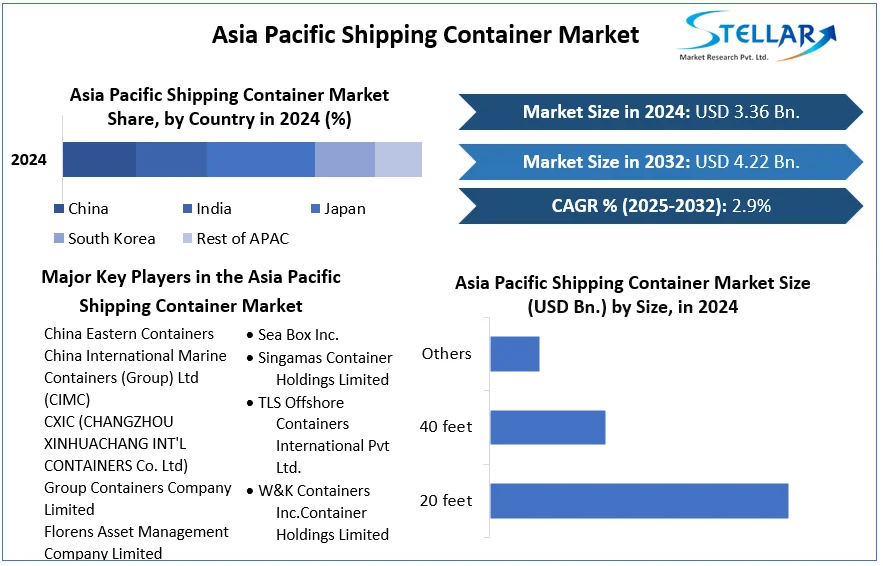
The Asia Pacific Shipping Container Market was valued at USD 3.36 billion in 2024 and is projected to reach USD 4.22 billion by 2032, growing at a CAGR of 2.9% during 2025–2032. The market growth is driven by increasing seaborne trade, rising containerized cargo transportation, expansion of e-commerce, and growing investments in logistics infrastructure across the region.
Understanding Shipping Containers
Shipping containers are standardized, reusable transport units designed for storing and moving goods through multiple transportation modes, including ships, railways, and trucks. These containers are manufactured according to international standards to withstand challenging transportation conditions while ensuring cargo safety and operational efficiency.
Common shipping container types include:
- Dry storage containers
- Refrigerated containers
- Flat rack containers
- Open-top containers
- Insulated or thermal containers
- Special-purpose containers
The flexibility and durability of shipping containers make them essential for global supply chains, international trade, and multimodal transportation systems.
Key Factors Driving the Asia Pacific Shipping Container Market
Expansion of Maritime Trade Activities
Asia Pacific represents one of the largest maritime trading regions worldwide due to strong export and import activities. Countries such as China, India, Japan, South Korea, and Australia contribute significantly to global container shipping demand.
The increasing movement of consumer goods, industrial products, raw materials, and agricultural commodities is creating strong demand for shipping containers. The expansion of international trade agreements and cross-border commerce is further supporting market growth.
𝐃𝐨𝐰𝐧𝐥𝐨𝐚𝐝 𝐅𝐫𝐞𝐞 𝐏𝐃𝐅 𝐁𝐫𝐨𝐜𝐡𝐮𝐫𝐞: https://www.stellarmr.com/report/req_sample/Asia-Pacific-Shipping-Container-Market/1308
Growth of E-Commerce and Global Supply Chains
The rapid growth of e-commerce has transformed logistics networks and increased demand for efficient transportation solutions. Businesses require reliable container systems to transport products across regional and international markets.
The expansion of online retail, consumer goods manufacturing, and global distribution networks is increasing the need for flexible container availability and advanced logistics solutions.
Development of Port Infrastructure
Governments across Asia Pacific are investing heavily in port modernization, container terminals, and logistics hubs. These developments are improving cargo handling capacity and supporting higher container movement volumes.
Major economies are focusing on:
- Smart ports
- Automated cargo handling systems
- Digital logistics platforms
- Efficient freight networks
These improvements are expected to strengthen container demand throughout the forecast period.
Asia Pacific Shipping Container Market Segmentation
By Type
The market is segmented into:
Dry Storage Containers
Dry storage containers represent the largest segment due to their widespread usage for transporting general cargo, consumer goods, machinery, and industrial products. In 2024, this segment accounted for the leading market share due to ease of handling, durability, and cost efficiency.
Refrigerated Containers
Refrigerated containers, also known as reefers, are increasingly used for temperature-sensitive products such as:
- Food and beverages
- Pharmaceuticals
- Chemicals
- Perishable goods
Growing demand for cold-chain logistics is supporting the adoption of refrigerated containers.
Flat Rack Containers
Flat rack containers are designed for oversized and heavy cargo, including industrial equipment, construction materials, and machinery.
Open Top Containers
Open-top containers are suitable for cargo that cannot be loaded through standard container doors due to height or size limitations.
Special Purpose Containers
These containers are customized for specific industries and applications, including offshore operations, military transportation, and specialized cargo movement.
By Size
The market is categorized into:
- 20 Feet Containers
- 40 Feet Containers
- Others
20 Feet Containers
Twenty-foot containers are widely used due to their compact size, easy handling, and compatibility with various transportation systems.
40 Feet Containers
Forty-foot containers are preferred for high-volume cargo transportation because they offer greater storage capacity and improved shipping efficiency.
Regional Market Outlook
The Asia Pacific Shipping Container Market covers major countries including:
- China
- India
- Japan
- South Korea
- Australia
- ASEAN countries
- Rest of Asia Pacific
China Leading Market Growth
China dominates the Asia Pacific shipping container industry due to its massive manufacturing base, extensive export activities, and strong dependence on maritime transportation. China accounted for more than half of the regional market share in recent years due to high cargo movement volumes and container manufacturing capabilities.
India Emerging as a Growth Market
India is expected to witness increasing demand due to expanding trade activities, infrastructure development, port modernization projects, and growing manufacturing industries.
Government initiatives focused on improving logistics efficiency and strengthening maritime connectivity are creating new opportunities for container manufacturers and logistics companies.
Japan and South Korea Market Opportunities
Japan and South Korea continue to contribute significantly due to their advanced industrial sectors, shipbuilding capabilities, and strong international trade networks.
𝐃𝐨𝐰𝐧𝐥𝐨𝐚𝐝 𝐅𝐫𝐞𝐞 𝐏𝐃𝐅 𝐁𝐫𝐨𝐜𝐡𝐮𝐫𝐞: https://www.stellarmr.com/report/req_sample/Asia-Pacific-Shipping-Container-Market/1308
Technological Trends in Shipping Containers
Technology is transforming traditional shipping containers into smarter and more efficient logistics assets.
Key innovations include:
- IoT-enabled smart containers
- Real-time tracking systems
- GPS monitoring
- Digital cargo management platforms
- Automated inventory systems
Smart containers help companies improve supply chain visibility, monitor cargo conditions, and reduce operational inefficiencies.
Market Challenges
Fluctuations in Transportation Costs
Changes in fuel prices, freight rates, and global economic conditions can influence container demand and manufacturing costs.
Supply Chain Disruptions
Global events, port congestion, and geopolitical uncertainties can affect container availability and logistics operations.
High Manufacturing Costs
Steel prices, raw material availability, and energy costs can impact container production expenses.
Future Opportunities in the Asia Pacific Shipping Container Market
Growth of Sustainable Containers
Environmental concerns are encouraging manufacturers to develop sustainable container solutions using:
- Recyclable materials
- Energy-efficient manufacturing processes
- Eco-friendly coatings
Expansion of Cold Chain Logistics
The increasing demand for pharmaceutical transportation, frozen foods, and temperature-sensitive products will create opportunities for refrigerated container manufacturers.
Adoption of Smart Logistics Solutions
Digital technologies will continue improving container tracking, fleet management, and supply chain optimization.
Competitive Landscape
The Asia Pacific Shipping Container Market includes several global and regional manufacturers focusing on production expansion, technological innovation, and strategic partnerships.
Key players include:
- China International Marine Containers (Group) Ltd. (CIMC)
- Singamas Container Holdings Limited
- CXIC Group Containers Company Limited
- Florens Asset Management Company Limited
- Maersk Container Industry AS
- Sea Box Inc.
- TLS Offshore Containers International Pvt Ltd.
- W&K Containers Inc.
- China Eastern Containers
- Guangdong Fuwa Engineering Group Co. Ltd.
Companies are focusing on increasing manufacturing capacity, developing advanced container solutions, and improving supply chain efficiency to strengthen their market position.
Conclusion
The Asia Pacific Shipping Container Market is expected to witness steady growth due to expanding maritime trade, rising containerized transportation, and increasing investments in logistics infrastructure. The region’s strong manufacturing base, growing e-commerce sector, and technological advancements are creating significant opportunities for container manufacturers and logistics providers.
As global supply chains become more interconnected and efficient, shipping containers will continue to play a vital role in supporting international trade and economic development across Asia Pacific.
