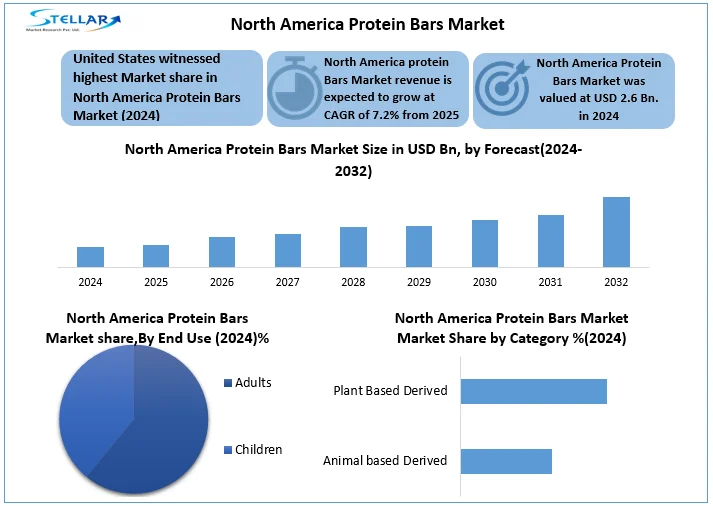
The North America Protein Bars Market is witnessing remarkable growth as consumers increasingly prioritize convenient, protein-rich nutrition that supports active lifestyles, weight management, and overall wellness. According to Stellar Market Research, the North America Protein Bars Market was valued at USD 2.6 billion in 2024 and is projected to reach nearly USD 4.53 billion by 2032, expanding at a CAGR of 7.2% during the forecast period.
Protein bars have evolved from niche sports nutrition products into mainstream functional snacks consumed by athletes, working professionals, students, and health-conscious consumers. The growing popularity of fitness culture, high-protein diets, and on-the-go nutrition is driving market expansion across the United States, Canada, and Mexico. At the same time, manufacturers are responding with innovative formulations featuring clean-label ingredients, plant-based proteins, low sugar content, and functional health benefits that appeal to a broader consumer base.
Market Overview
Protein bars are portable nutritional products designed to provide high-quality protein along with essential vitamins, minerals, and dietary fiber. Initially targeted at athletes and bodybuilders, these products are now widely consumed as meal replacements, healthy snacks, and post-workout nutrition.
Changing consumer lifestyles have significantly increased demand for convenient foods that combine nutrition with portability. Busy work schedules, growing awareness of preventive healthcare, and rising gym memberships have encouraged consumers to choose protein bars as healthier alternatives to conventional snacks.
Product innovation continues to reshape the industry. Manufacturers are introducing bars enriched with collagen, probiotics, adaptogens, plant proteins, and functional ingredients while reducing added sugars and artificial additives. According to the Stellar Market Research report, nearly 60% of newly launched protein bars contain 5 grams or less of sugar, while almost one-third now incorporate plant-based proteins.
𝐃𝐨𝐰𝐧𝐥𝐨𝐚𝐝 𝐅𝐫𝐞𝐞 𝐏𝐃𝐅 𝐁𝐫𝐨𝐜𝐡𝐮𝐫𝐞: https://www.stellarmr.com/report/req_sample/north-america-protein-bars-market/2869
Health and Fitness Trends Accelerate Market Growth
One of the strongest drivers of the North America Protein Bars Market is the increasing emphasis on health, fitness, and preventive nutrition. Consumers are becoming more aware of the role protein plays in muscle recovery, weight management, and overall metabolic health.
The growing popularity of fitness centers, home workouts, endurance sports, and strength training has significantly expanded the customer base for protein-rich snacks. Protein bars are increasingly consumed before workouts, after exercise, or as convenient meal replacements during busy schedules.
High-protein dietary trends, including ketogenic, paleo, and low-carbohydrate eating plans, are also supporting demand. Consumers actively seek products that deliver high protein while minimizing sugar, carbohydrates, and artificial ingredients.
Clean-Label and Plant-Based Innovation Reshape the Industry
Consumer preferences are shifting toward products made with recognizable, natural ingredients. Clean-label protein bars containing nuts, oats, seeds, dried fruits, and minimally processed protein sources are becoming increasingly popular.
Plant-based nutrition represents one of the fastest-growing opportunities in the market. Manufacturers are developing protein bars using pea protein, brown rice protein, pumpkin seed protein, and other plant-derived ingredients to serve vegan, vegetarian, and flexitarian consumers.
Brands are also introducing allergen-friendly products that are gluten-free, dairy-free, soy-free, and low-FODMAP, expanding their appeal to consumers with specific dietary requirements.
Sustainability is becoming another important purchasing factor. Many manufacturers are transitioning to recyclable packaging, responsibly sourced ingredients, and environmentally friendly production methods to meet growing consumer expectations.
E-commerce Expands Consumer Access
Online retail has become a major distribution channel for protein bars. Digital marketplaces allow consumers to compare nutritional information, explore new brands, subscribe for recurring deliveries, and access specialty products not always available in traditional retail stores.
According to the report, e-commerce sales of protein bars grew by approximately 40% year over year, reflecting consumers’ increasing preference for digital shopping. Subscription models and direct-to-consumer platforms have strengthened customer loyalty while helping manufacturers expand market reach.
At the same time, supermarkets, convenience stores, fitness centers, and specialty nutrition retailers continue to play an important role by improving product visibility and impulse purchases.
Market Segmentation Analysis
Snack Protein Bars Lead the Market
Among product categories, protein snack bars account for the largest market share. Consumers increasingly prefer these products because they provide convenient nutrition without requiring meal preparation.
Meal replacement bars continue to gain popularity among professionals and travelers seeking balanced nutrition during busy schedules. Premium functional bars designed for sports performance, digestive health, and energy support are also experiencing increasing demand.
Plant-Based Protein Segment Shows Strong Growth
While animal-based proteins such as whey continue to dominate, plant-based protein bars are experiencing rapid expansion.
Consumers are increasingly selecting plant-based products for health, sustainability, and ethical reasons. Manufacturers continue to invest in improving taste, texture, and nutritional quality, making plant-based options more appealing to mainstream buyers.
United States Dominates the Regional Market
The United States accounted for approximately 87% of the North America Protein Bars Market in 2024, supported by its large health-conscious consumer base, mature retail infrastructure, and strong fitness culture.
The country benefits from high consumer spending on functional foods, extensive product availability, and continuous innovation from leading nutrition brands.
Canada is experiencing steady growth as awareness of sports nutrition and healthy snacking continues to increase. Meanwhile, Mexico represents an emerging market driven by expanding middle-class populations, urbanization, and rising interest in convenient nutritional products.
Key Market Drivers
Several factors continue to support market expansion:
Growing consumer focus on health, fitness, and preventive nutrition.
Increasing demand for convenient, on-the-go snacks.
Rising adoption of high-protein and low-sugar diets.
Expansion of e-commerce and direct-to-consumer sales channels.
Continuous innovation in plant-based, clean-label, and functional protein bars.
These trends are encouraging both established brands and emerging companies to introduce differentiated products targeting diverse consumer preferences.
Market Challenges
Despite robust growth prospects, the industry faces several challenges.
Taste and texture remain important concerns for some consumers, particularly in high-protein and plant-based formulations. Manufacturers continue investing in research and development to improve product quality without compromising nutritional value.
Regulatory compliance also presents challenges. Companies must adhere to evolving labeling requirements, nutritional claims, allergen disclosures, and food safety regulations across North America, increasing development and compliance costs.
Competitive Landscape
The North America Protein Bars Market is highly competitive, with established global brands and innovative startups introducing new products across multiple nutrition segments.
Key market participants include:
Quest Nutrition
Clif Bar & Company
KIND Snacks
RXBAR (Kellanova)
ONE Brands (The Hershey Company)
No Cow
Atkins (Simply Good Foods)
Power Crunch
GoMacro
Legendary Foods
Manufacturers are pursuing mergers, acquisitions, product innovation, sustainable packaging initiatives, and expansion into functional nutrition categories. Recent developments include Hershey’s acquisition of the remaining stake in ONE Brands, Post Holdings’ acquisition of D’s Naturals, and Beyond Meat’s entry into the protein bar segment with a pea-protein product, highlighting the industry’s continued evolution.
𝐃𝐨𝐰𝐧𝐥𝐨𝐚𝐝 𝐅𝐫𝐞𝐞 𝐏𝐃𝐅 𝐁𝐫𝐨𝐜𝐡𝐮𝐫𝐞: https://www.stellarmr.com/report/req_sample/north-america-protein-bars-market/2869
Future Outlook
The future of the North America Protein Bars Market remains highly promising as consumers increasingly embrace healthier lifestyles and functional nutrition. Advances in ingredient technology, personalized nutrition, plant-based proteins, and sustainable manufacturing are expected to shape the next generation of protein bars.
Manufacturers that successfully combine great taste, clean-label ingredients, nutritional value, and environmentally responsible practices will strengthen their competitive advantage. As health-conscious consumers continue seeking convenient protein-rich snacks, the North America Protein Bars Market is expected to maintain strong momentum through 2032, creating significant opportunities for both established companies and emerging brands.
Media Contact
Stellar Market Research
Website: Stellar Market Research – Global Research Reports & Consulting
Email: sales@stellarmr.com
