The evolution of antibody-based therapies is transforming modern healthcare by enabling more precise disease targeting and improved treatment outcomes. Advanced engineering approaches are enhancing therapeutic performance across oncology, autoimmune disorders, and chronic diseases. Innovations in biotechnology are accelerating the development of highly specific and effective treatment solutions.
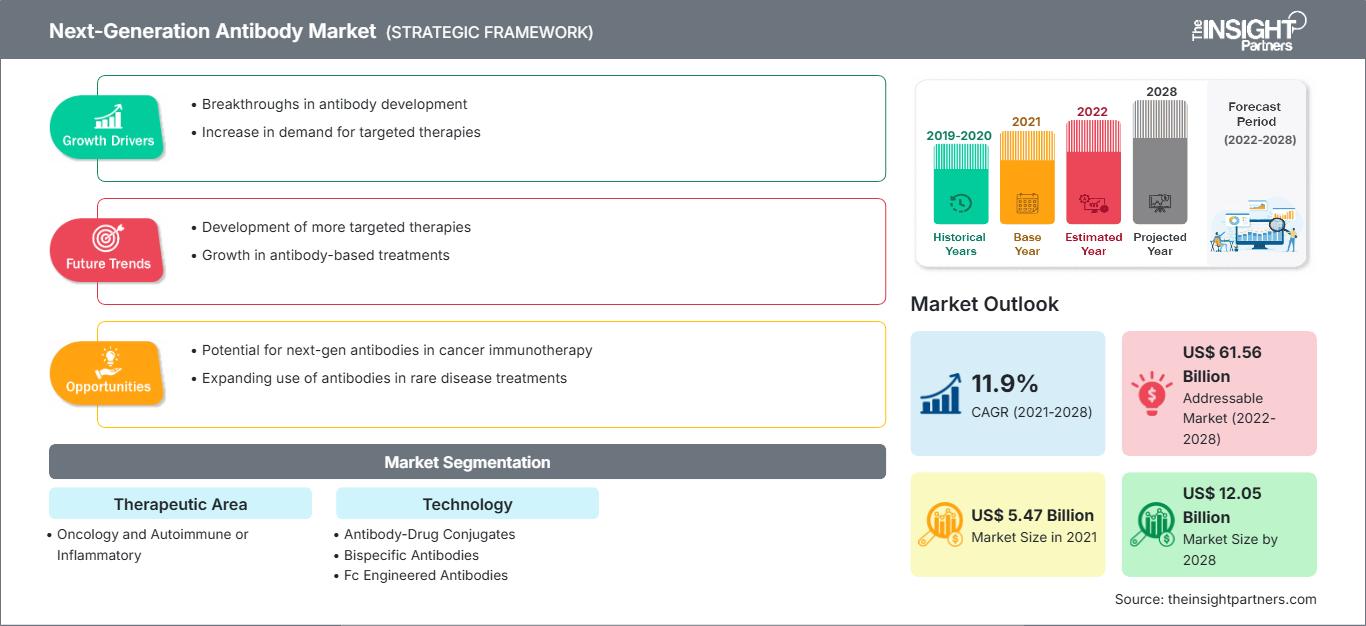
The Next-Generation Antibody Market is projected to grow from US$ 5.47 billion in 2021 to US$ 12.05 billion by 2028, registering a CAGR of 11.9% during the forecast period. Next-generation antibodies are designed with enhanced specificity, improved potency, and optimized therapeutic characteristics compared with conventional monoclonal antibodies. These advanced biologics combine antibody engineering, payload optimization, linker technologies, and targeted delivery mechanisms to minimize off-target effects and improve patient outcomes.
Get Sample PDF @ https://www.theinsightpartners.com/sample/TIPRE00006412
Increasing Demand for Advanced Antibody Therapeutics
The growing prevalence of cancer, autoimmune diseases, and inflammatory disorders is significantly driving the adoption of next-generation antibody therapies. Pharmaceutical and biotechnology companies are increasingly investing in innovative antibody platforms, including antibody-drug conjugates (ADCs), bispecific antibodies, Fc-engineered antibodies, and antibody fragments.
Oncology remains a major application area due to the increasing demand for targeted cancer therapies. Next-generation antibodies provide improved tumor recognition and selective drug delivery, making them valuable alternatives to traditional treatment approaches. The rising number of clinical trials, regulatory approvals, and research initiatives focused on precision medicine is further supporting industry expansion.
Technological Advancements Transforming Antibody Development
Continuous advancements in antibody engineering technologies are reshaping therapeutic development. Antibody-drug conjugates have gained significant attention due to their ability to deliver cytotoxic agents directly to cancer cells while reducing damage to healthy tissues. Similarly, bispecific antibodies are witnessing strong growth as they can simultaneously bind to two different antigens, enhancing immune system activation against targeted diseases.
The technology segment includes:
- Antibody-Drug Conjugates
- Bispecific Antibodies
- Fc Engineered Antibodies
- Antibody Fragments and Antibody-Like Proteins
- Biosimilar Antibody Products
Among these technologies, bispecific antibodies are expected to witness notable growth due to increasing clinical applications and promising therapeutic outcomes. The antibody-drug conjugates segment held a significant share due to increasing approvals and commercial success of ADC-based therapies.
Regional Insights and Growth Opportunities
North America dominated the Next-Generation Antibody Market, accounting for a leading share in 2021, supported by strong biotechnology infrastructure, advanced healthcare systems, and significant investments in research and development activities. The presence of major pharmaceutical companies and increasing adoption of innovative biologics continues to strengthen regional growth.
Europe is expected to experience substantial expansion during the forecast period, supported by rising healthcare expenditure, favorable regulatory frameworks, and growing investments in antibody-based therapies. The Asia Pacific region is also anticipated to witness significant opportunities due to increasing clinical research activities, improving healthcare infrastructure, and rising demand for advanced treatments.
The COVID-19 pandemic influenced antibody research activities worldwide by increasing focus on immune response analysis, vaccine development, and therapeutic antibody solutions. The increased demand for antibody-based research has contributed to broader applications of next-generation antibody technologies.
Competitive Landscape and Key Players
Leading companies are focusing on strategic collaborations, product development, clinical advancements, and technology innovation to strengthen their position in this sector. These companies are expanding their antibody portfolios and investing in next-generation platforms to address unmet medical needs.
Key players operating in the Next-Generation Antibody Market include:
- F. Hoffmann-La Roche Ltd.
- Pfizer Inc.
- Catalent Inc.
- Takeda Pharmaceutical Company Limited
- AstraZeneca Plc
- Amgen Inc.
- Kyowa Kirin Co., Ltd.
- Seagen Inc.
- ImmunoGen, Inc.
- Xencor
These organizations are actively developing novel antibody therapeutics and advancing clinical pipelines focused on oncology, autoimmune disorders, and other complex diseases.
Interested in Purchasing this Report? Click here @ https://www.theinsightpartners.com/buy/TIPRE00006412
Future Outlook
The Next-Generation Antibody Market is expected to experience sustained growth through 2028 due to increasing demand for targeted therapies, rising biotechnology investments, and continuous innovation in antibody engineering. The expansion of personalized medicine and growing regulatory approvals for advanced antibody products will create new opportunities for pharmaceutical companies.
Related Report:
1) Oral Anticoagulants Market Growth, Trends & Forecast by 2034
2) Thrombosis Drugs Market Dynamics, Analysis, Trends, and Opportunities 2031
3) Cancer Monoclonal Antibodies Market Growth, Size, Share, Trends, and Forecast by 2031
About Us –
The Insight Partners provides comprehensive syndicated and tailored market research services in the healthcare, technology, and industrial domains. Renowned for delivering strategic intelligence and practical insights, the firm empowers businesses to remain competitive in ever-evolving global markets.
Contact Us:
Ankit Mathur | The Insight Partners
E-mail: ankit.mathur@theinsightpartners.com
Phone: +1-646-491-9876
Also Available in : Korean German Japanese French Chinese Italian Spanish
