The global automotive sector continues to witness significant technological advancement as vehicle manufacturers strive to meet stringent environmental regulations and rising consumer demands for higher performance and fuel economy. Gasoline Direct Injection (GDI) technology has emerged as one of the most critical developments in modern internal combustion engines (ICE). By injecting gasoline directly into the combustion chamber at high pressure, GDI systems offer precise fuel delivery, optimizing air-fuel mixture ratios and ensuring vastly improved combustion efficiency.
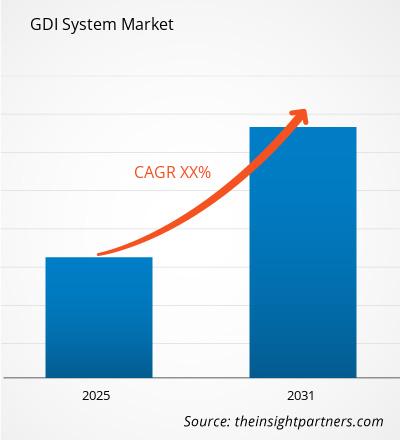
According to a detailed research report published by The Insight Partners, the global GDI System Market size is projected to reach US$ 10 billion by 2034 from US$ 6.51 billion in 2025. The market is anticipated to register a Compound Annual Growth Rate (CAGR) of 5.53% during the forecast period 2026–2034.
Core Drivers Fueling Market Expansion
Tightening Carbon Emission Standards
Governments worldwide, particularly in Europe, North America, and parts of Asia-Pacific, are enforcing strict corporate average fuel economy (CAFE) standards and reduced carbon emission targets. GDI systems play a vital role in reducing greenhouse gas emissions and particulate matter when combined with support technologies like Gasoline Particulate Filters (GPFs), making them indispensable for internal combustion and hybrid powertrains.
Consumer Demand for Fuel Efficiency and Vehicle Performance
With fluctuating global fuel prices, vehicle buyers actively seek fuel-efficient options that do not compromise power output. GDI systems enable precise injection control, resulting in complete fuel burn, enhanced engine torque, and smoother overall engine performance.
Engine Downsizing and Turbocharging Trends
Automotive Original Equipment Manufacturers (OEMs) are increasingly adopting smaller, downsized engines equipped with turbochargers. GDI technology integrates seamlessly with turbocharged engines, cooling the intake air and mitigating knock, which allows for higher compression ratios and maximized engine power output.
Get a PDF Sample- https://www.theinsightpartners.com/sample/TIPRE00007388
Market Segmentation Highlights
The GDI system market is categorized into distinct segments to provide a clear view of its trajectory:
By Component: Sensors, Fuel Injectors, Engine Control Units (ECUs), Fuel Pumps, and Fuel Rails. High-pressure fuel injectors and advanced ECUs represent major shares of overall market value due to their technological complexity and necessity for optimal fuel delivery.
By Vehicle Type: Passenger Cars and Commercial Vehicles. Passenger cars continue to command the highest demand, driven by massive production volumes in emerging economies and shifting consumer preferences toward compact, high-efficiency sedans and SUVs.
By Support Technology: Gasoline Turbochargers and Gasoline Particulate Filters (GPFs).
Key Players Operating in the Market
The global GDI system landscape is highly competitive, dominated by established tier-1 automotive component suppliers and technology firms continuously innovating to improve high-pressure injection capabilities:
Continental AG
Delphi Technologies
Denso Corp
Hitachi, Ltd.
Keihin Corporation
Magneti Marelli S.p.A.
Park-Ohio Holdings Corp.
Renesas Electronics Corporation
Robert Bosch GmbH
Stanadyne LLC
These key players are focusing on joint ventures, active research and development, and localized production expansion to increase market footprint and address regional automotive requirements.
Get Full Copy of This Report- https://www.theinsightpartners.com/buy/TIPRE00007388
Future Outlook
The future of the Gasoline Direct Injection (GDI) system market remains highly promising, particularly through its integration into hybrid electric vehicle (HEV) and plug-in hybrid electric vehicle (PHEV) powertrains. As the automotive industry transitions through electrification, hybrid vehicles rely on refined, highly efficient internal combustion engines to work in tandem with electric motors. Furthermore, key developments in ultra-high-pressure fuel injection systems—exceeding 350 to 500 bar—are set to further decrease soot generation and particle emissions. While pure electric vehicles present long-term competition, GDI systems will remain a dominant automotive component over the next decade, ensuring cleaner, more efficient internal combustion engine performance globally.
Related Reports-
About Us
The Insight Partners is a one-stop industry research provider of actionable intelligence. We help our clients in getting solutions to their research requirements through our syndicated and consulting research services. We specialize in industries such as Semiconductor and Electronics, Aerospace and Defense, Automotive and Transportation, Biotechnology, Healthcare IT, Manufacturing and Construction, Medical Devices, Technology, Media, and Telecommunications, as well as chemicals and Materials.
Contact Us
If you have any queries about this report or if you would like further information, don’t hesitate to get in touch with us:
Contact Person: Ankit Mathur
E-mail: ankit.mathur@theinsightpartners.com
